Locking II
Strict/Rigorous Locks, Lock Upgrades, Deadlocks
Recall: Two-phase Locking
- 2PL guarantees serializability.
- Recoverable? Cascadeless?
- 2PL alone does not guarantee either of them.
- Example: 2PL? yes
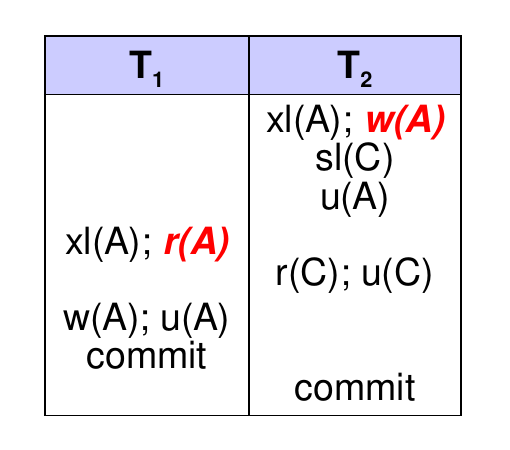
not recoverable. why not?
r1(A) is a dirty read, and reader commits before writer.
not cascadeless. why not?
the dirty read. if T2 is rolled back after that read, T1 must be, too.
Strict Locking
- Strict locking makes txns hold all exclusive locks until they commit or abort.
- doing so prevents dirty reads, which means schedules will be recoverable and cascadeless
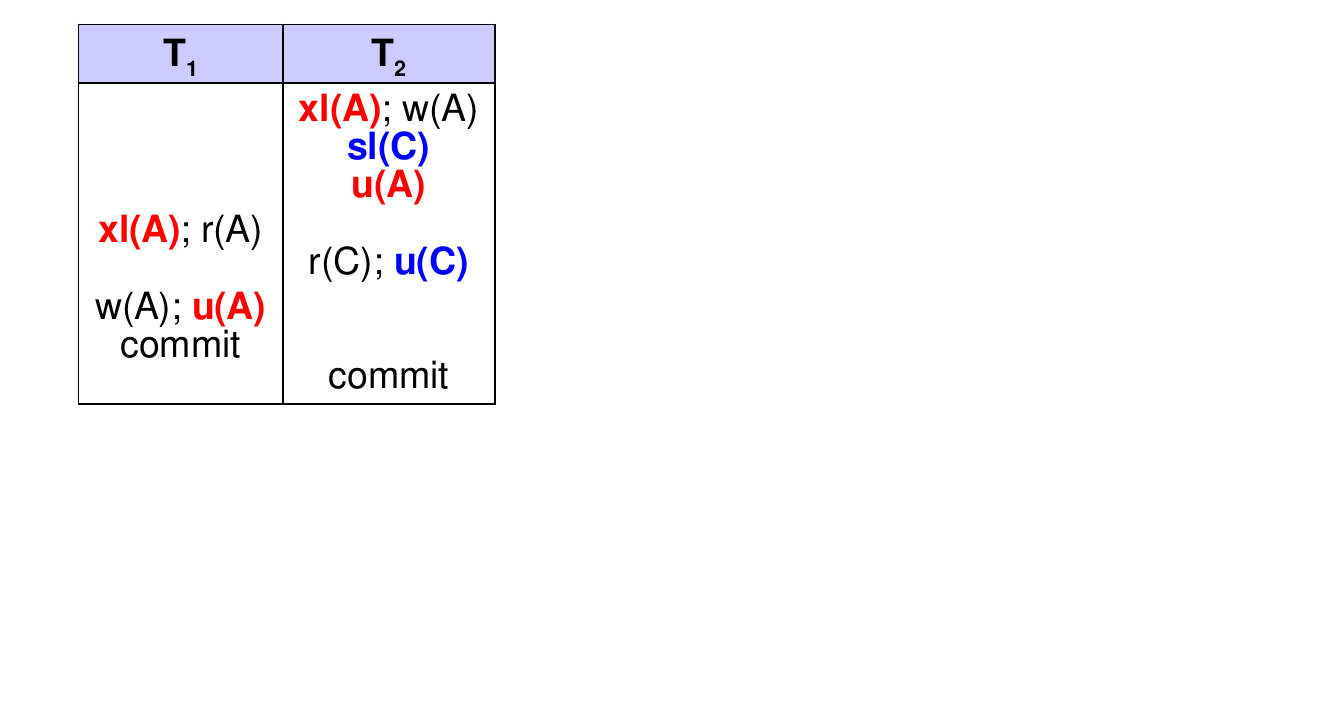
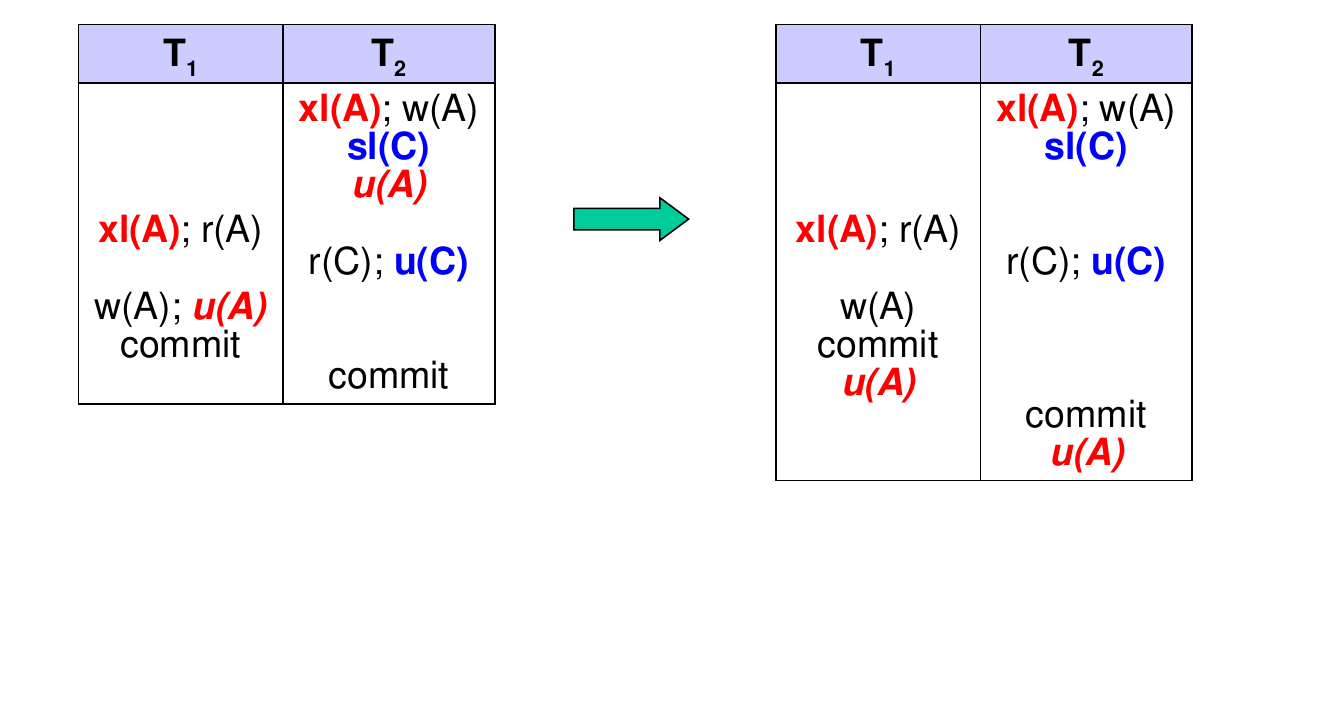
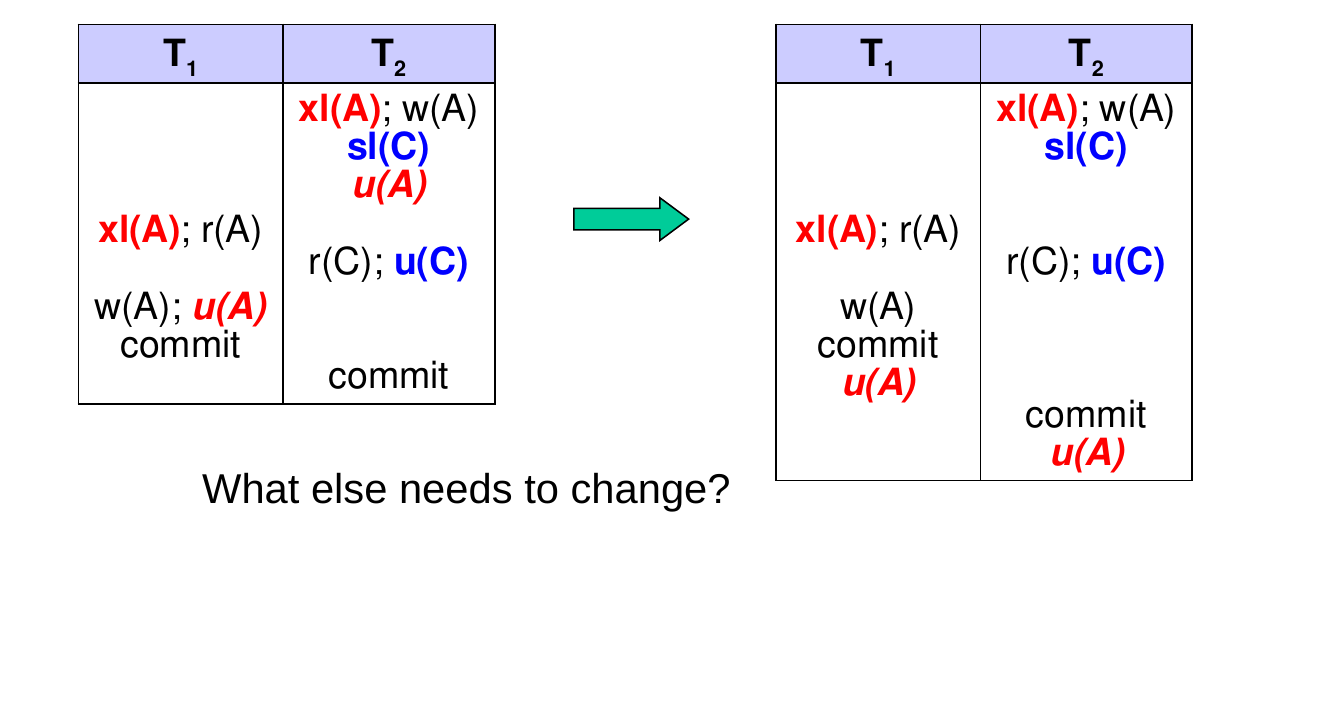
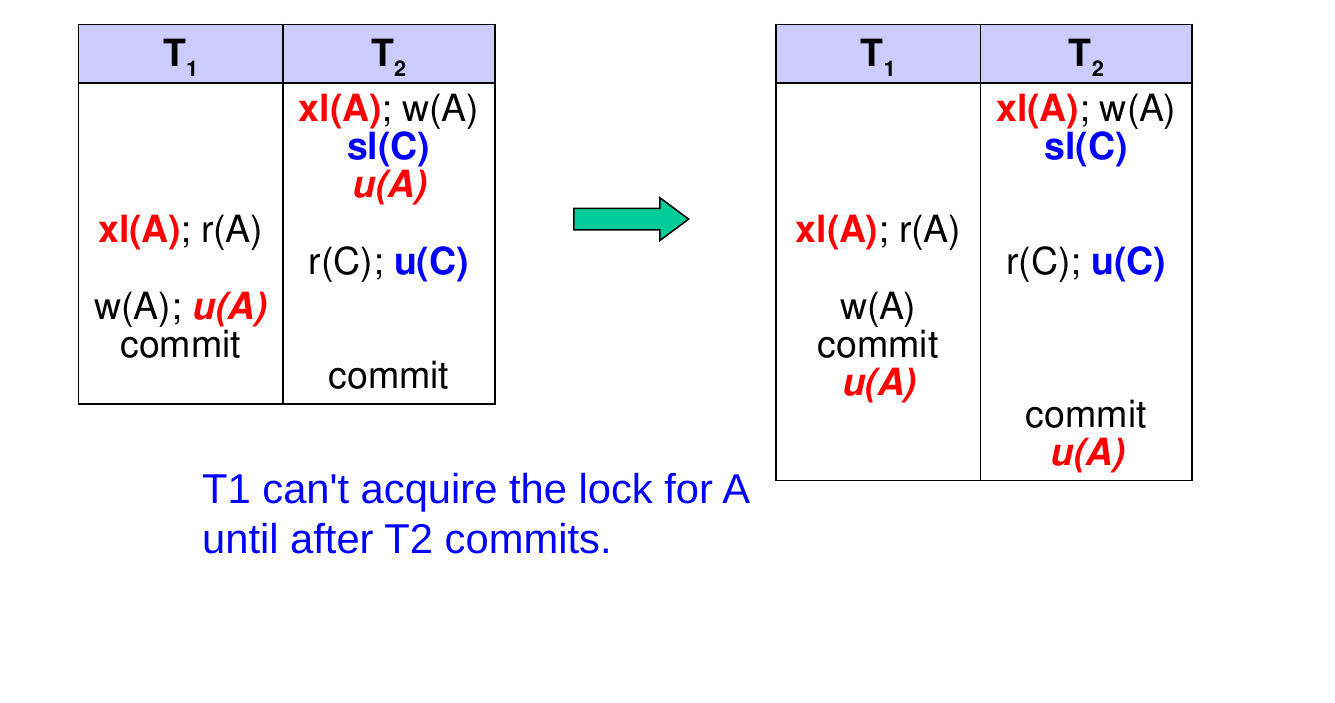
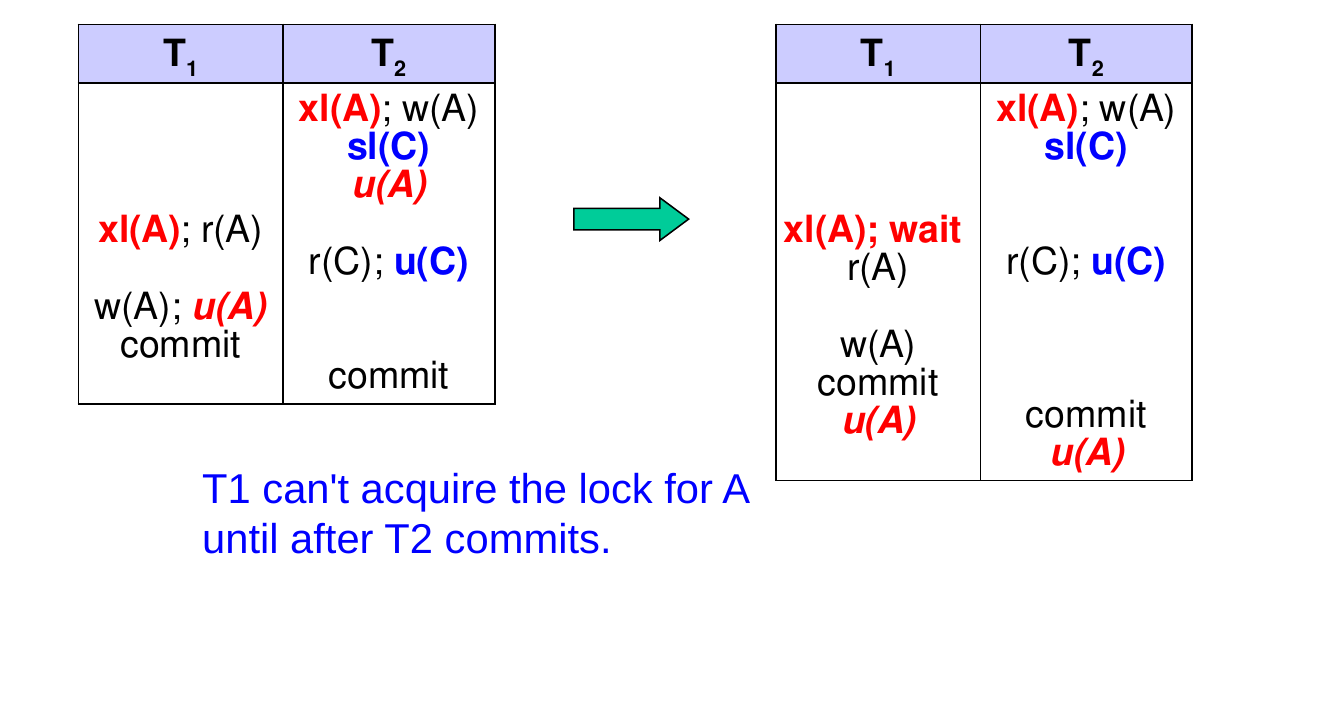
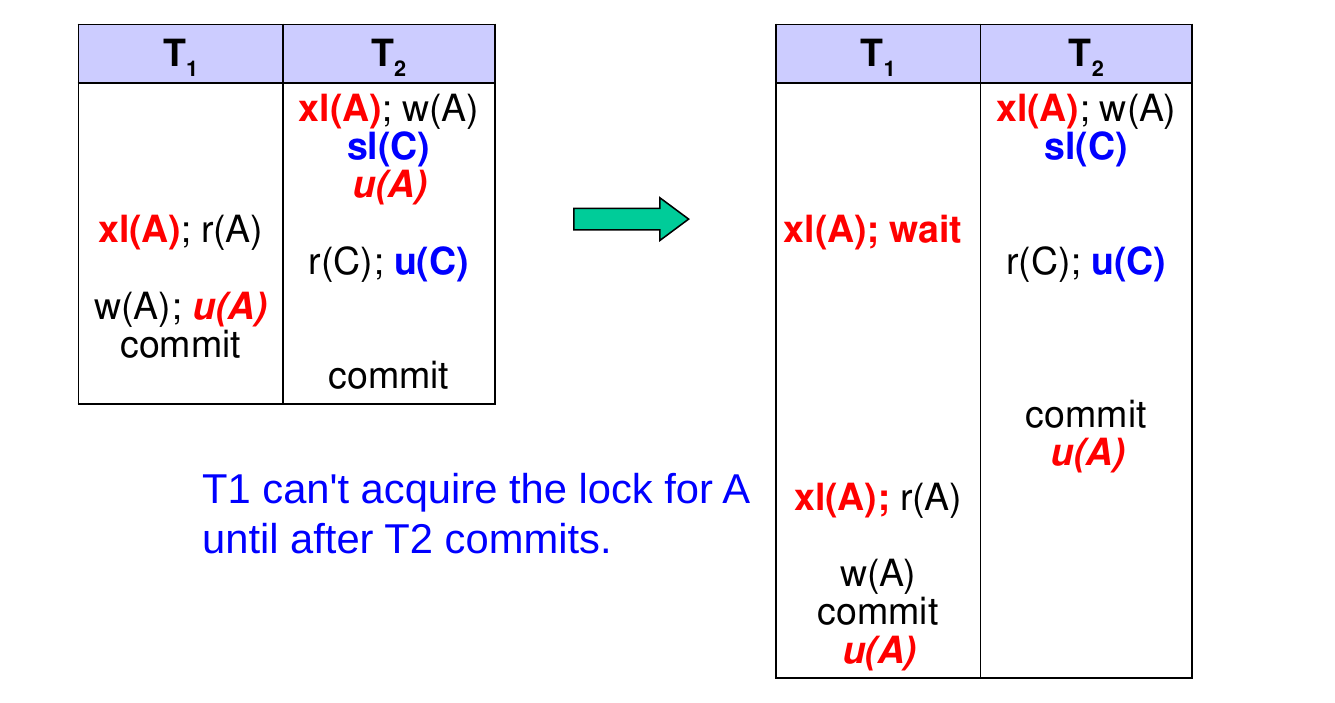
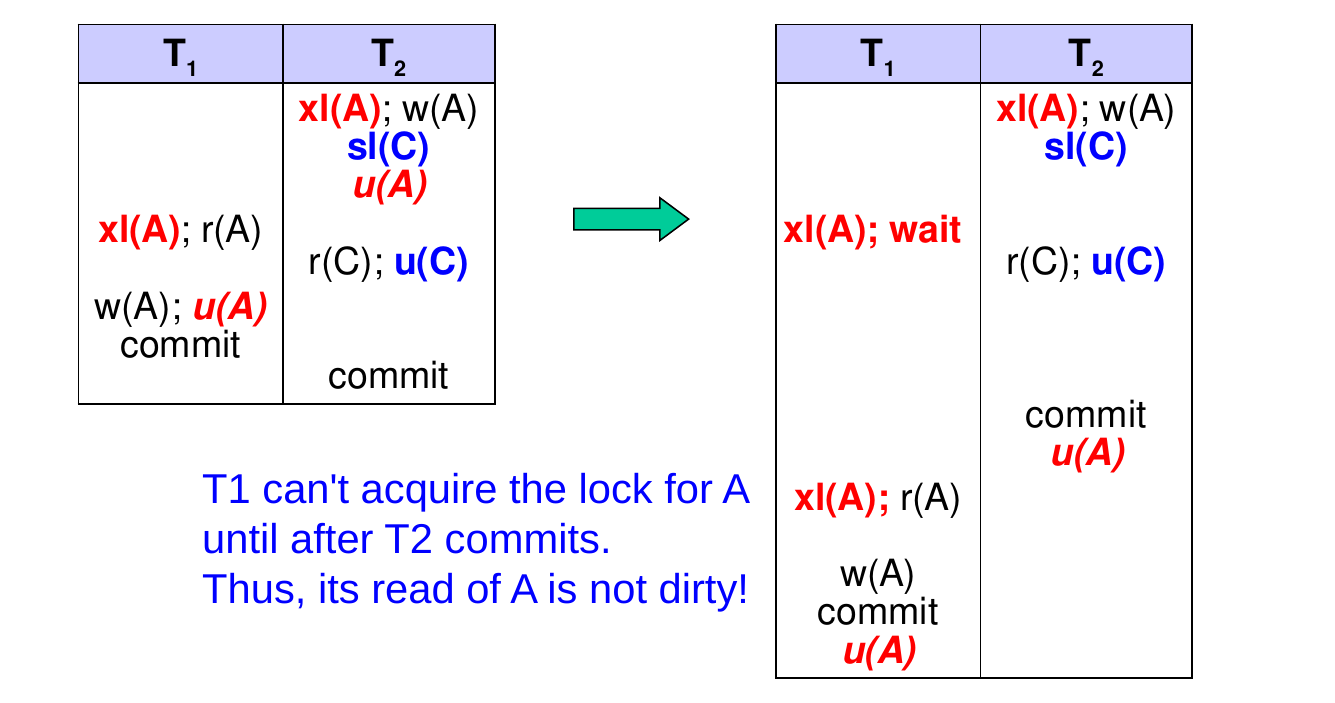
- strict + 2PL = strict 2PL
Rigorous Locking
- Under strict locking, it’s possible to get something like this:
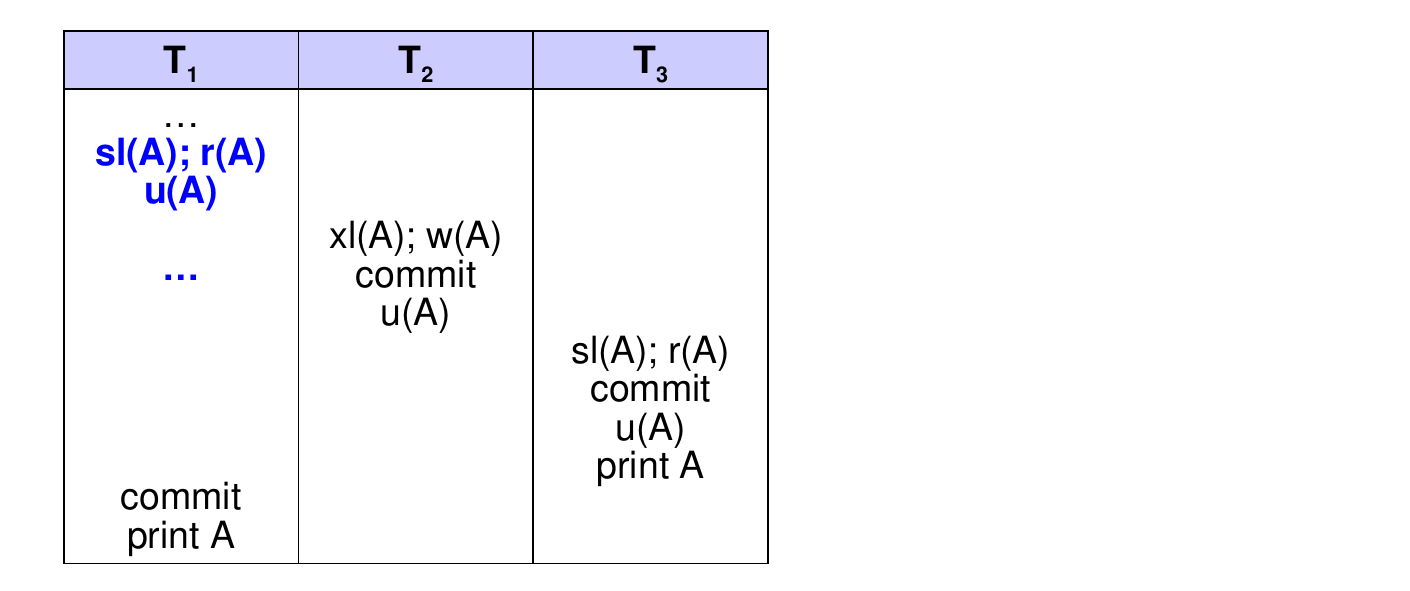
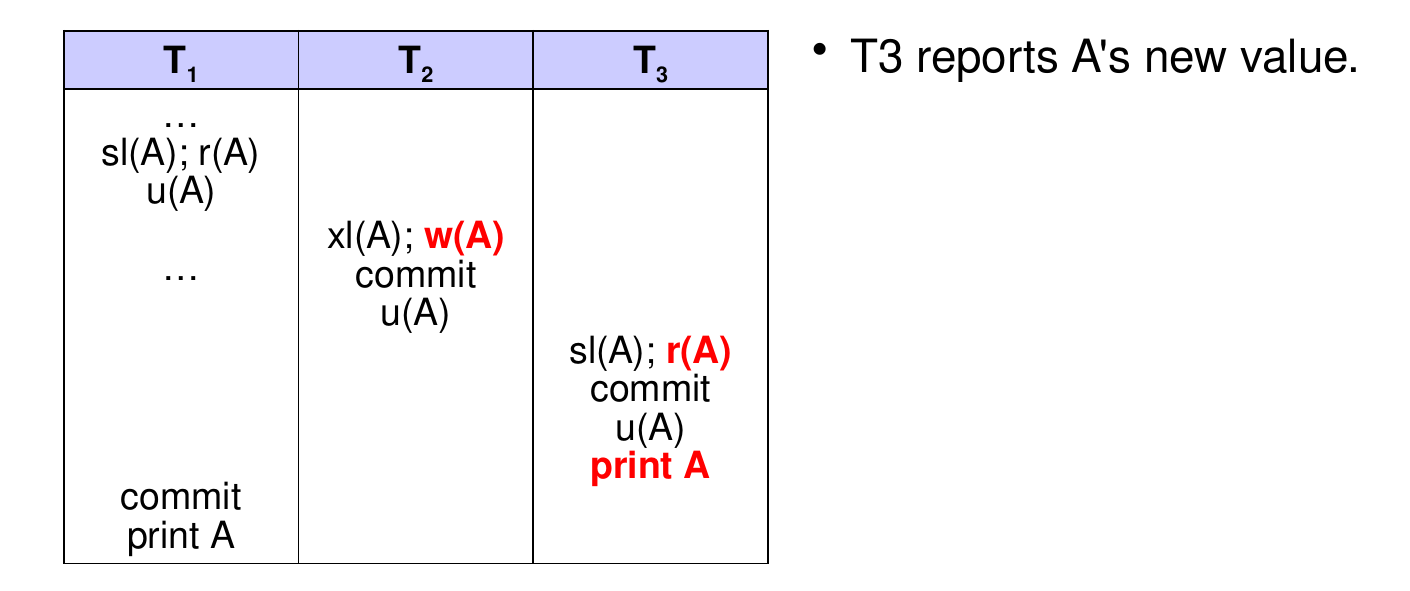
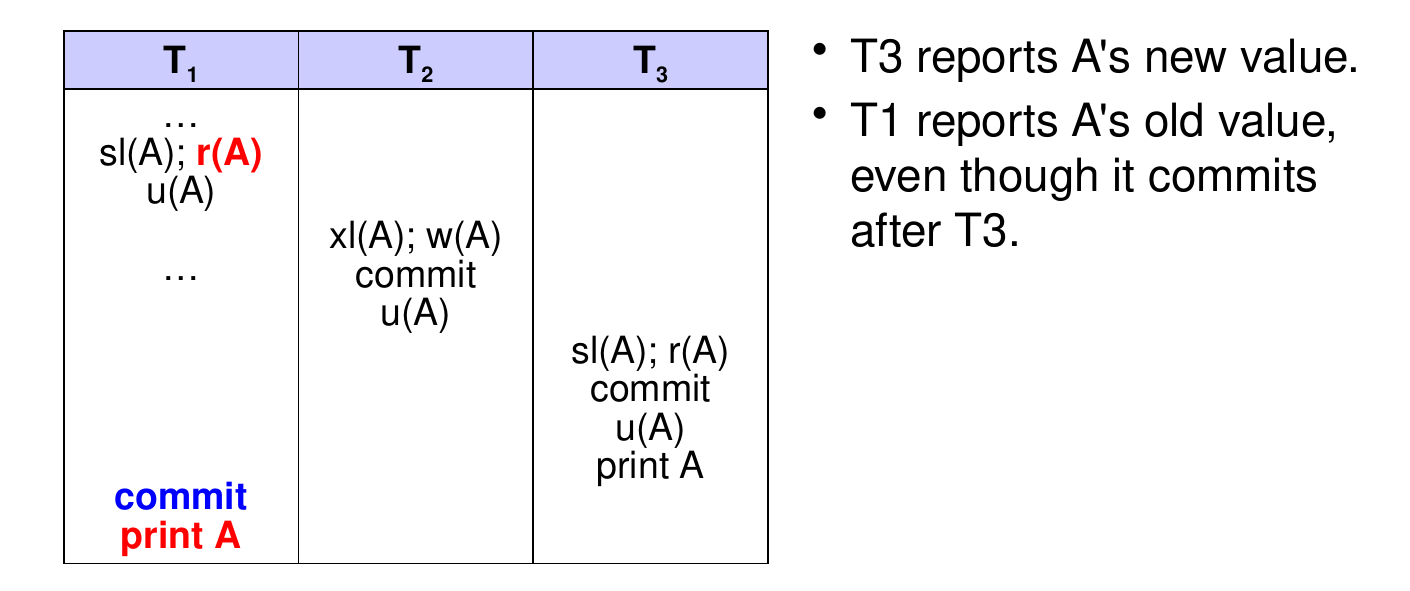
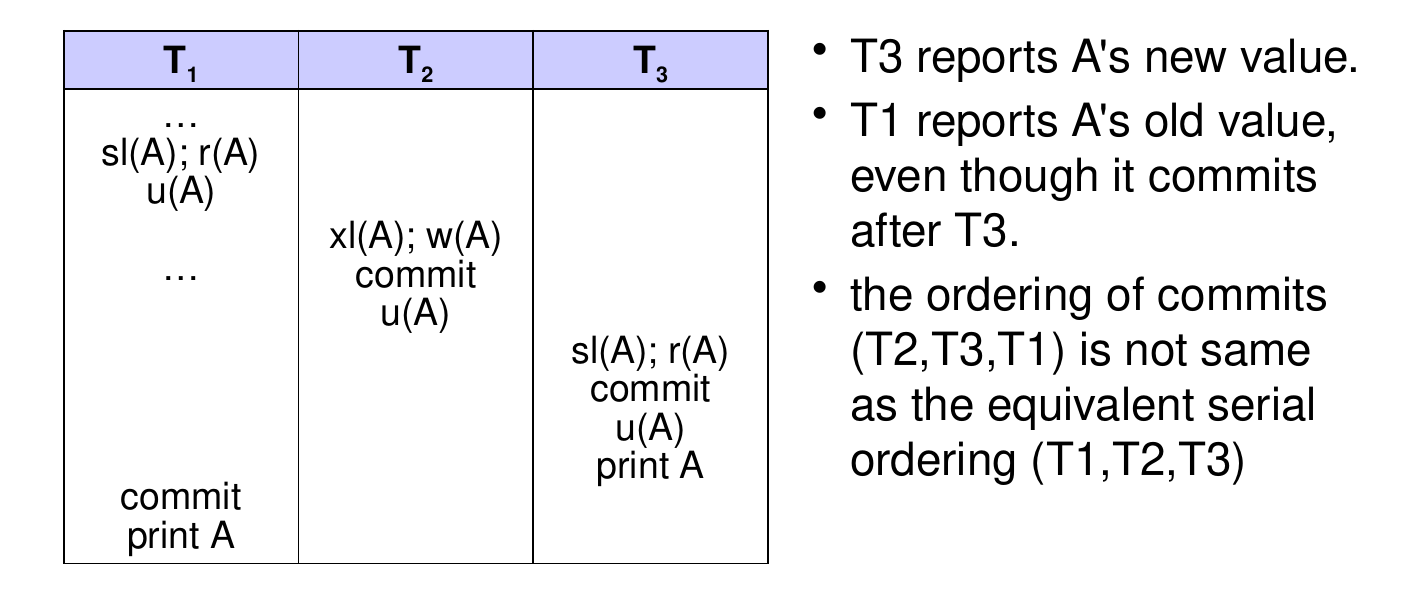
- Rigorous locking requires txns to hold all locks until commit/abort.
- It guarantees that transactions commit in the same order as they would in the equivalent serial schedule.
- rigorous + 2PL = rigorous 2PL
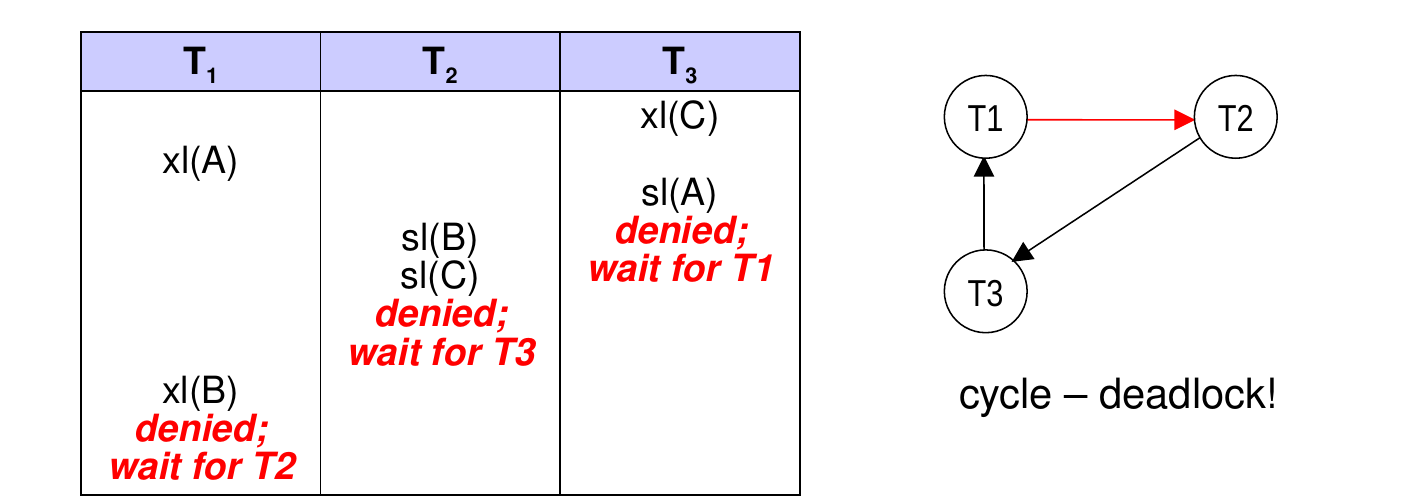
Deadlock
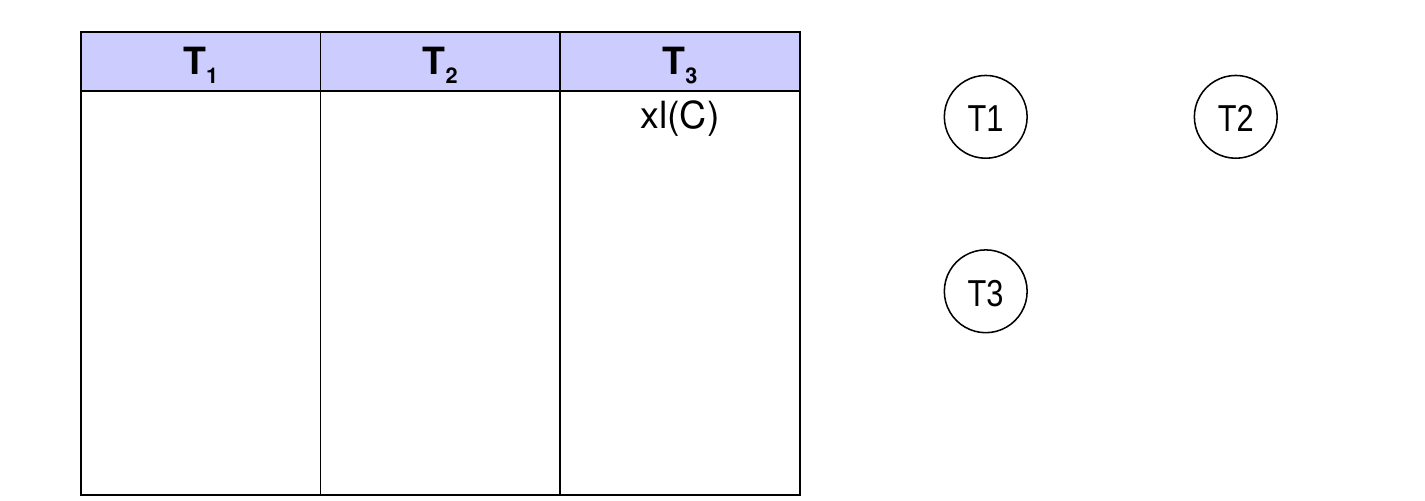
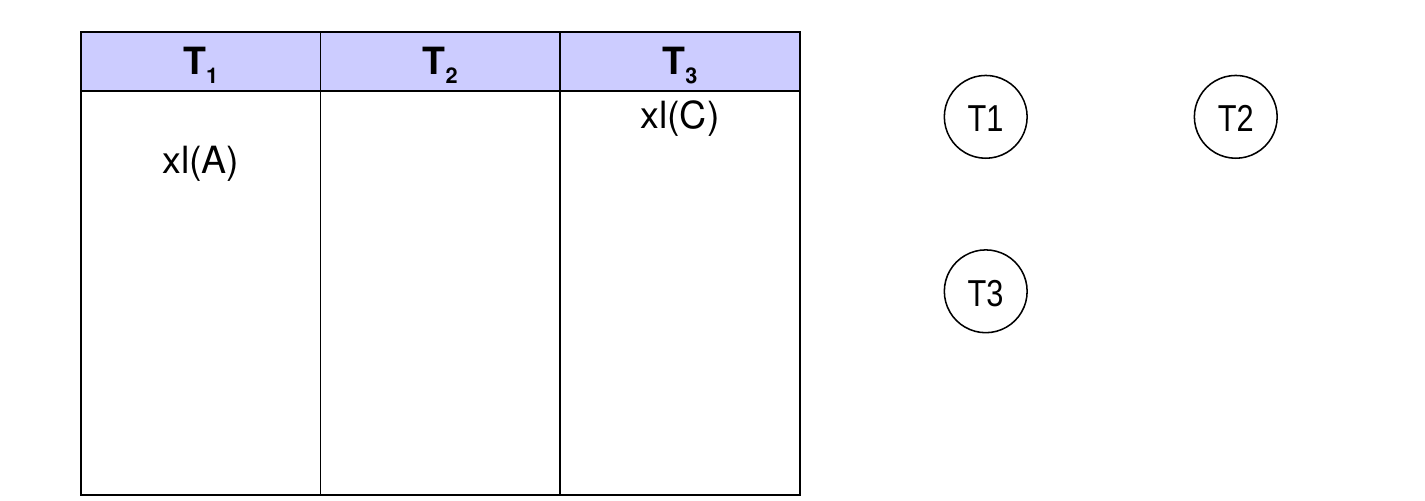
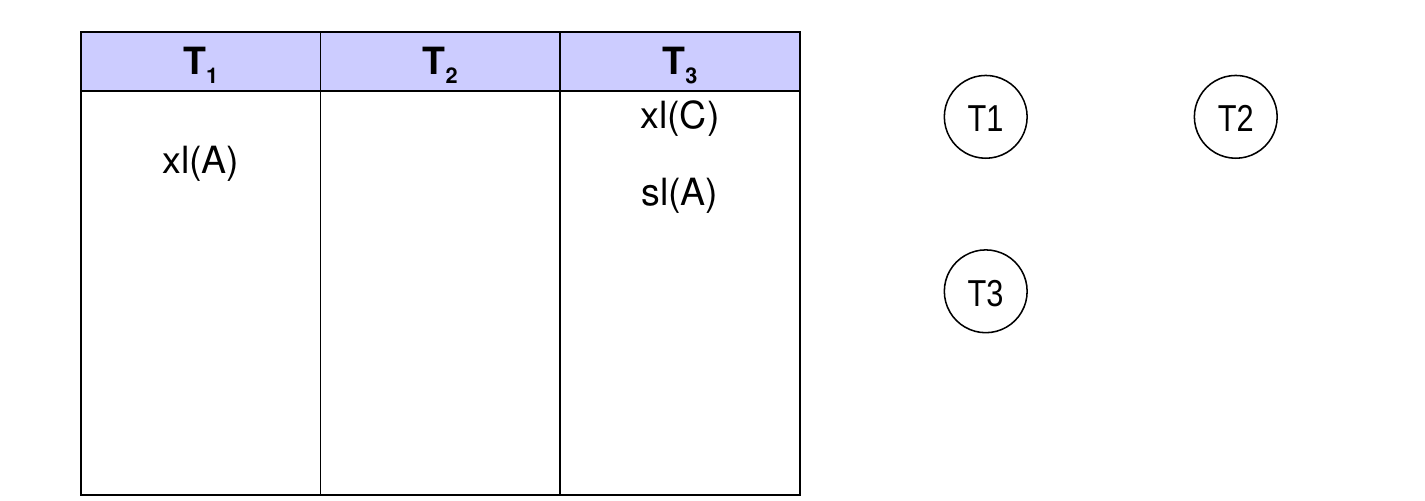
- Consider the following schedule:
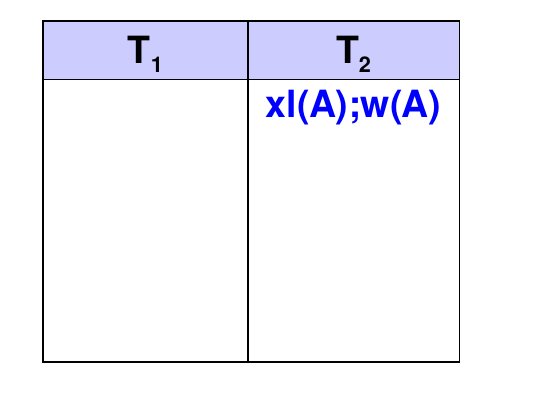
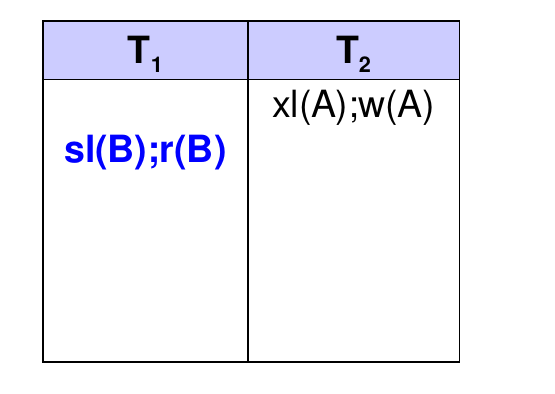
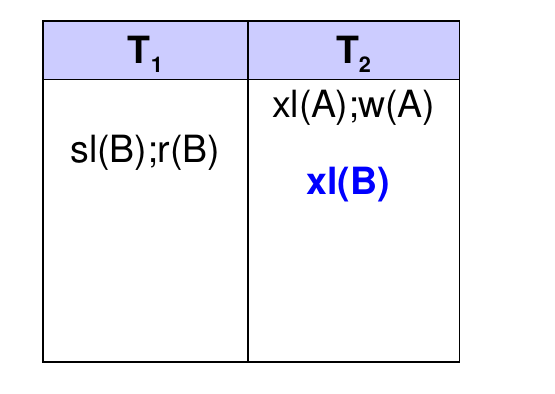
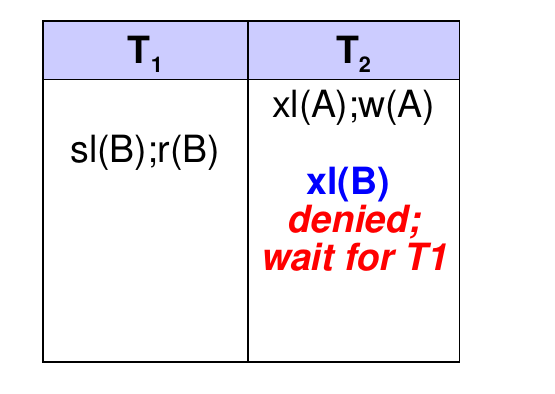
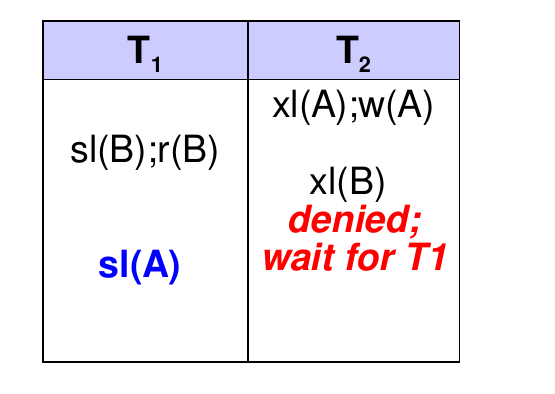
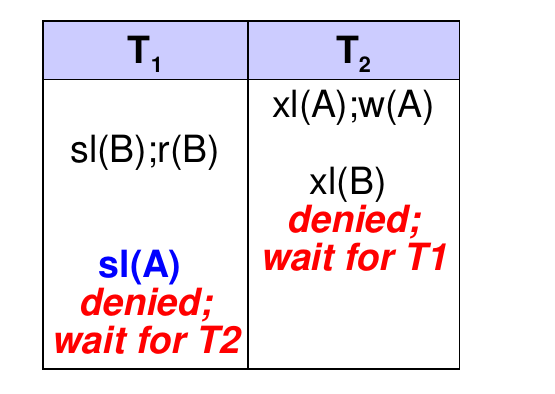
- This schedule produces deadlock.
- T1 is waiting for T2 to unlock A
- T2 is waiting for T1 to unlock B
- neither can make progress!
- We’ll see later how to deal with this.
Lock Upgrades
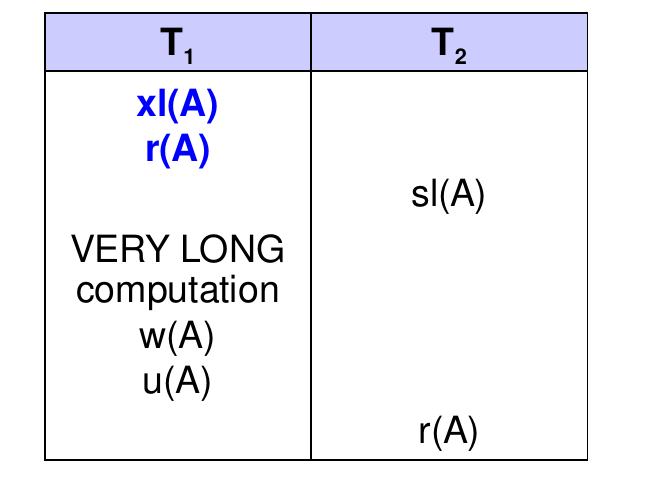
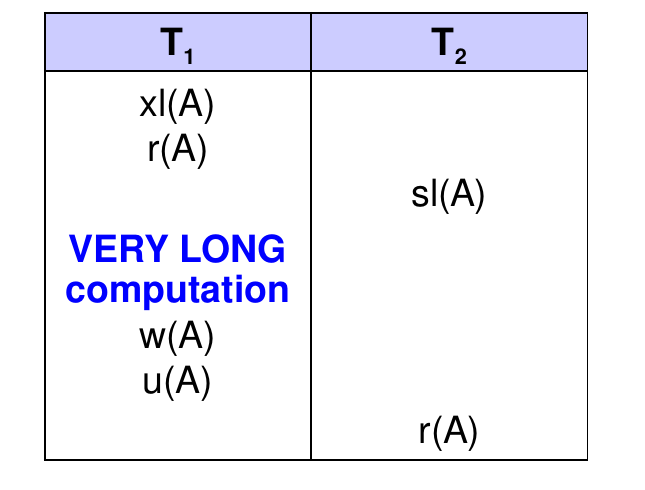
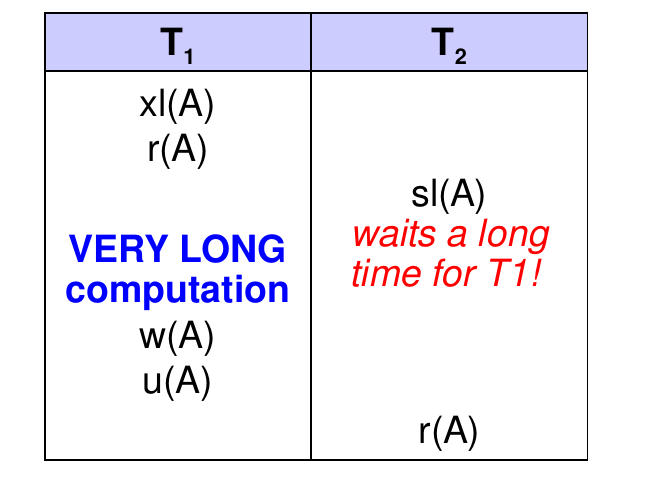
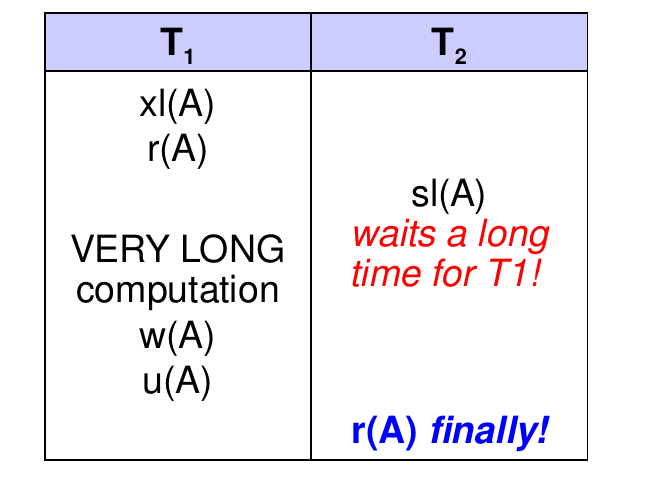
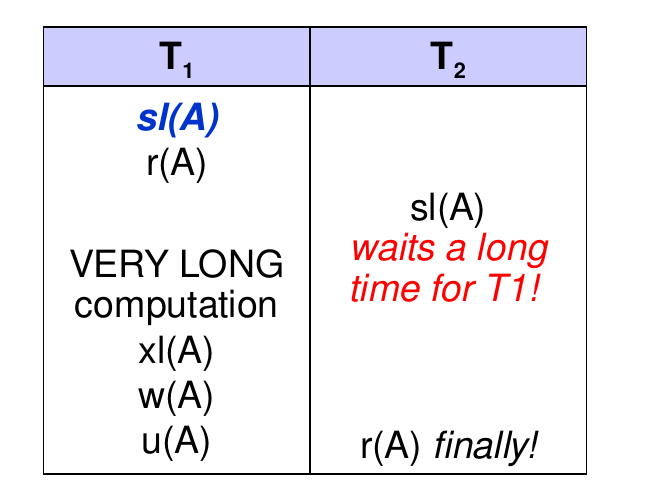
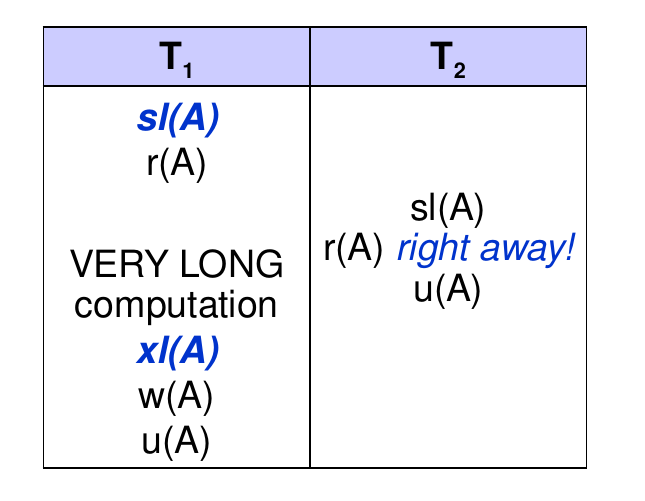
- It can be problematic to acquire an exclusive lock earlier than necessary.
- Instead:
- acquire a shared lock to read the item
- upgrade to an exclusive lock when you need to write
- may need to wait to upgrade if others hold shared locks
- Note: we’re not releasing the shared lock before acquiring the exclusive one. why not?
- doing so would violate 2PL!
A Possible Problem with Lock Upgrades
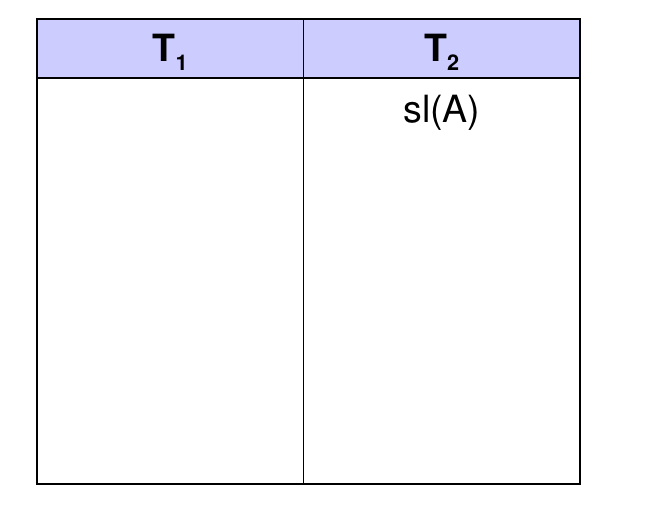
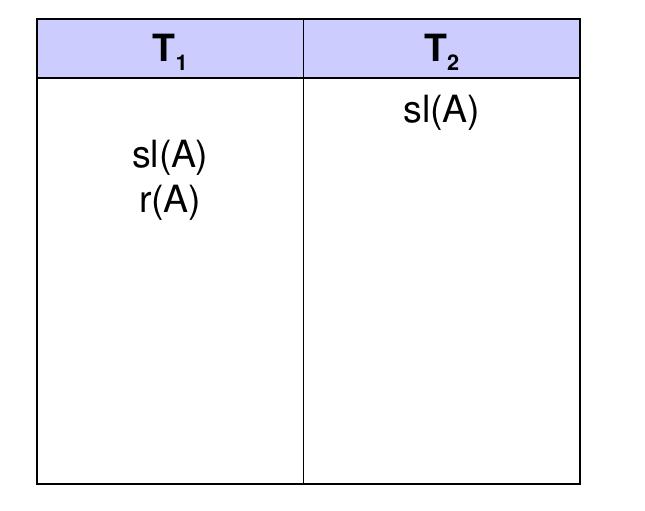
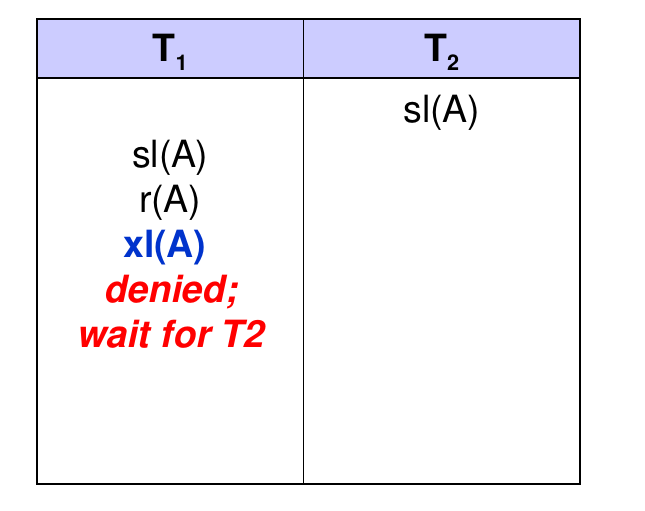
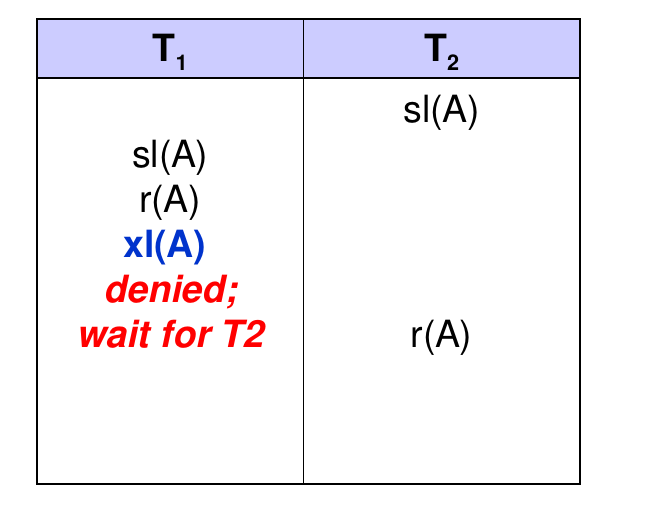
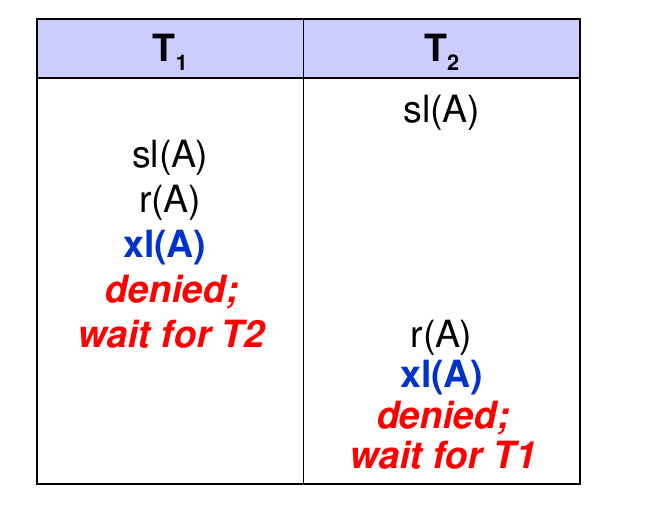
- Upgrades can lead to deadlock:
- two txns each hold a shared lock for an item
- both txns attempt to upgrade their locks
- each txn waits for the other to release its shared lock
- deadlock!
- Example:
Update Locks (cont.)
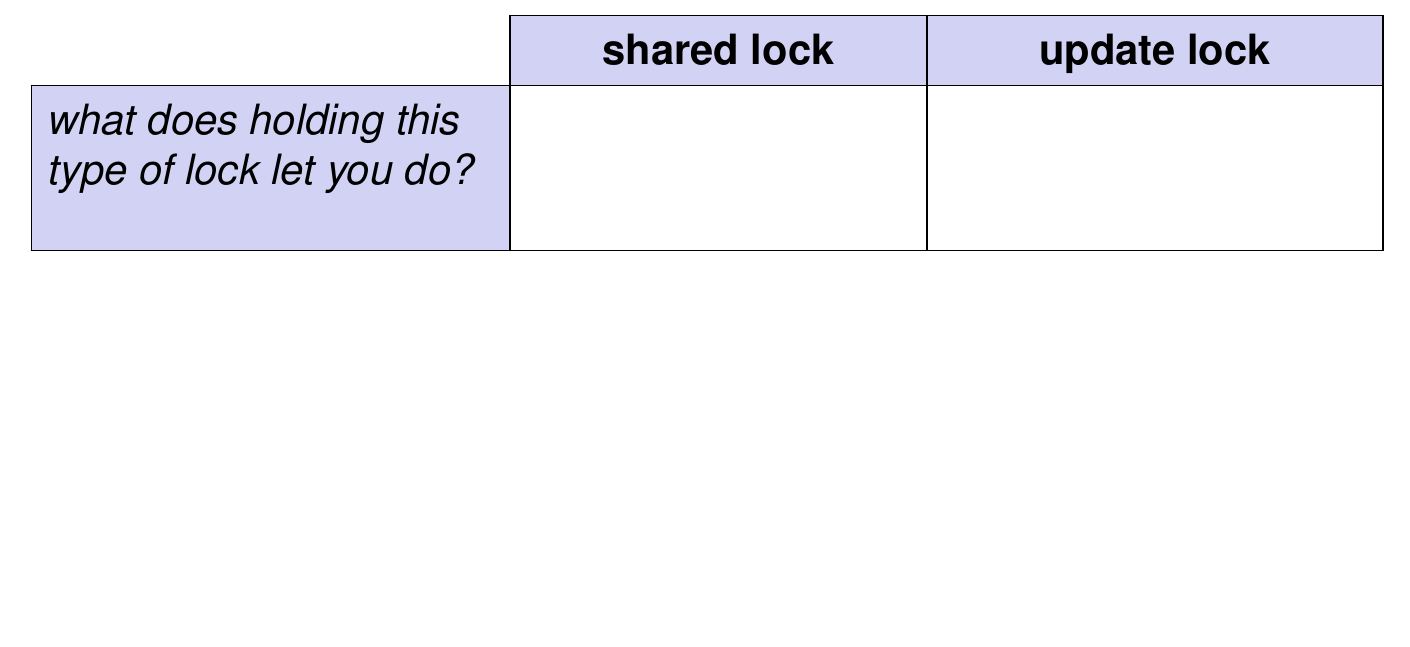
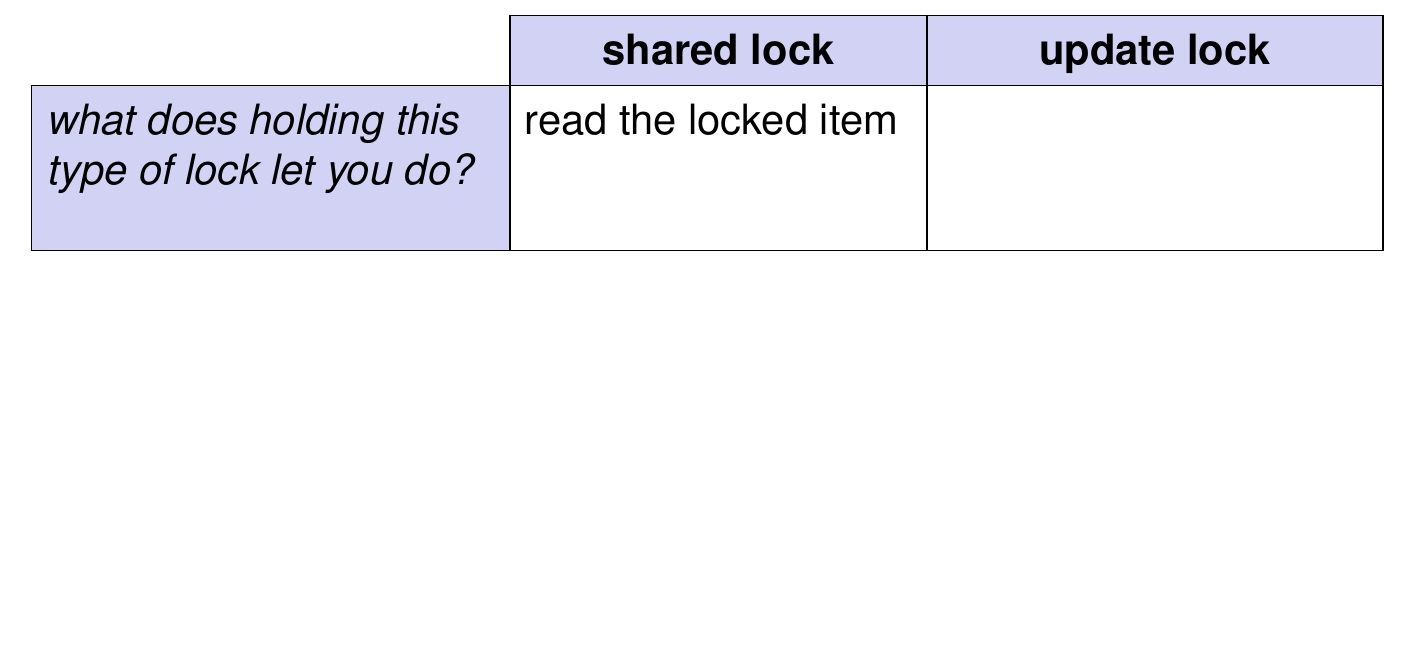
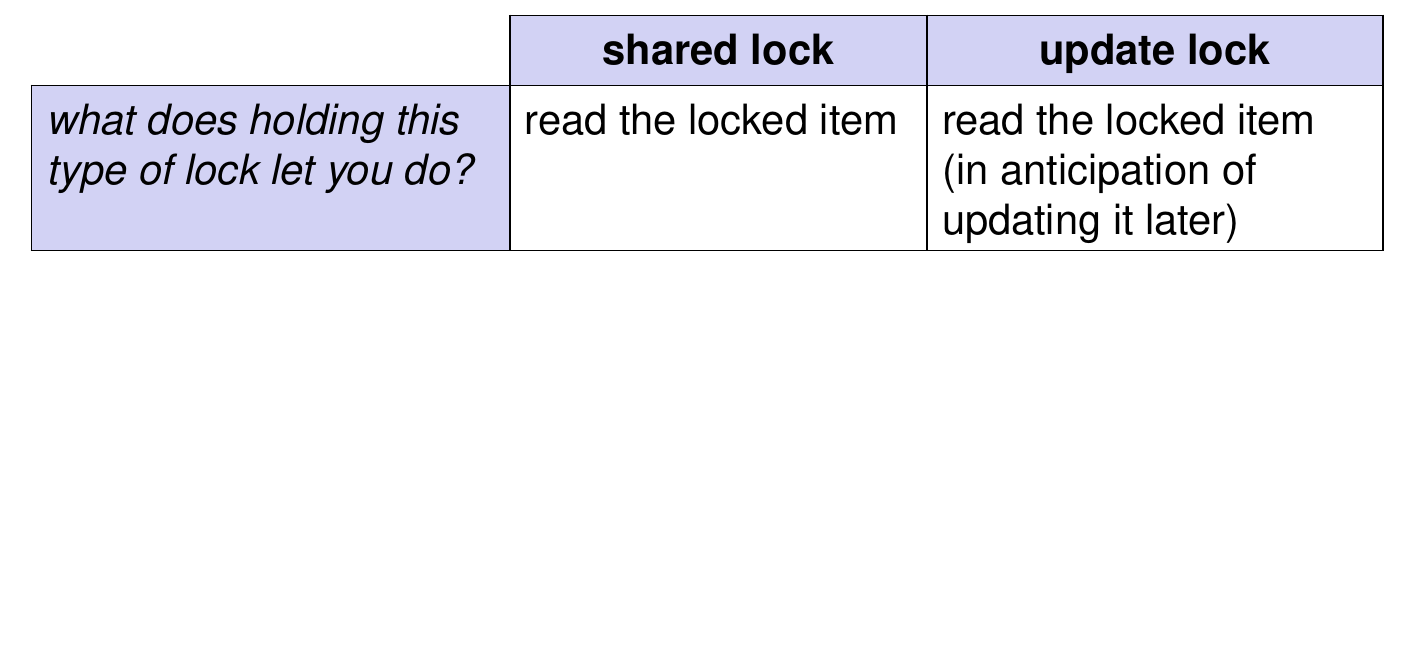
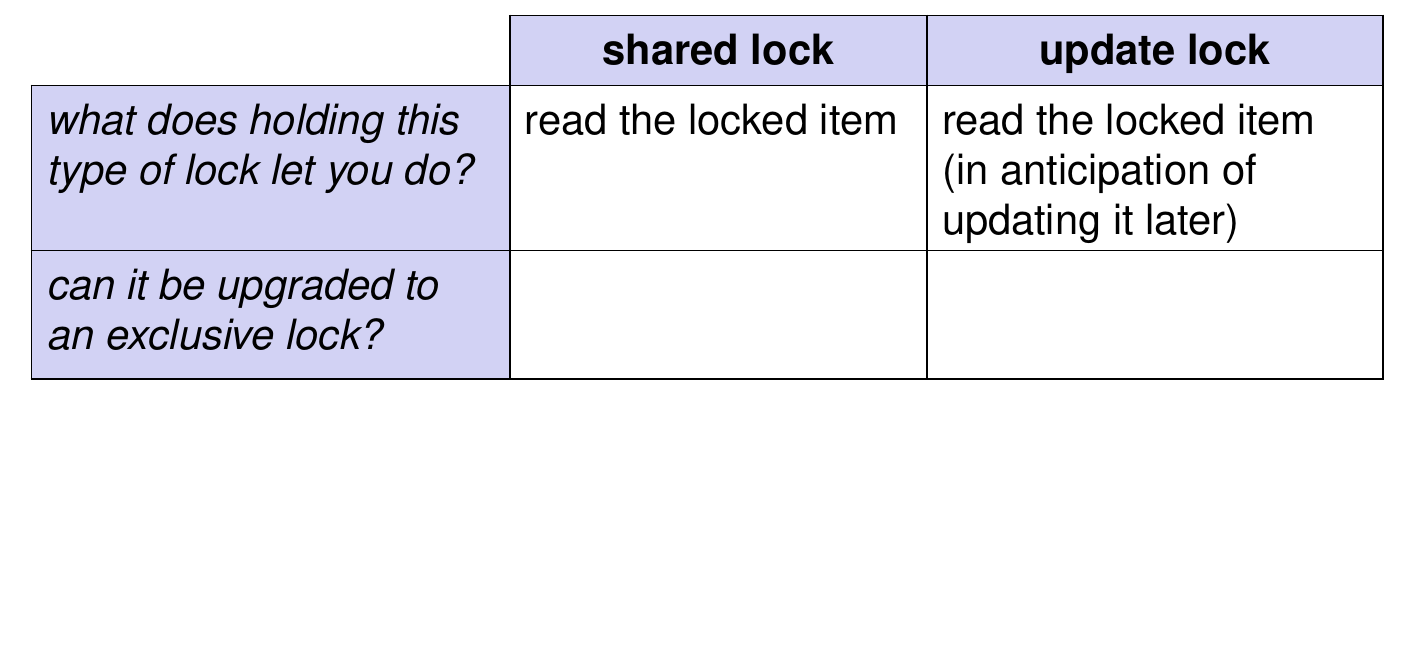
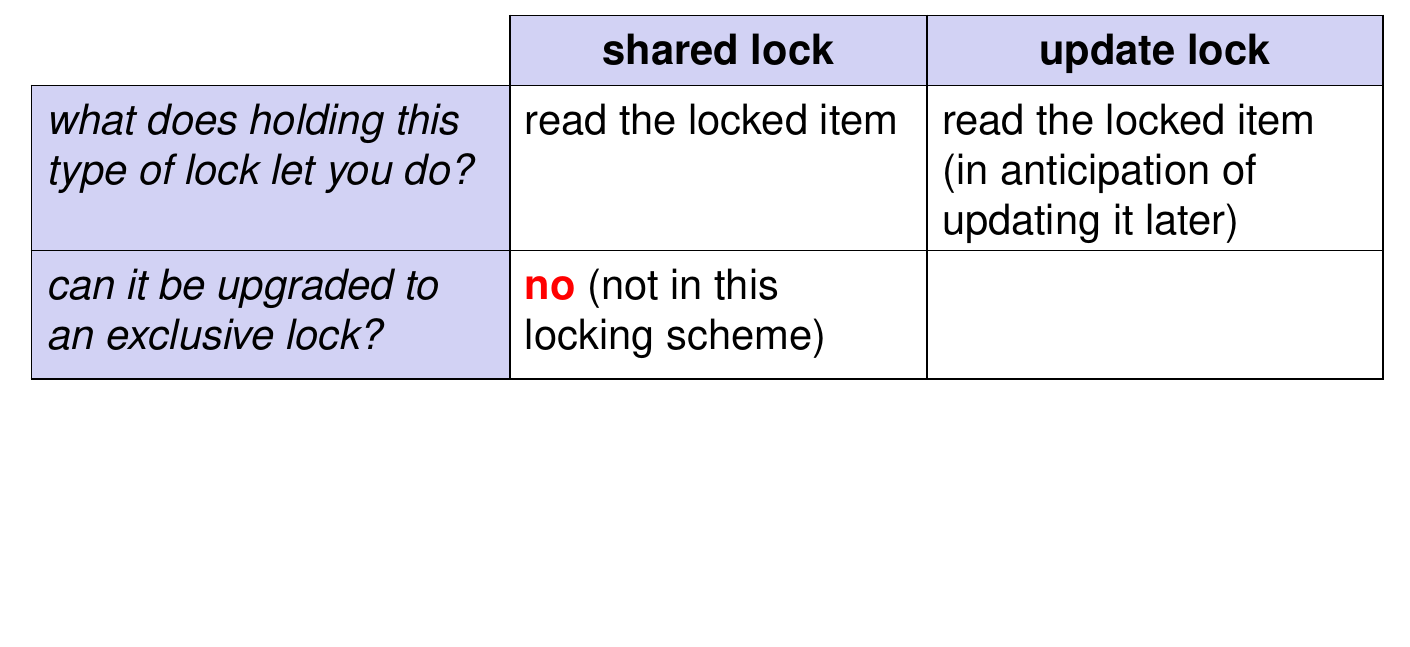
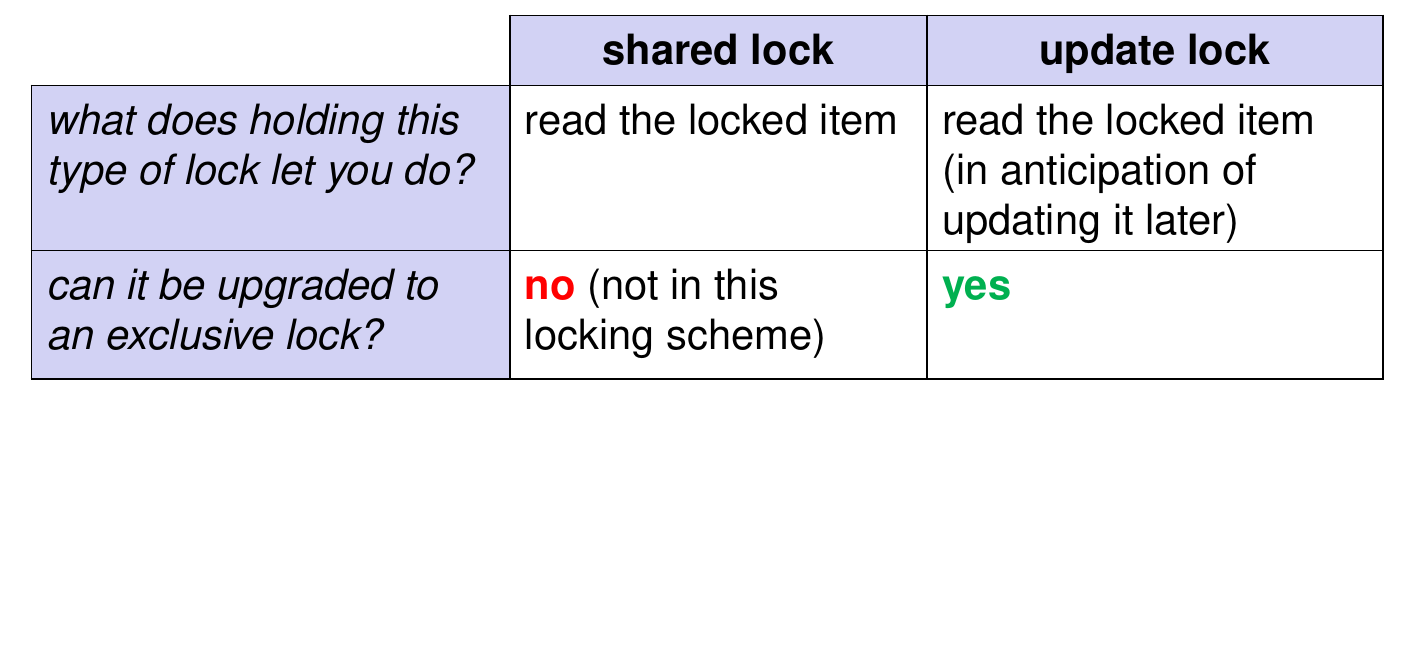
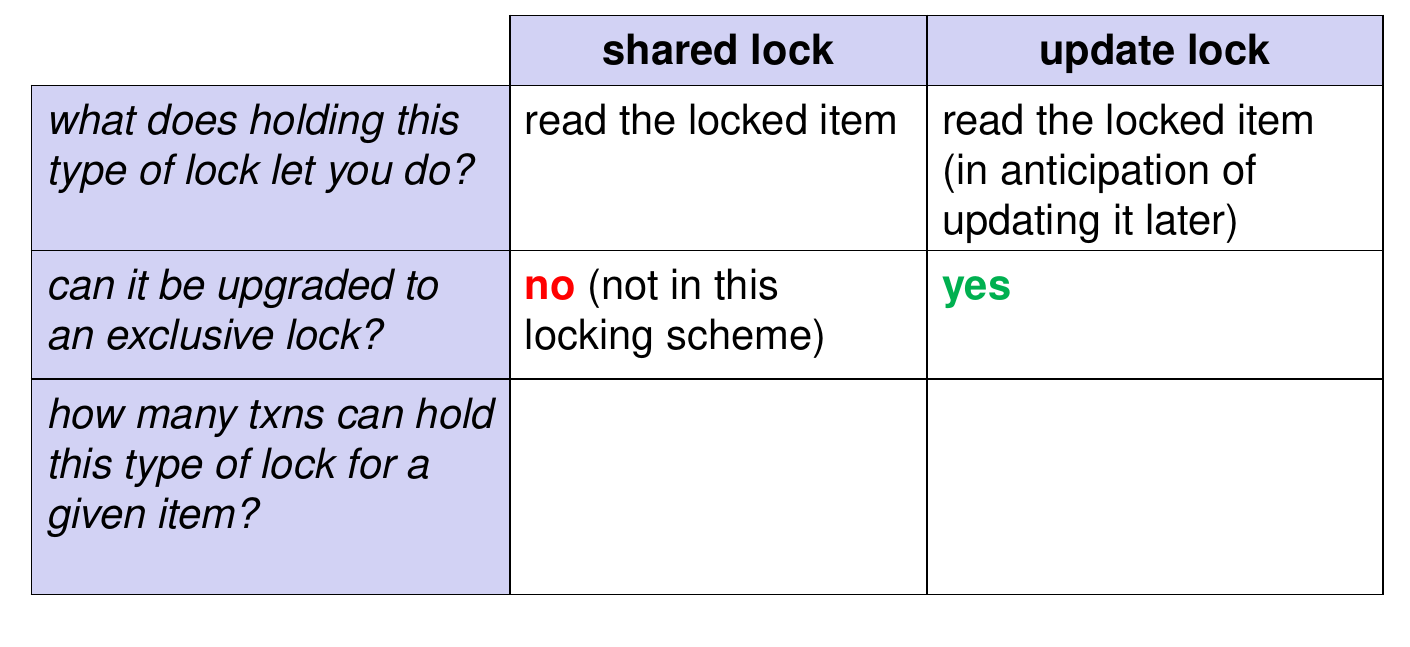
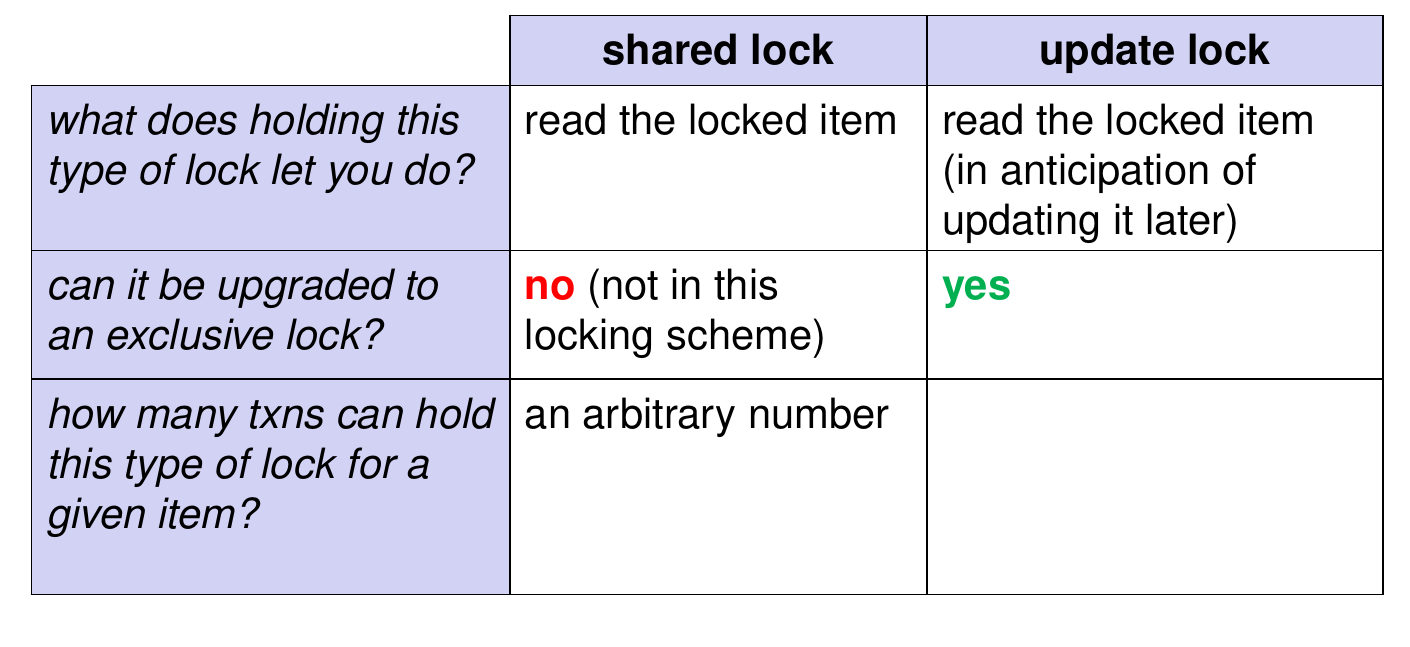
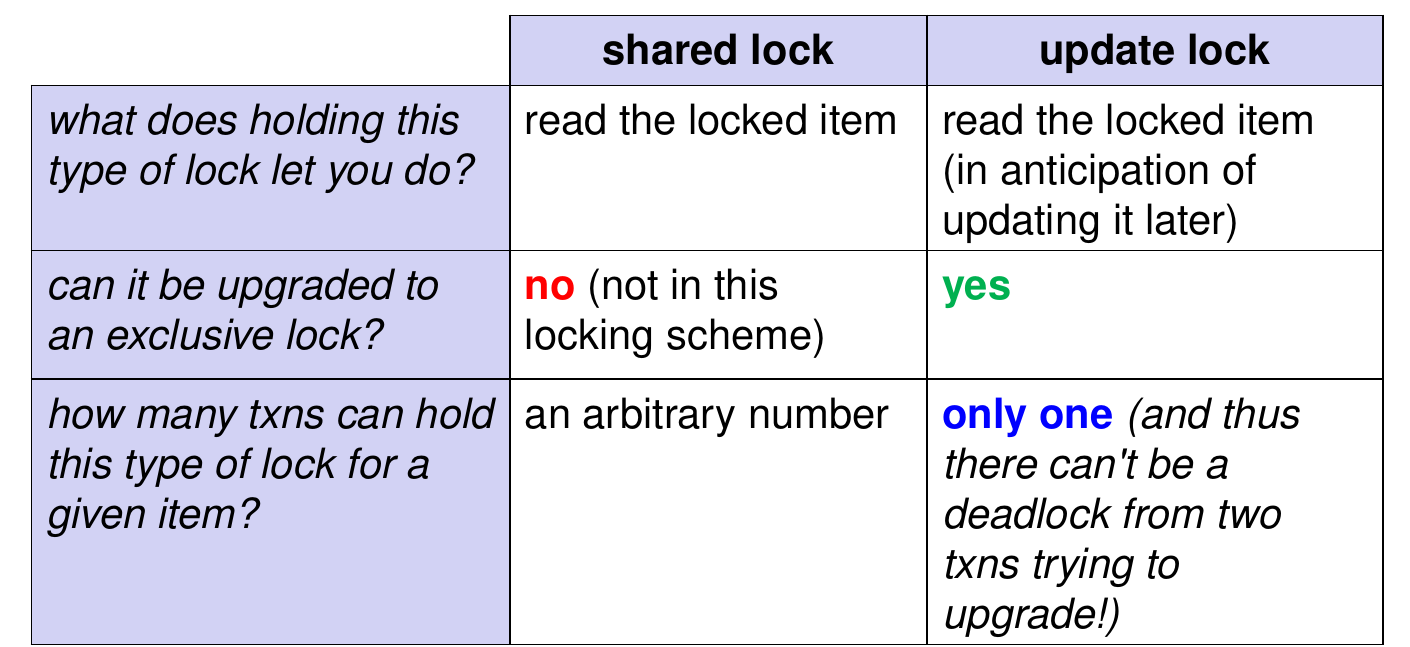
- To avoid deadlocks from lock upgrades, some systems provide two different lock modes for reading:
- shared locks – used if you only want to read an item
- update locks – used if you want to read an item and later update it
Compatibility Matrix with Update Locks
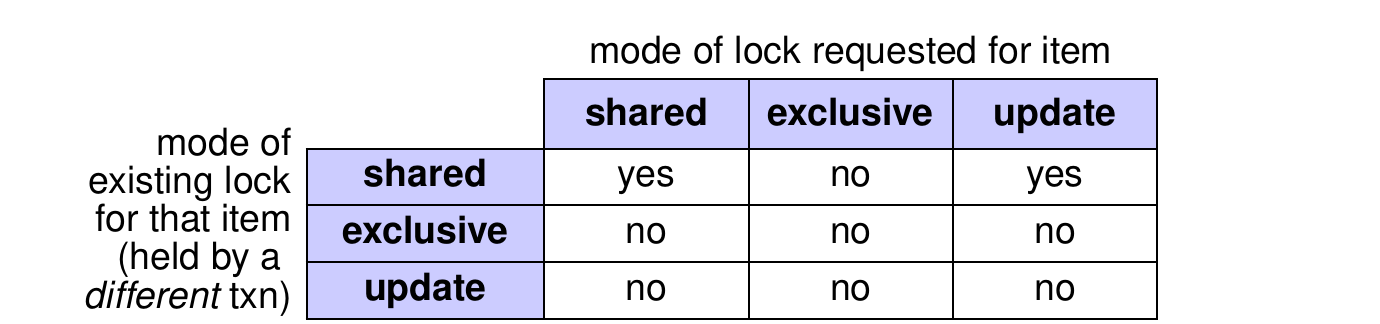
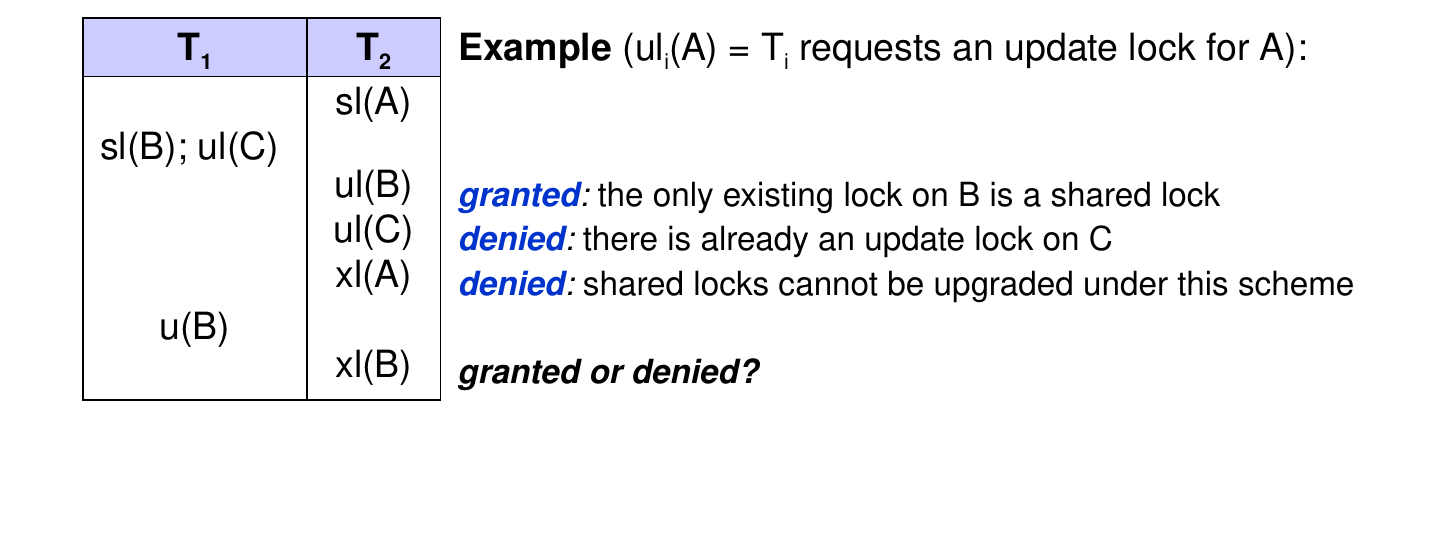
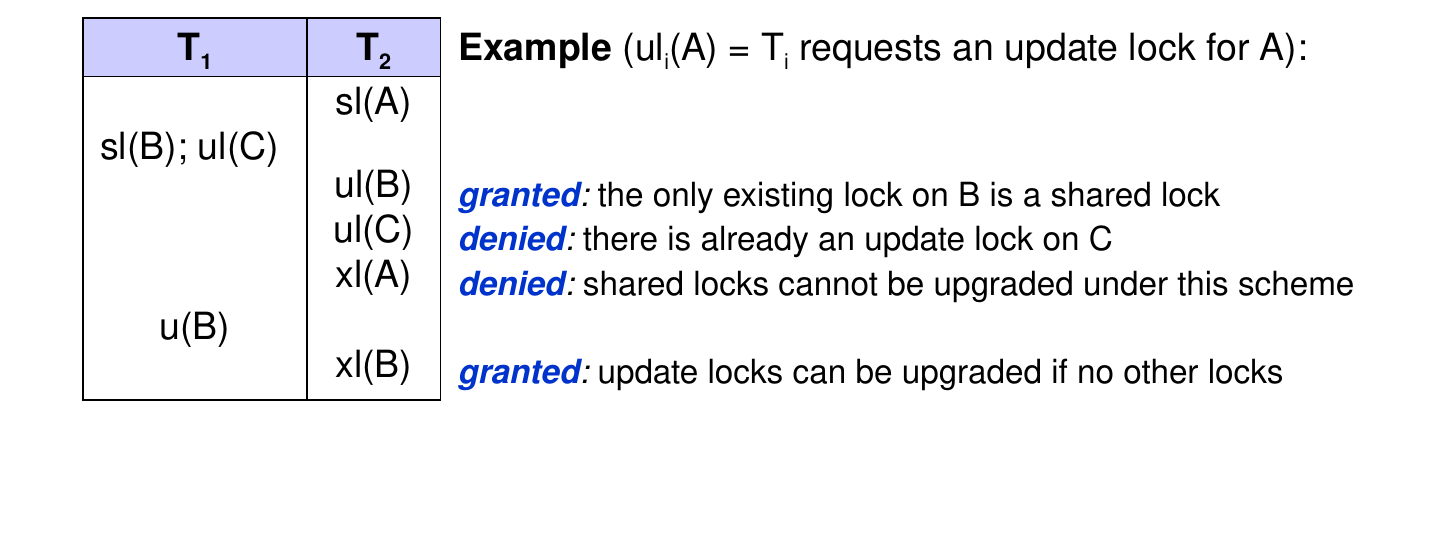
- When there are one or more shared locks on an item, a txn can still acquire an update lock for that item.
- allows for concurrency on the read portion of RMW txns
- There can’t be more than one update lock on an item.
- prevents deadlocks when upgrading from update to exclusive
- If a txn holds an update lock on an item, other txns can’t acquire any new locks on that item.
- prevents the RMW txn from waiting indefinitely to upgrade
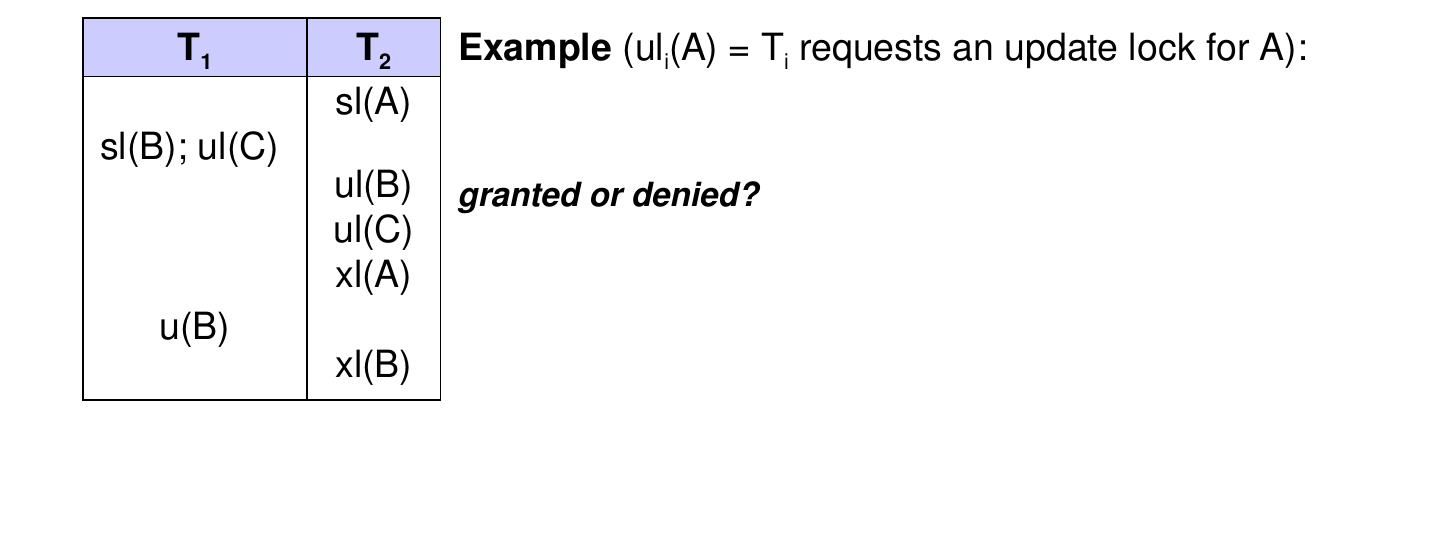
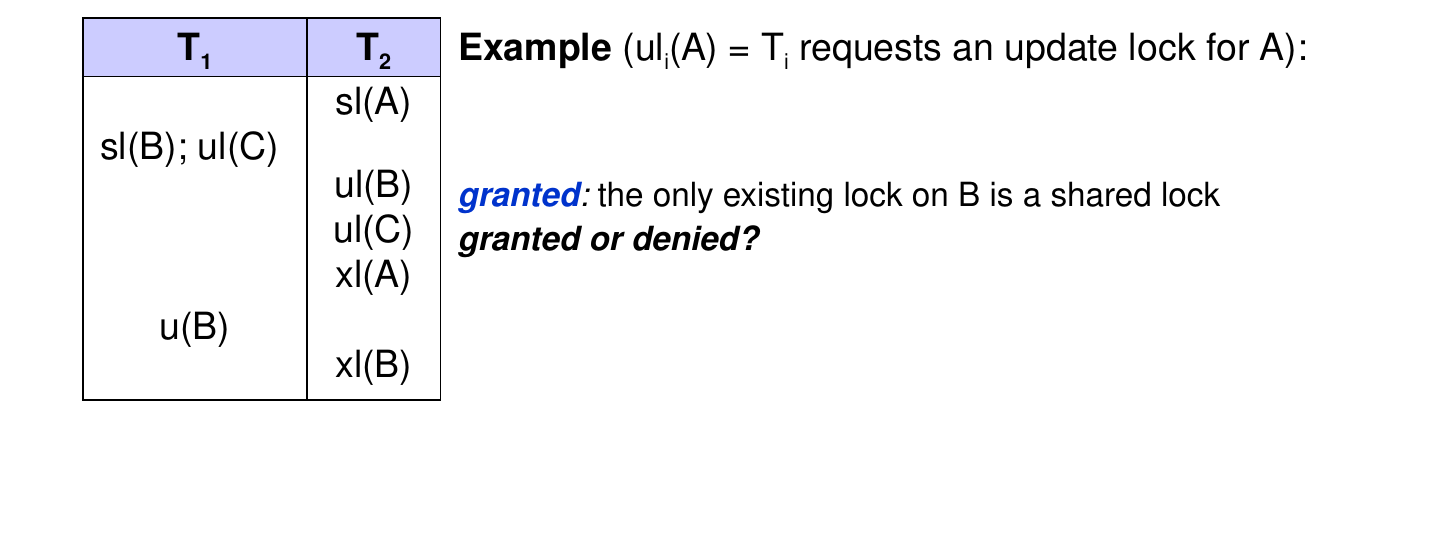
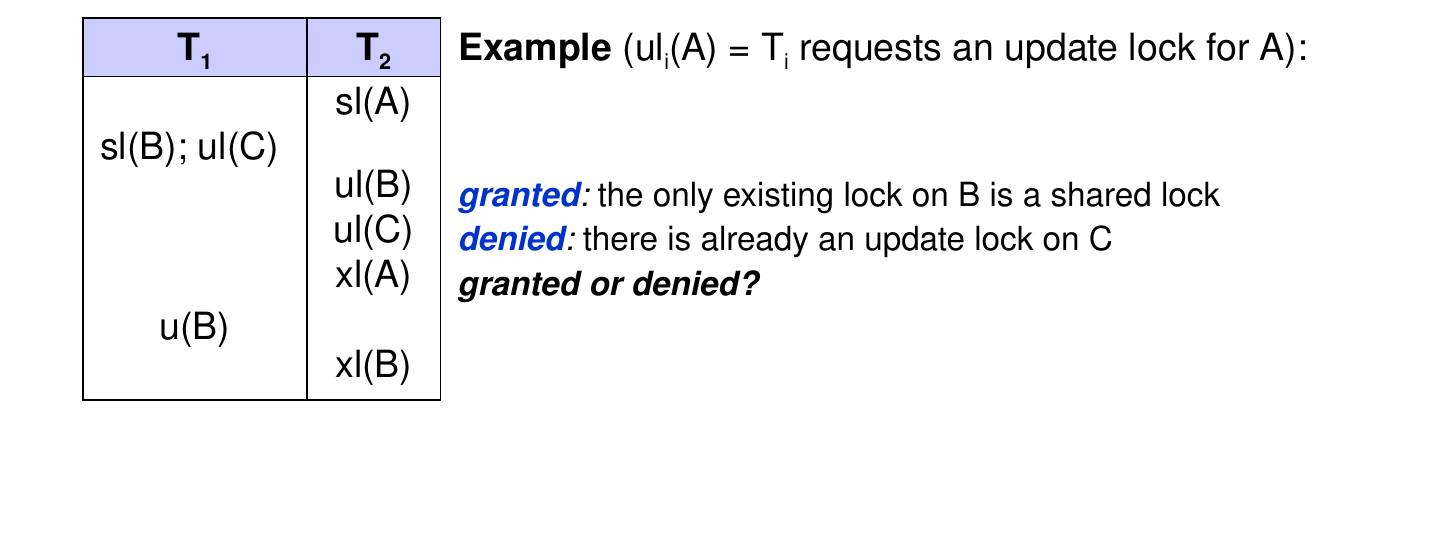
Example of Using Update Locks
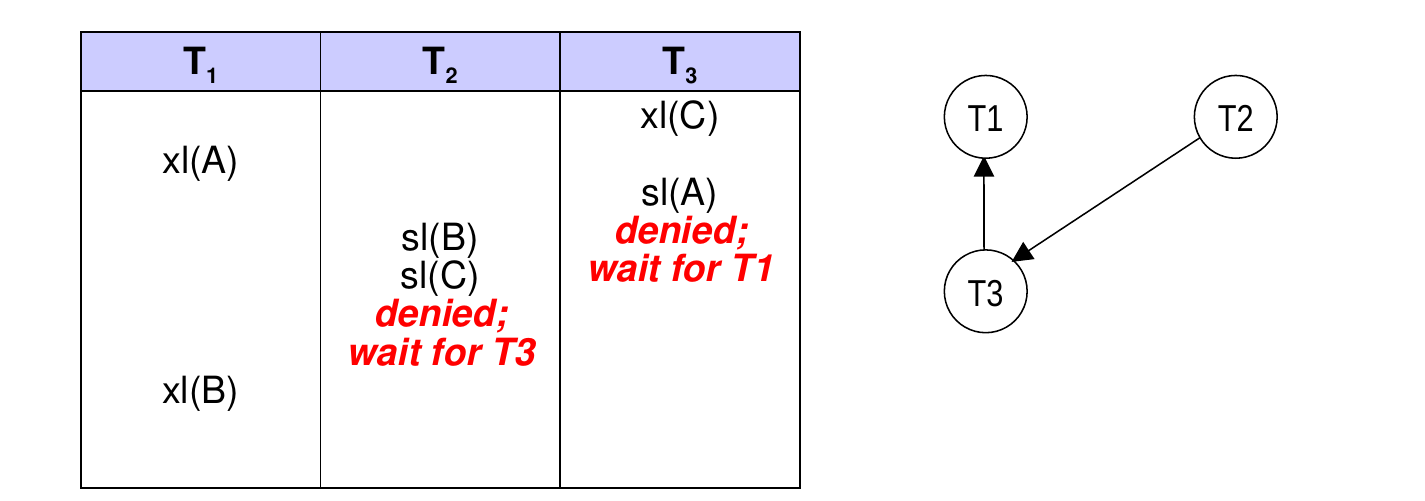
Detecting and Handling Deadlocks
- When DBMS detects a deadlock, it rolls back one of the deadlocked transactions.
- How does it know when there is a deadlock?
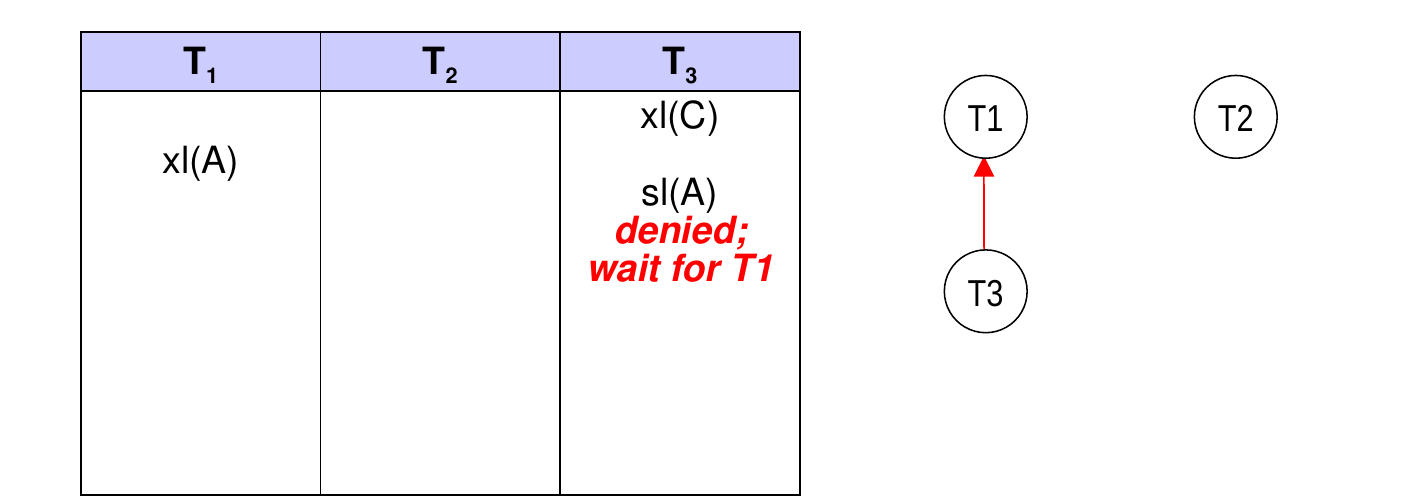
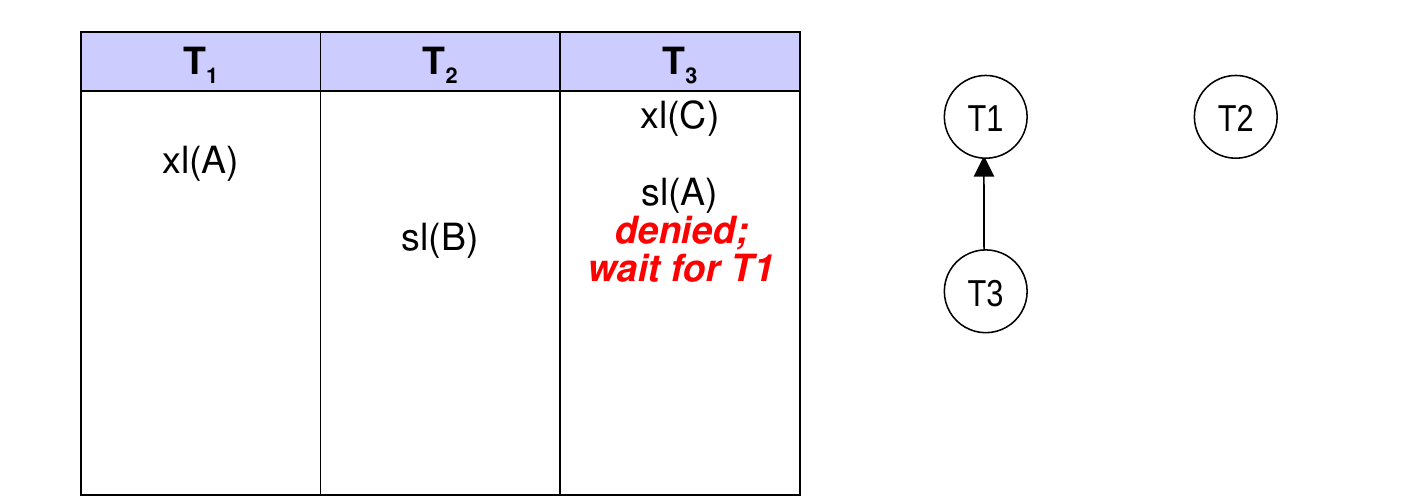
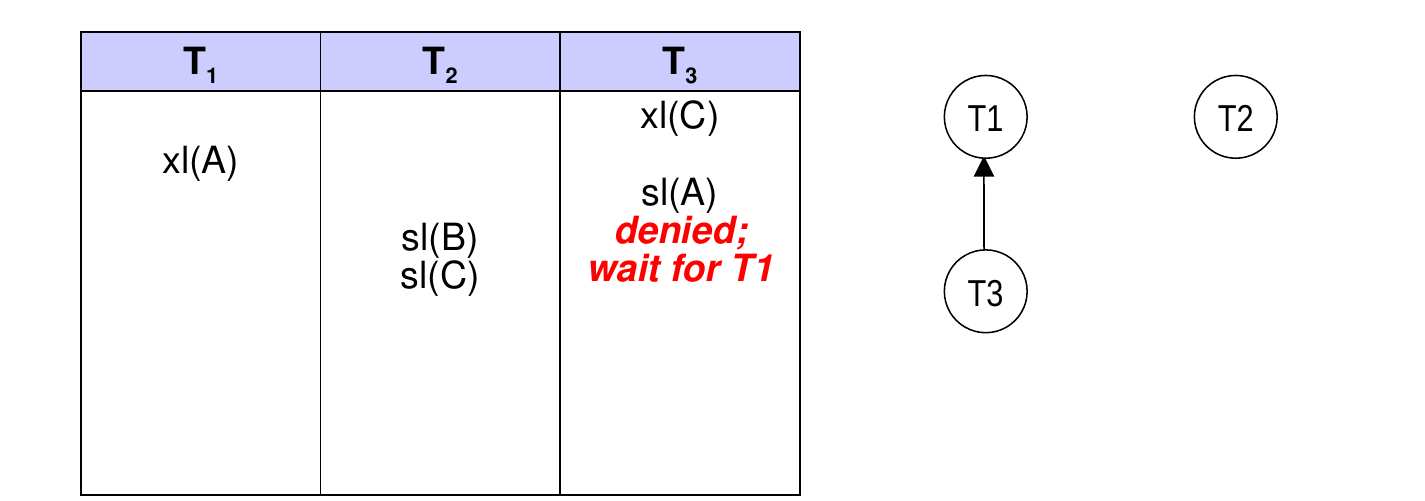
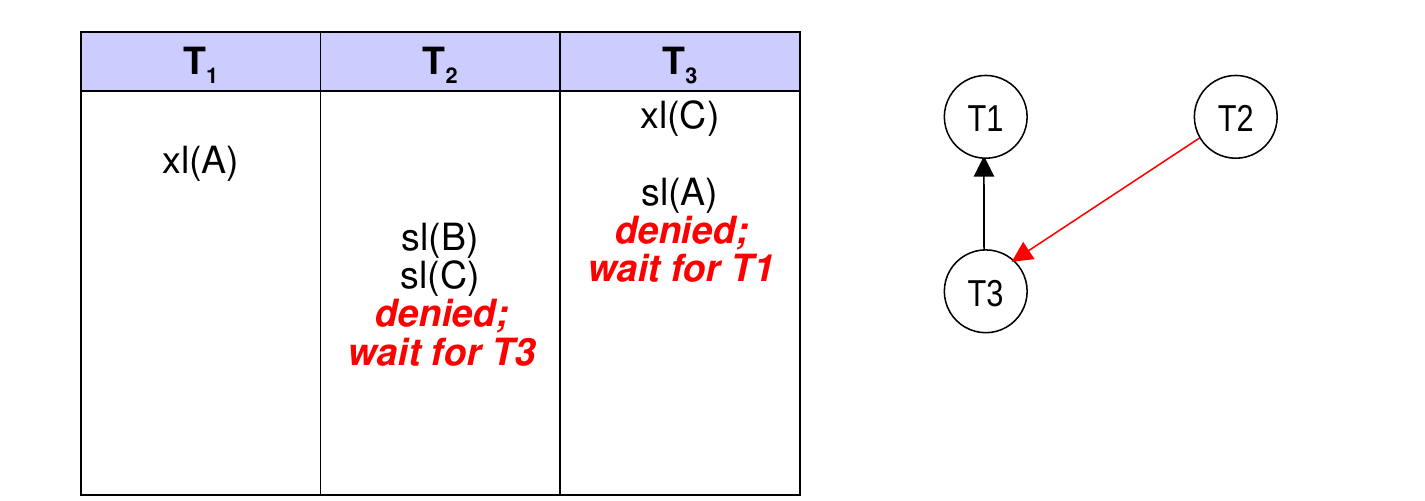
- Can use a waits-for graph to detect the deadlock.
- the vertices are the transactions
- an edge from T1 → T2 means T1 is waiting for T2 to release a lock
- a cycle indicates a deadlock
- Example: