Timestamp-Based

Concurrency Control

Data Science 310

Boston University

Optimistic Concurrency Control

  • Locking is pessimistic.
    • assumes serializability will be violated
    • prevents transactions from performing actions that might violate serializability
  • example:

  • There are other approaches that are optimistic.
    • assume serializability will be maintained
    • only interfere with a transaction if it actually does something that violates serializability
  • deadlock detection+recovery is one such example
  • We’ll look at one such approach – one that uses timestamps.

Timestamp-Based Concurrency Control

  • In this approach, the DBMS assigns timestamps to txns.
    • TS(T) = the timestamp of transaction T
    • the timestamps must be unique
  • TS(T1) < TS(T2) if and only if T1 started before T2
  • The system ensures that all operations are consistent with a serial ordering based on the timestamps.
  • if TS(T1) < TS(T2), the DBMS only allows actions that are consistent with the serial schedule T1; T2

Timestamp-Based Concurrency Control (cont.)

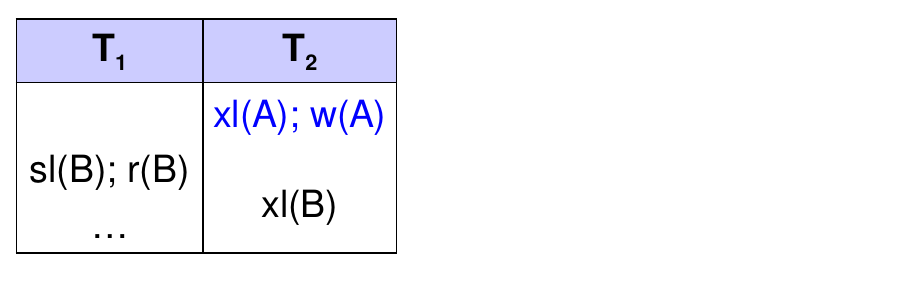
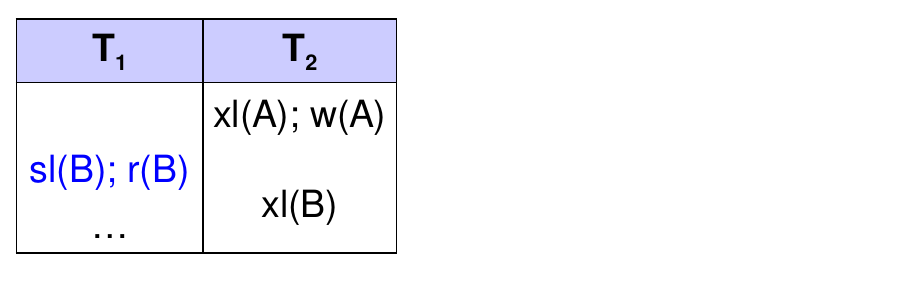
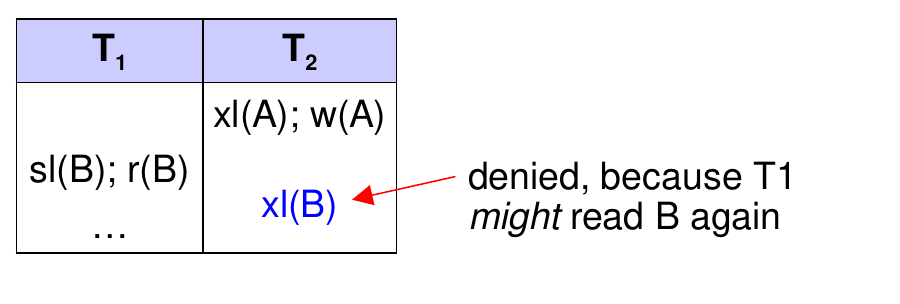
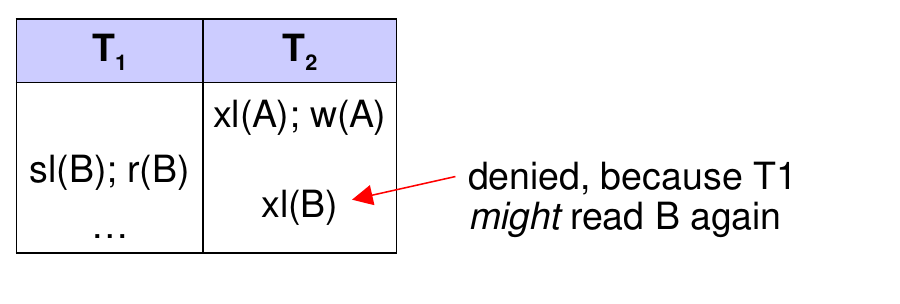
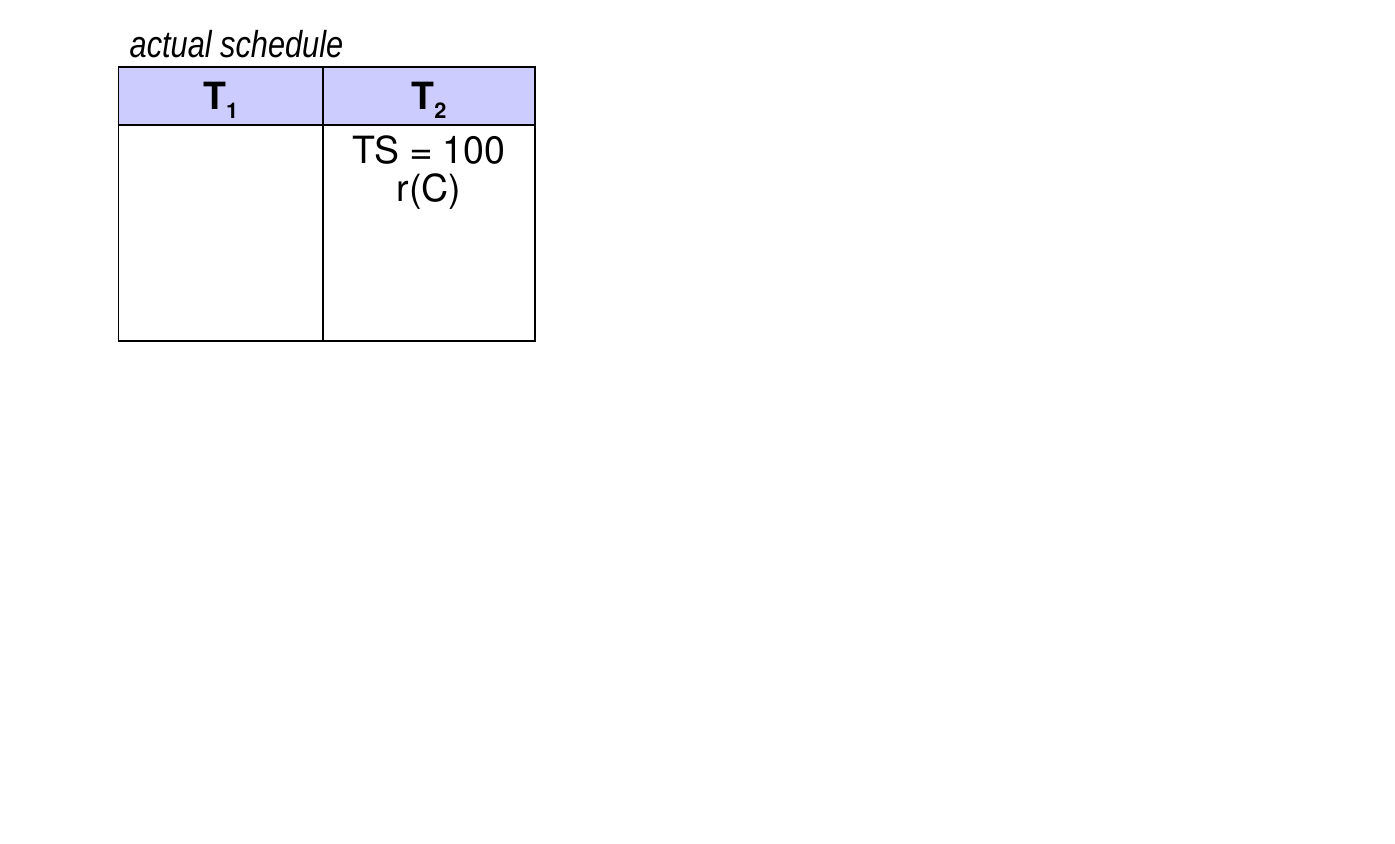
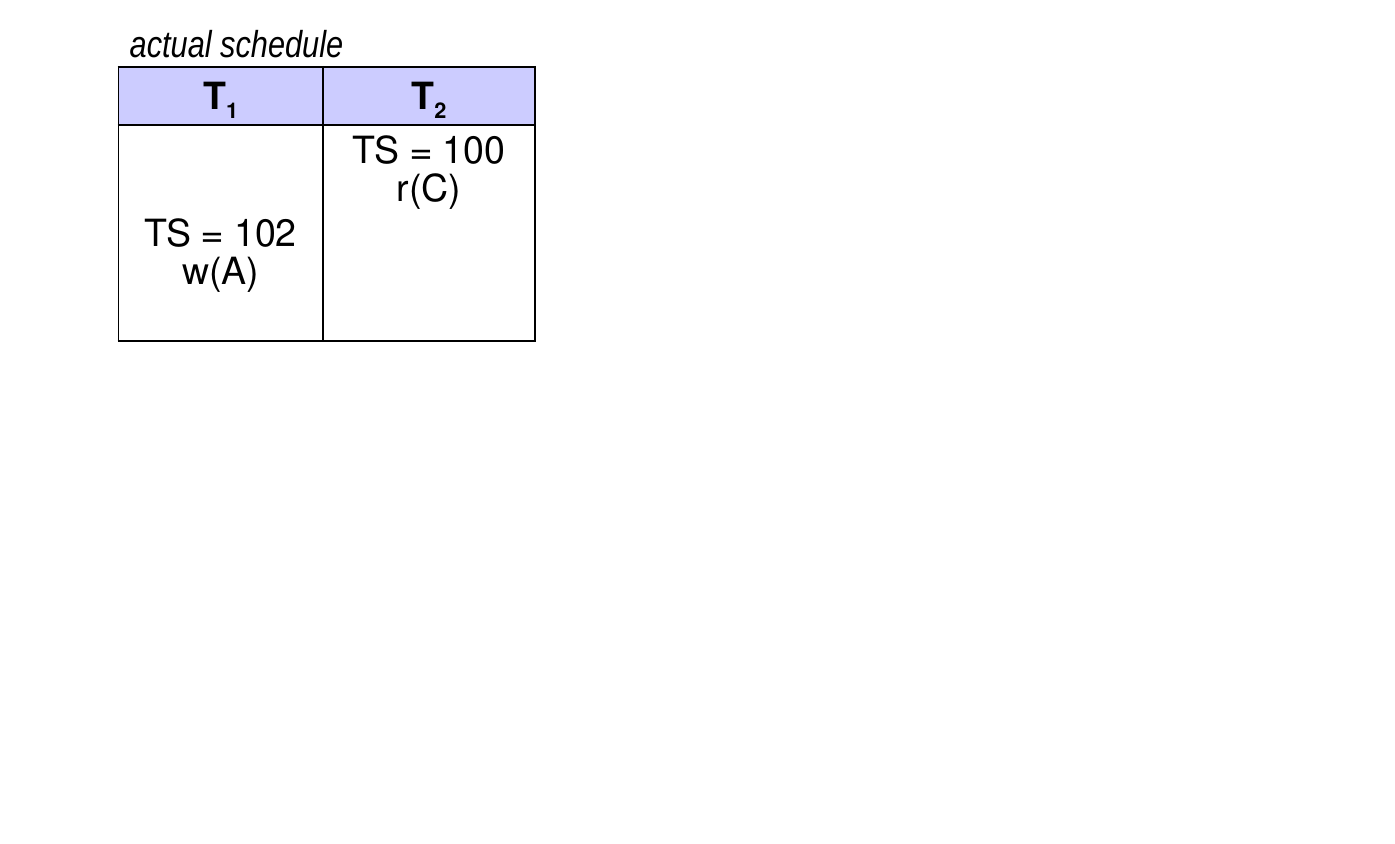
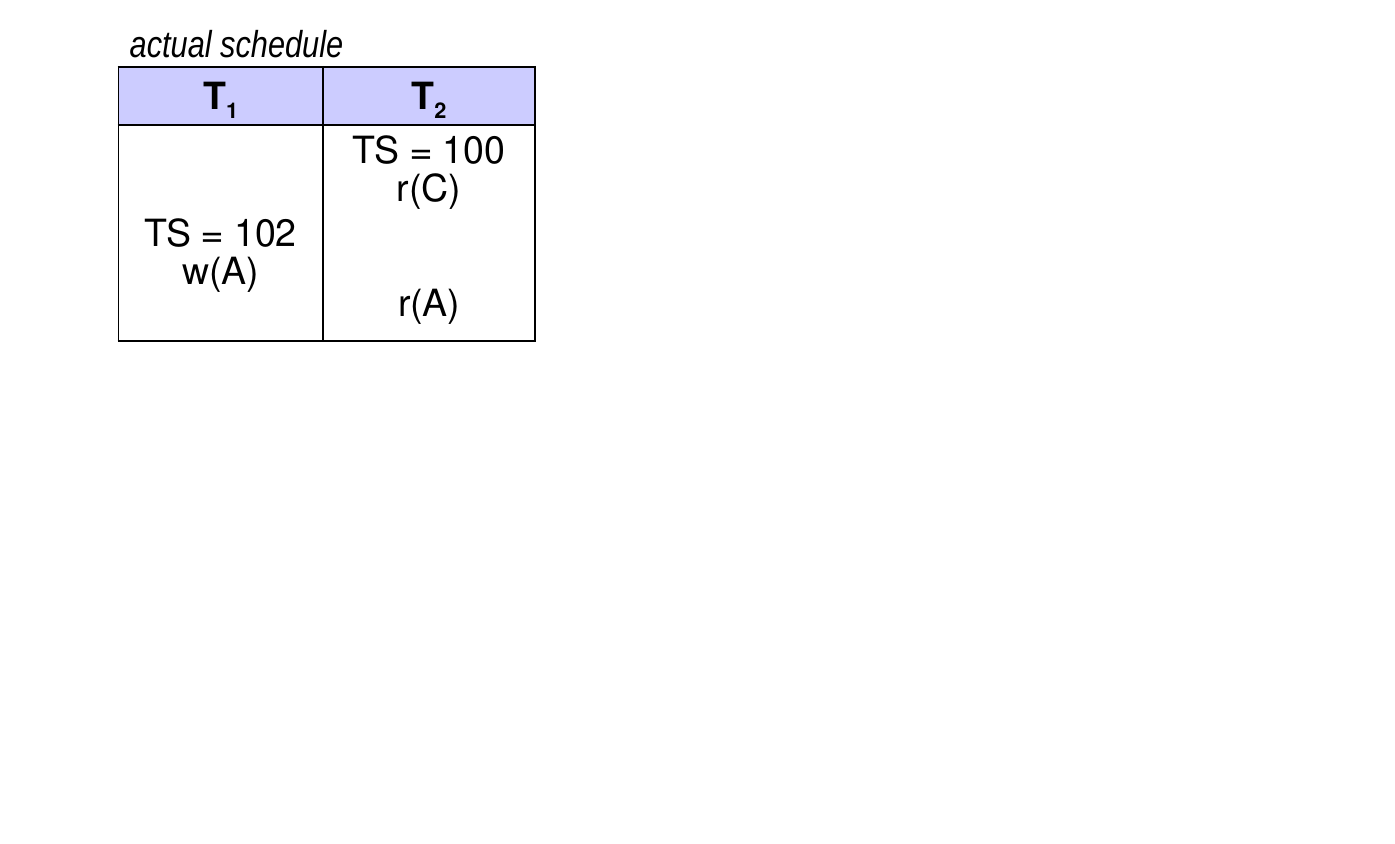
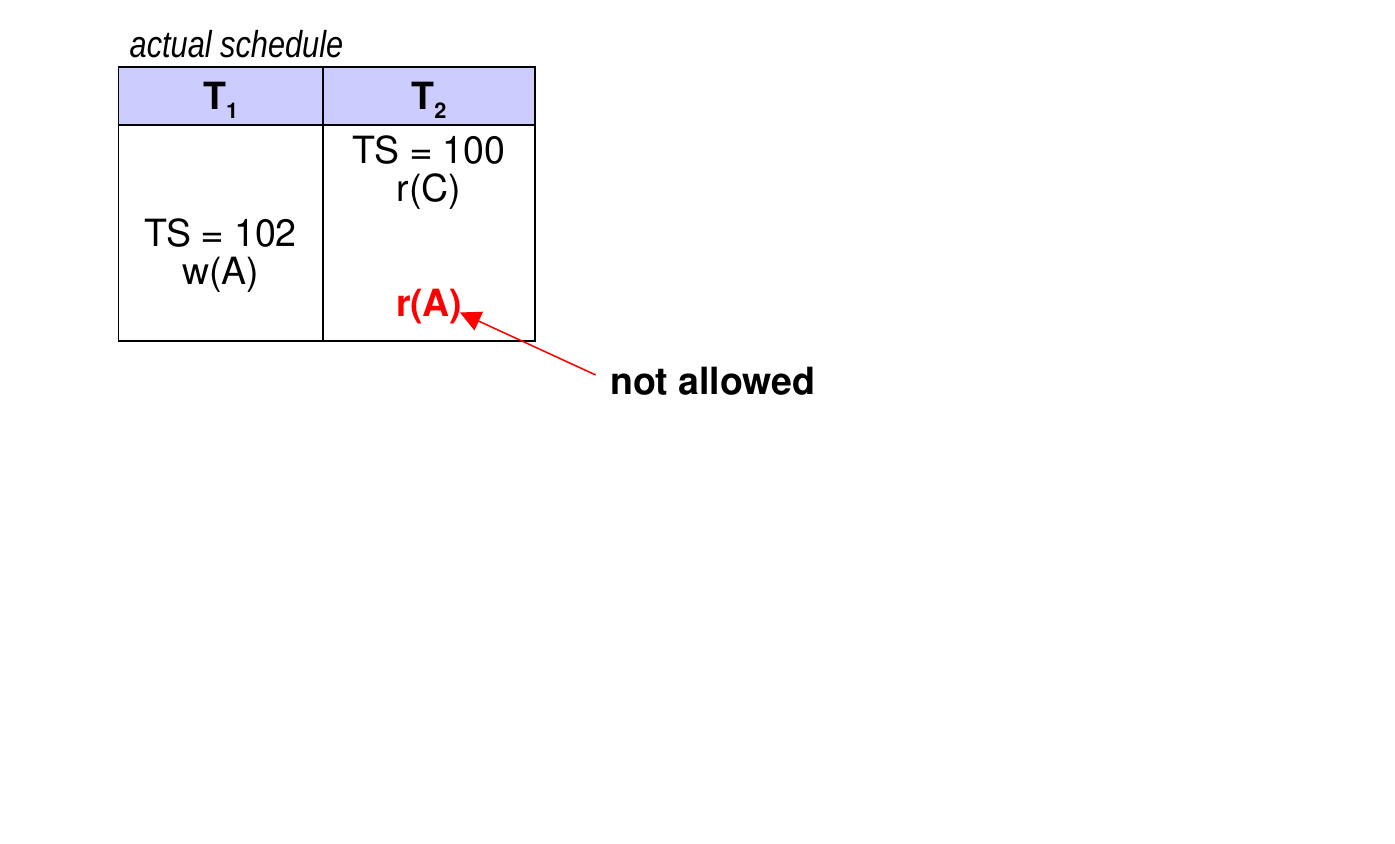
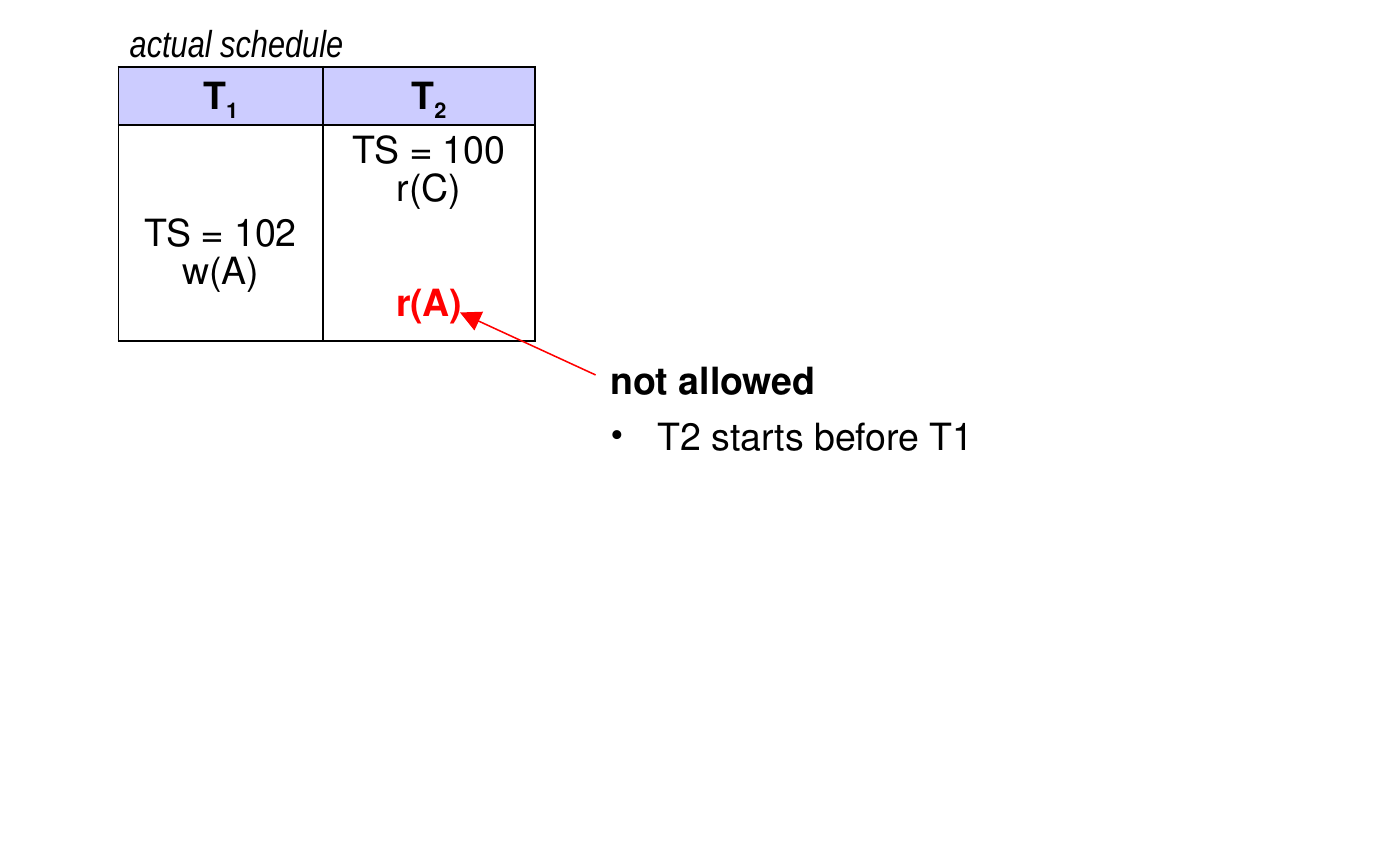
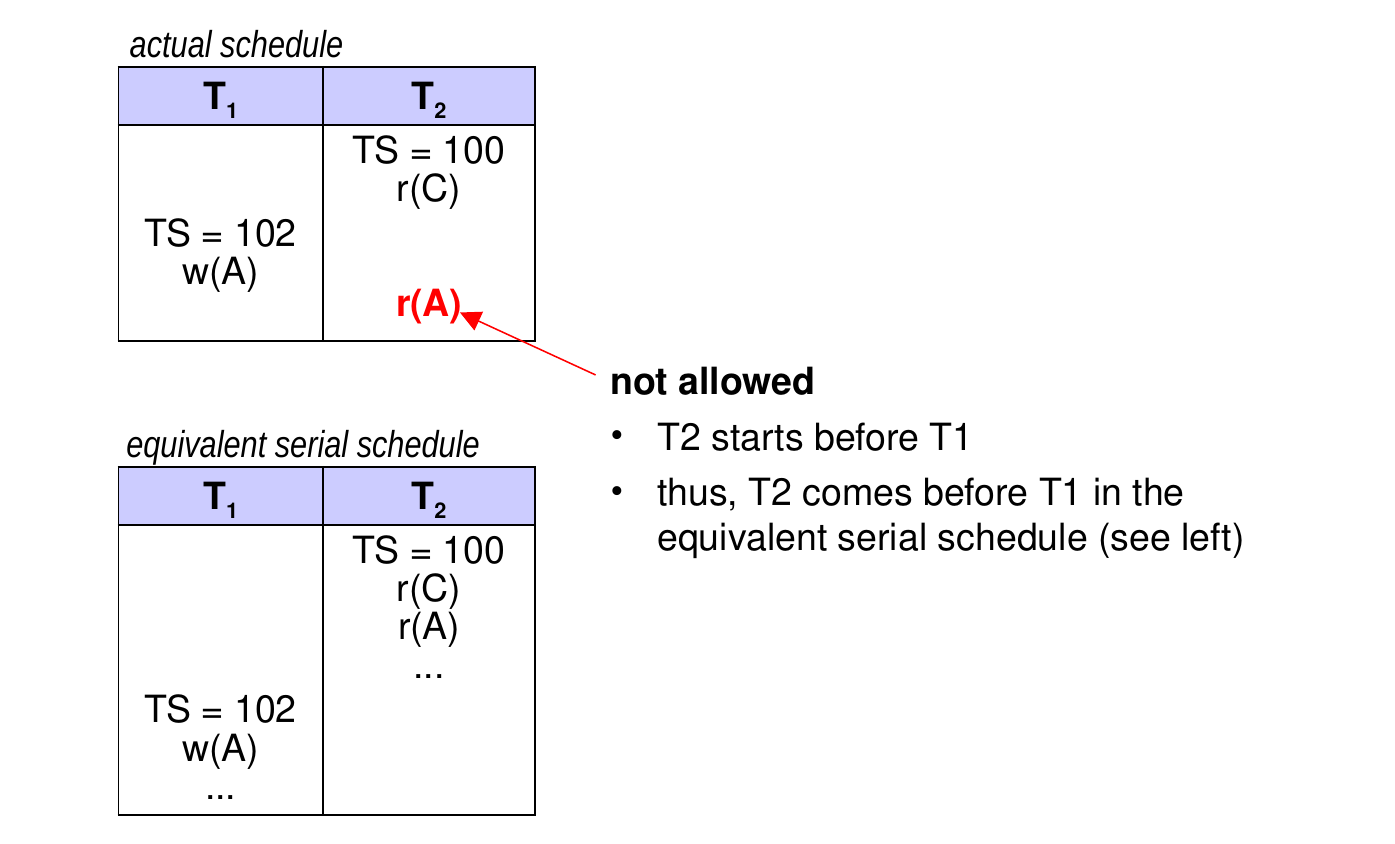
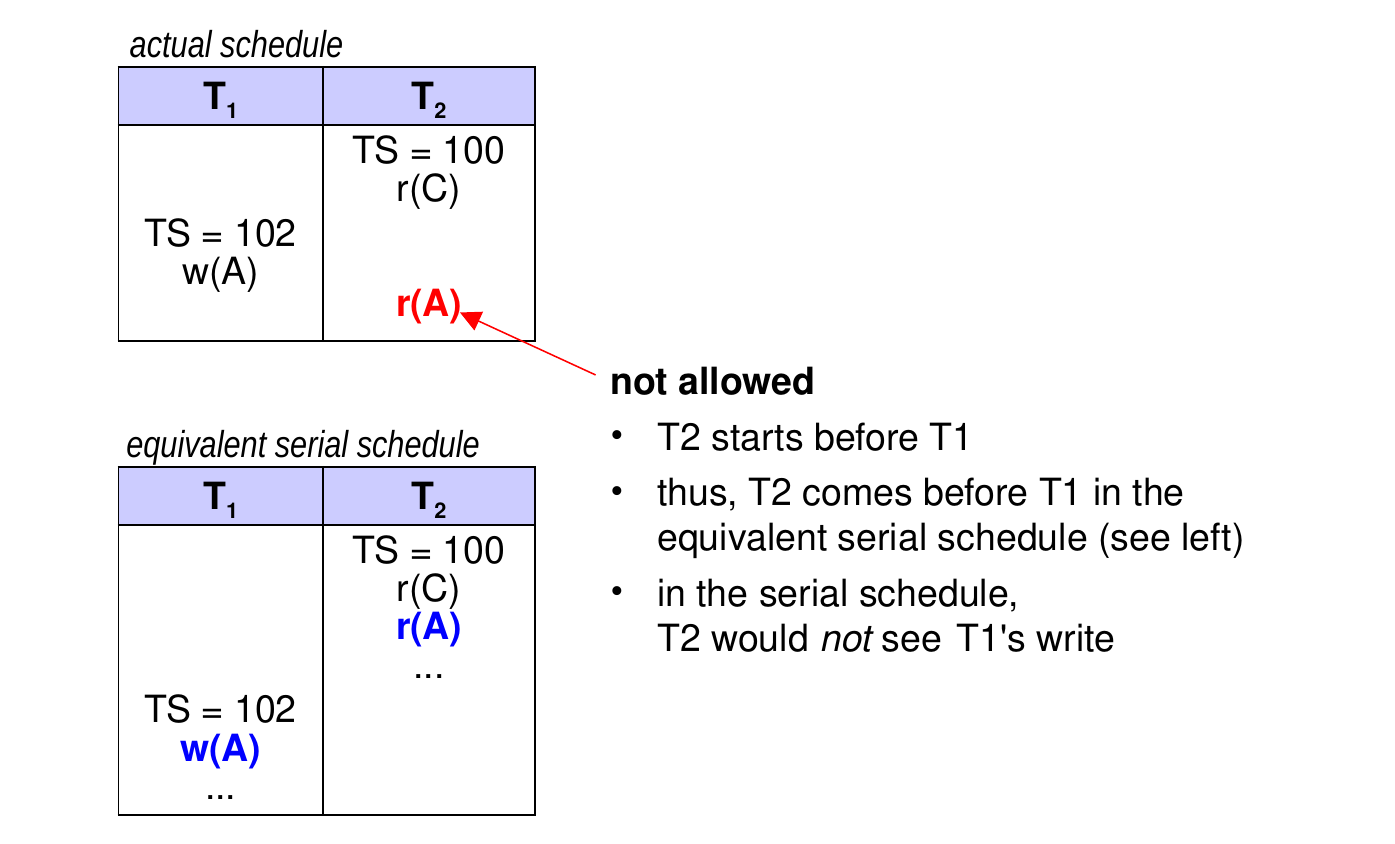
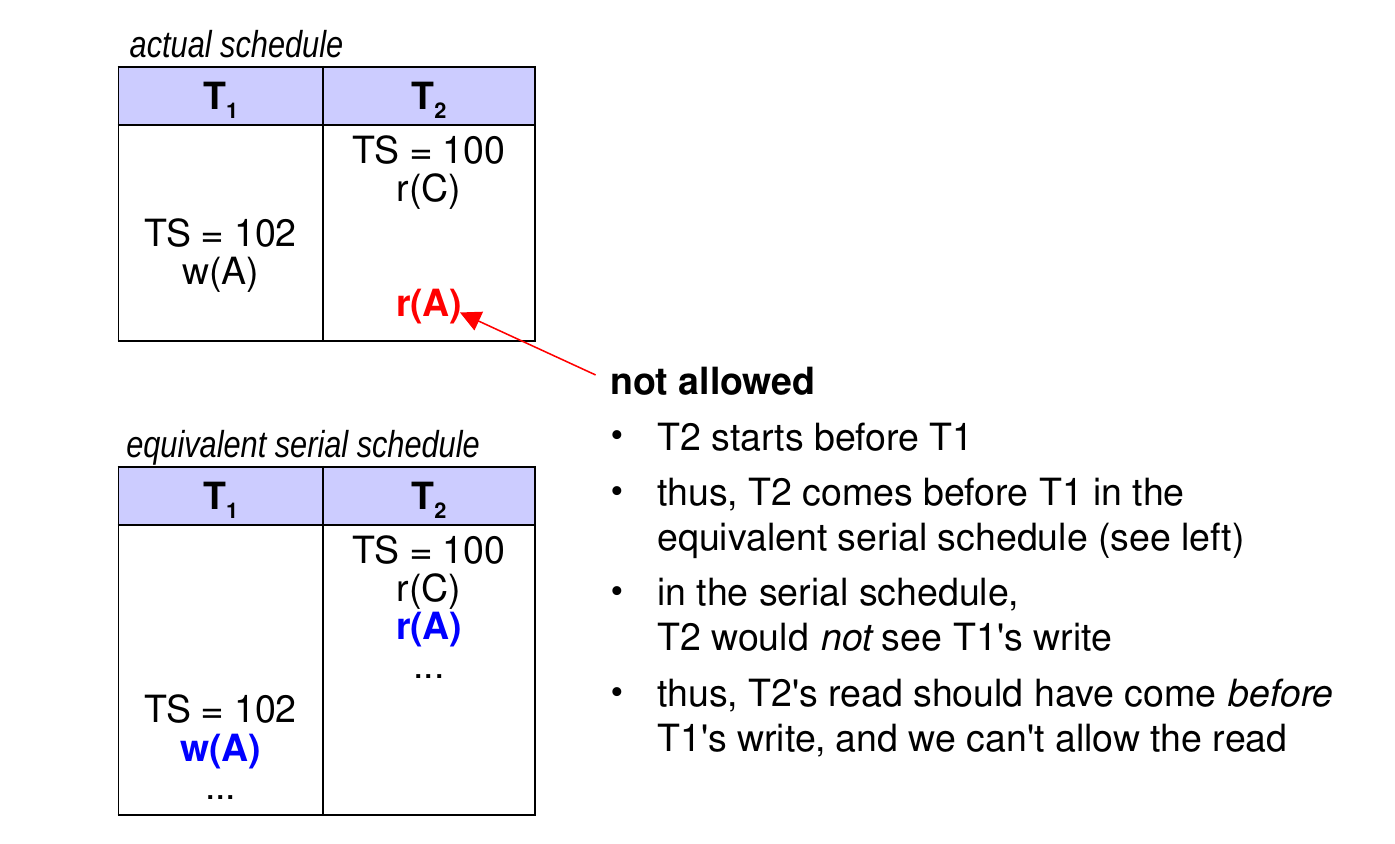
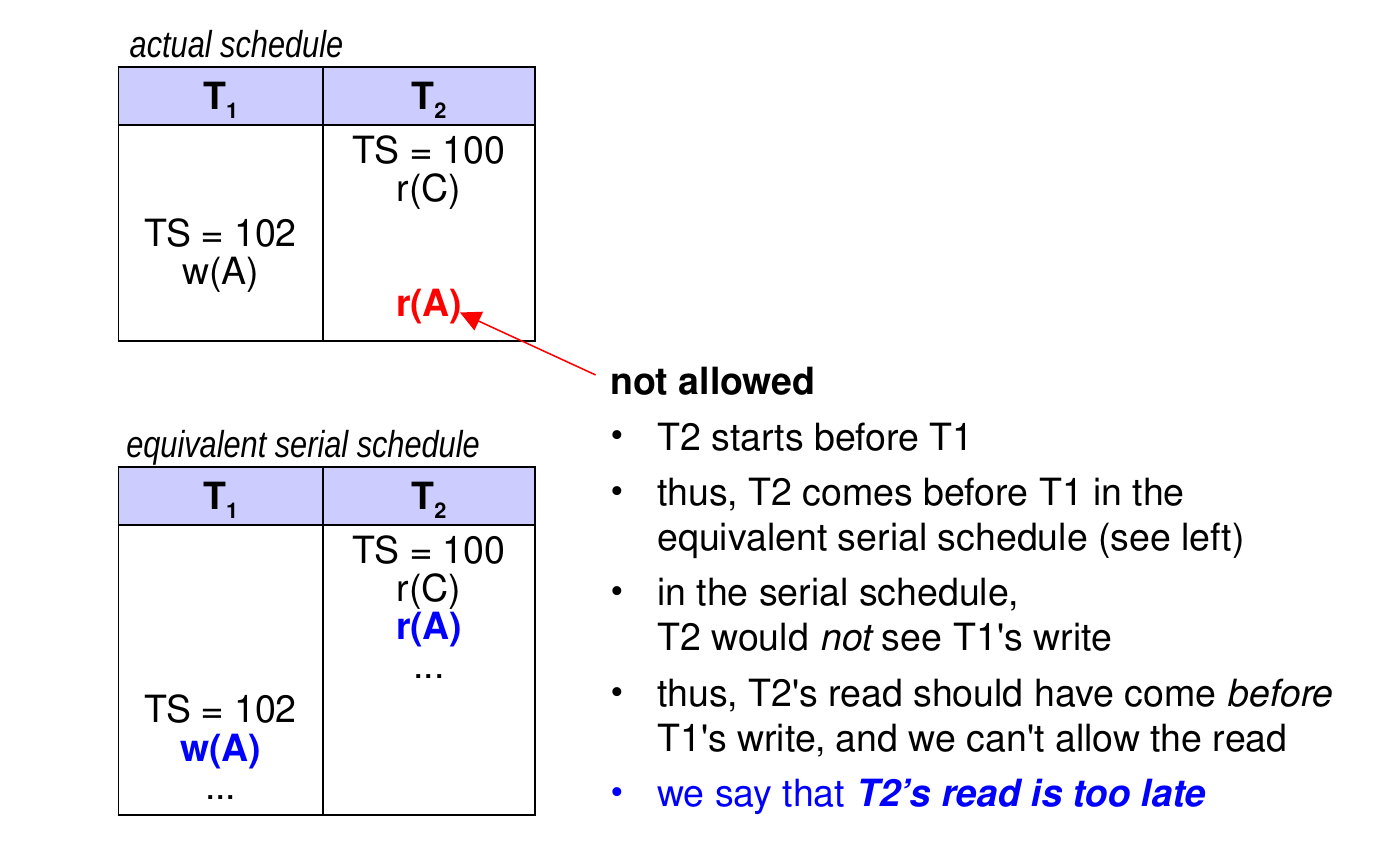
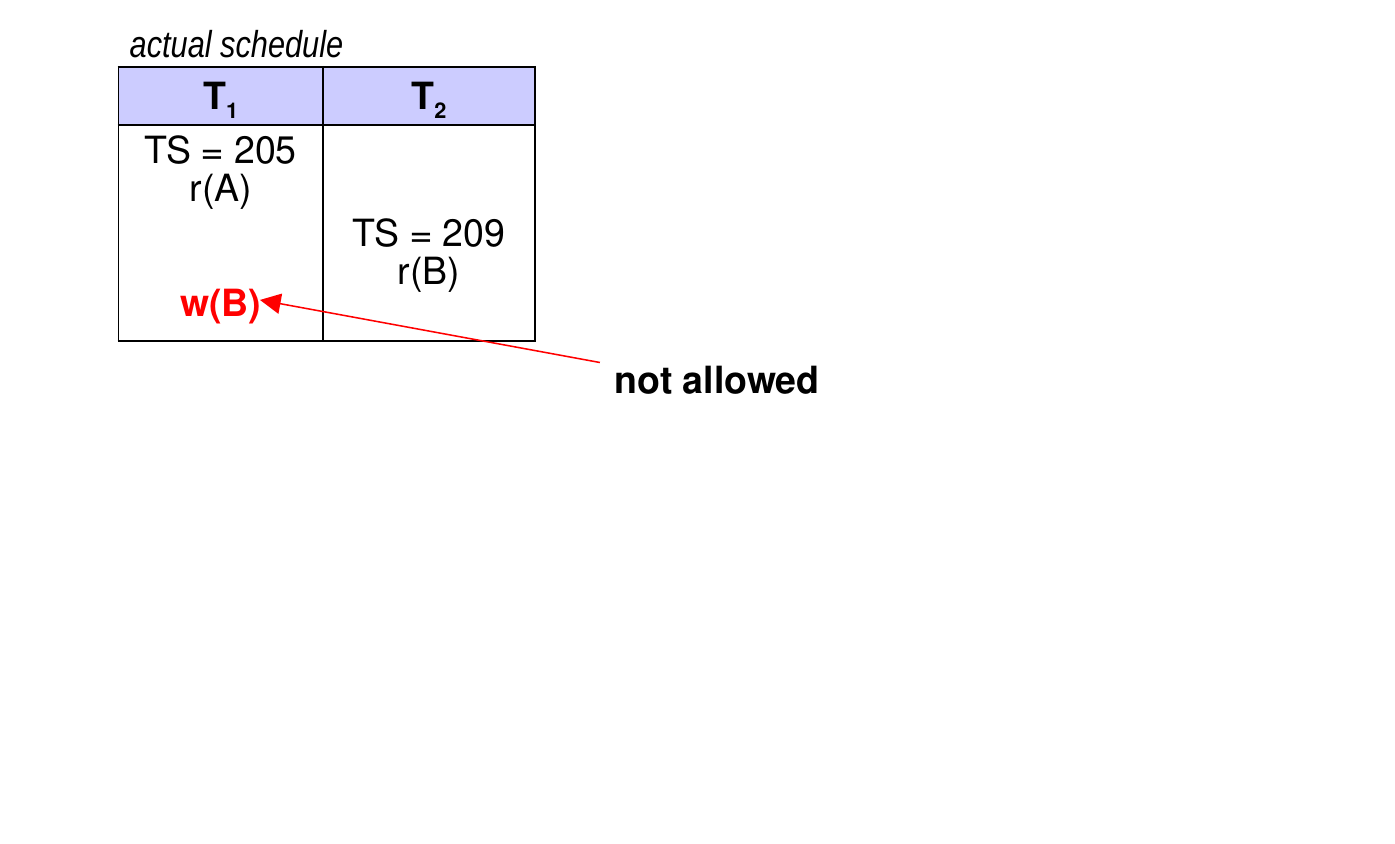
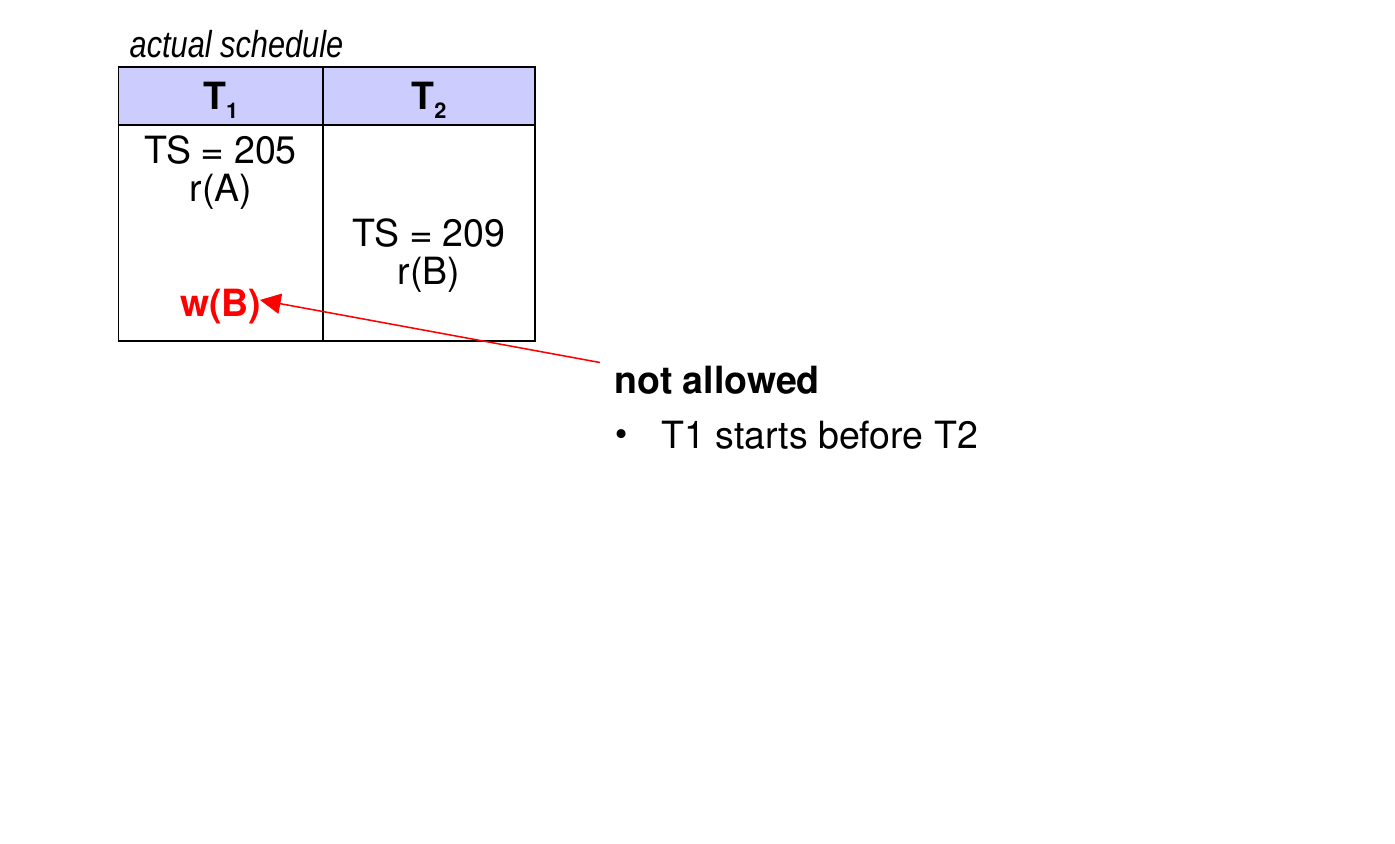
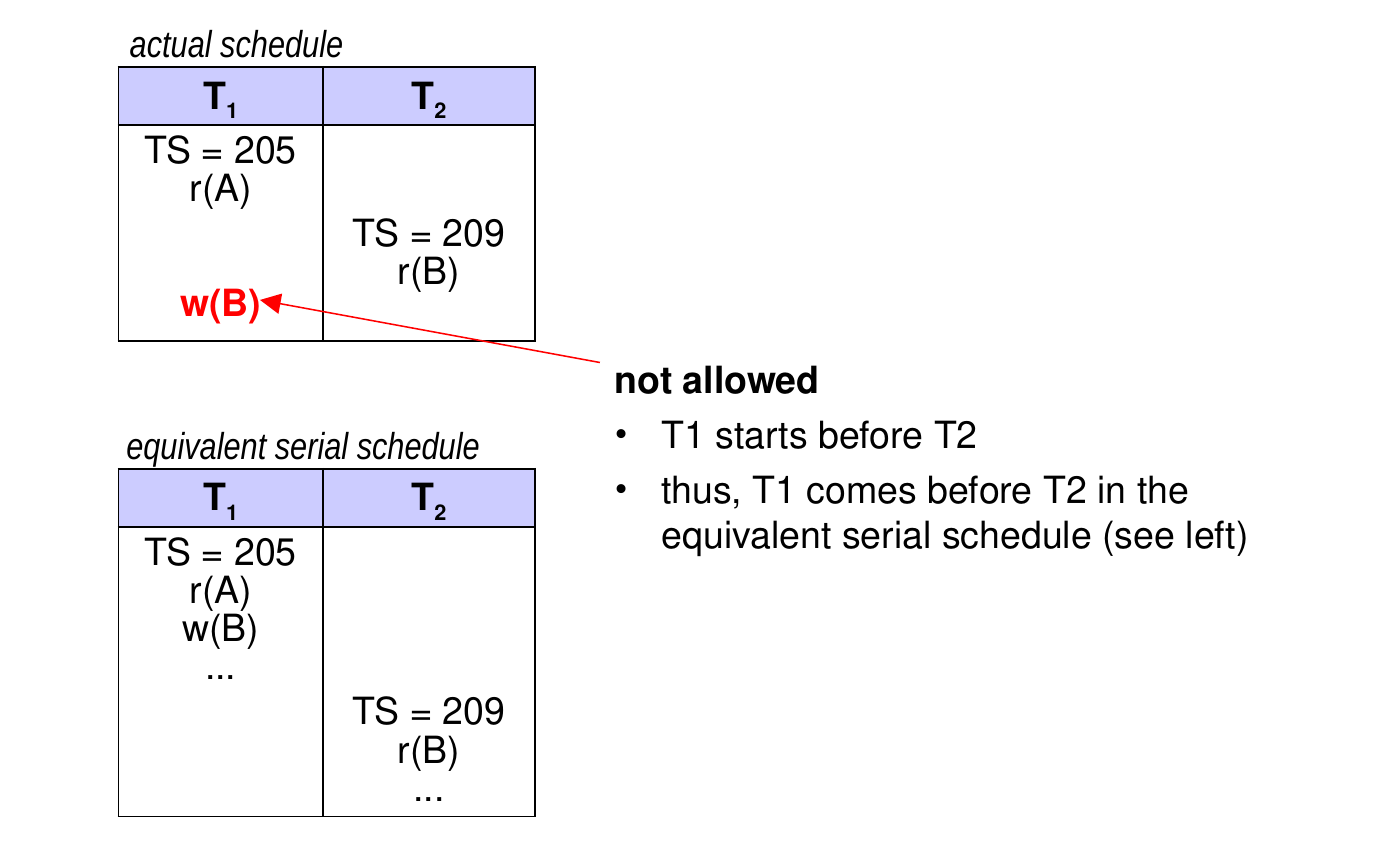
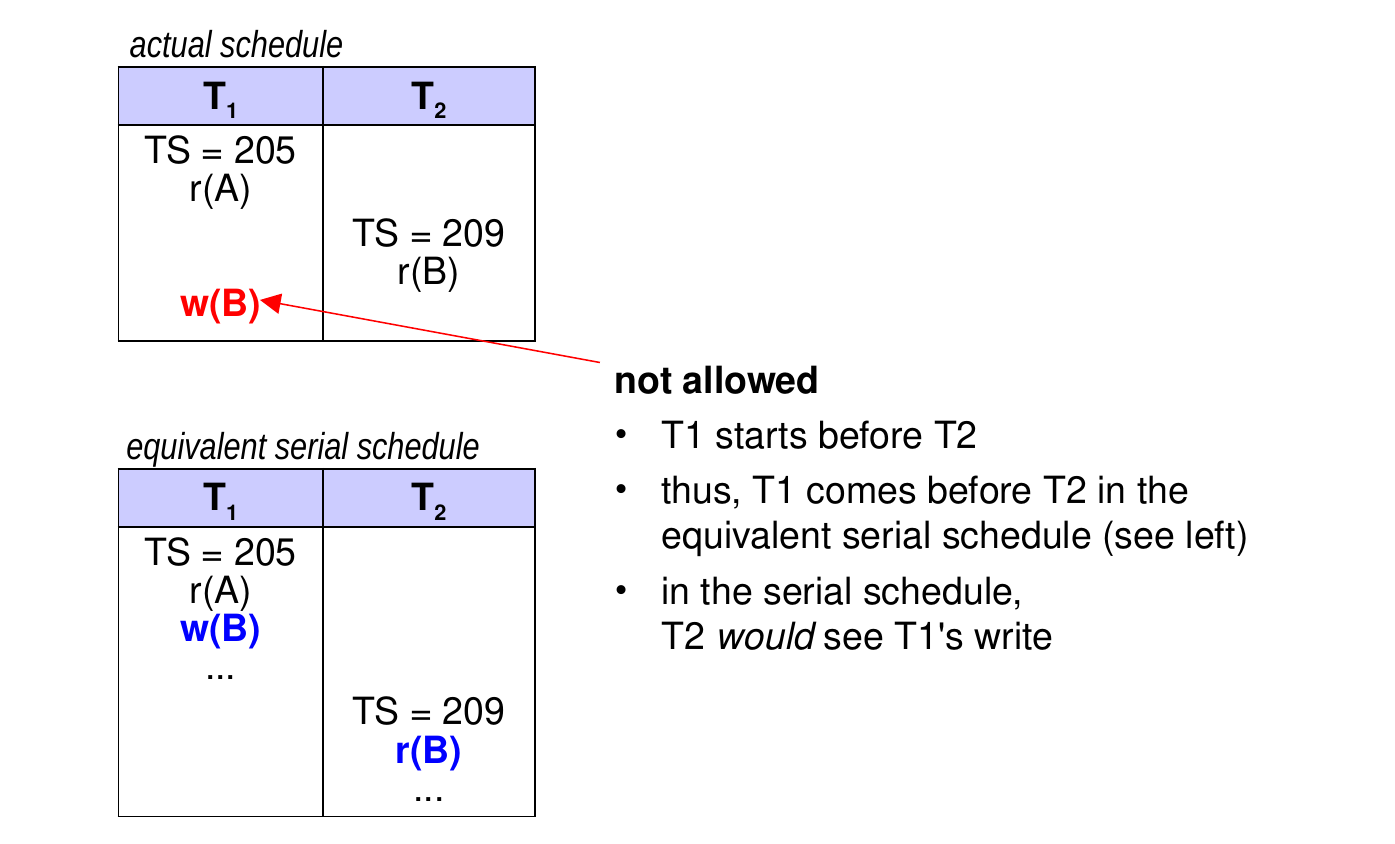
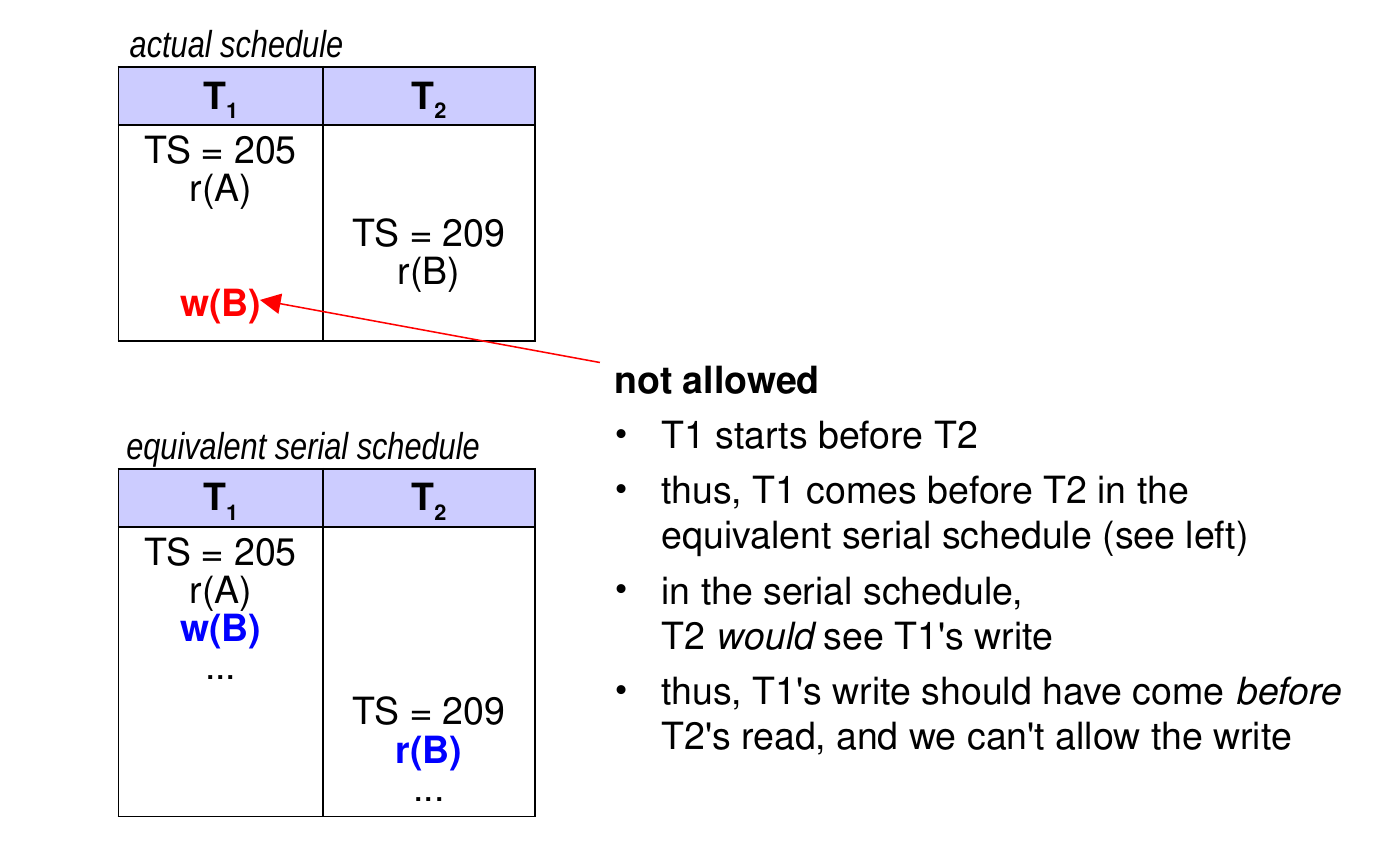
  • Examples of actions that are not allowed:
    • example 1:

Timestamp-Based Concurrency Control (cont.)

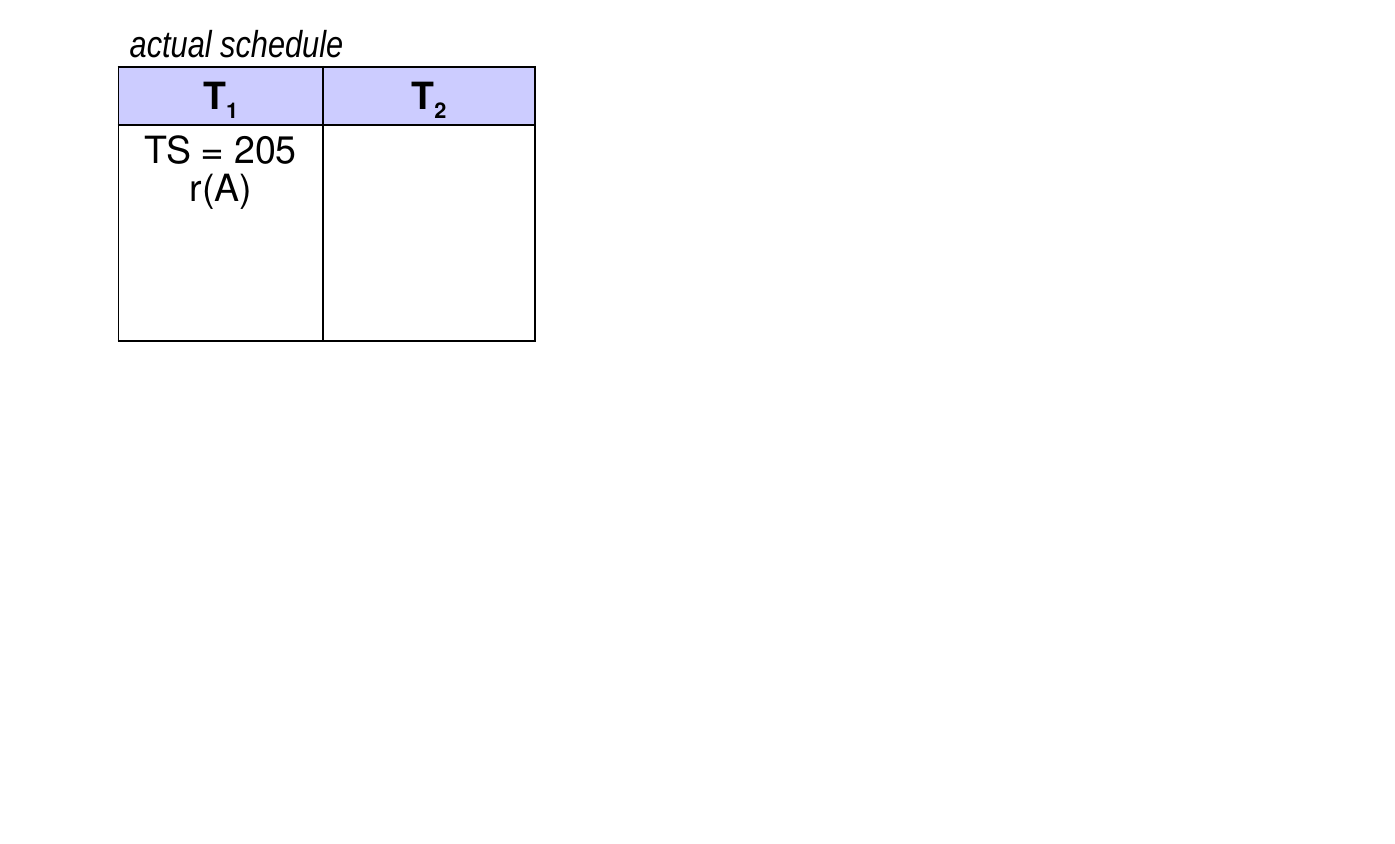
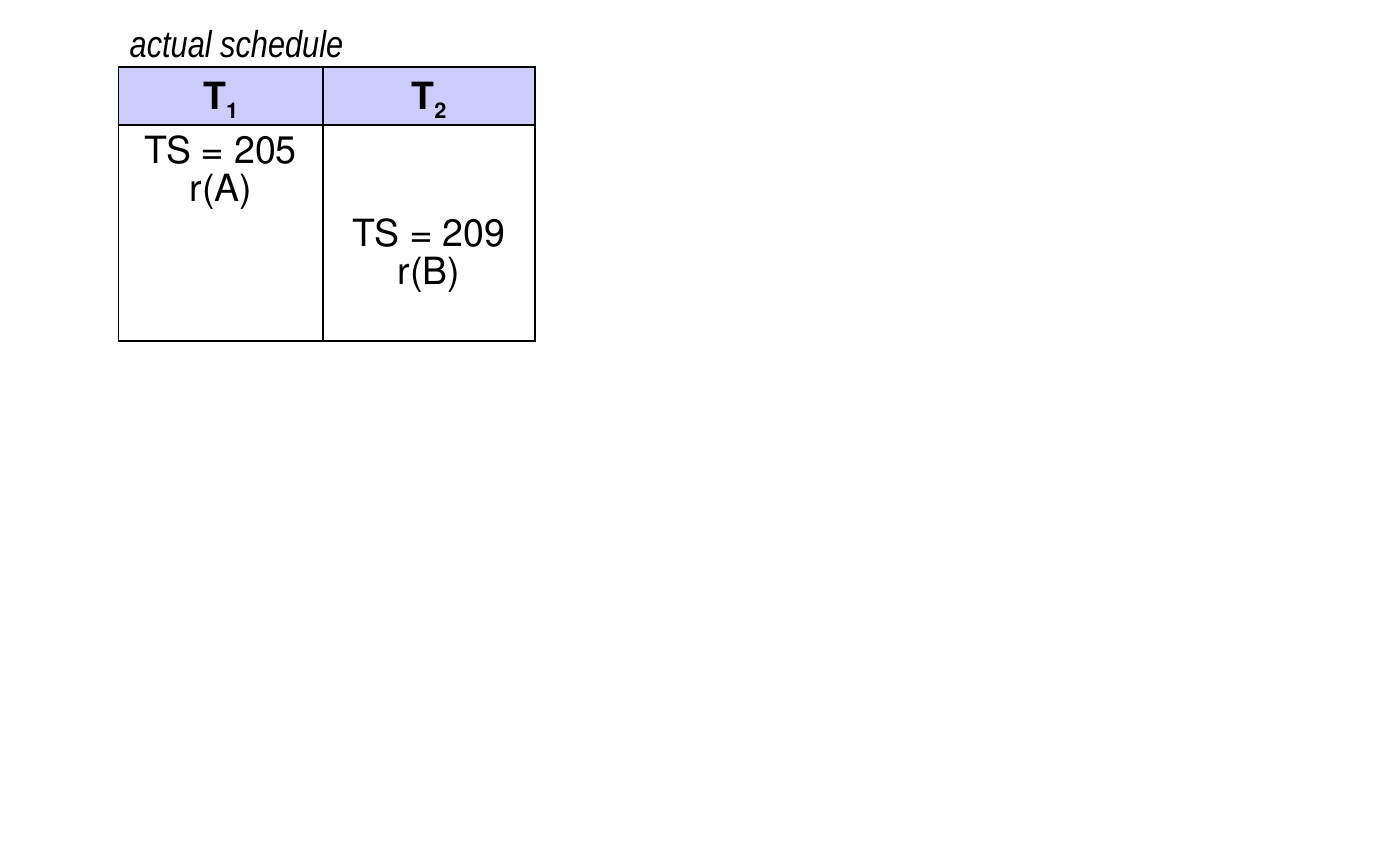
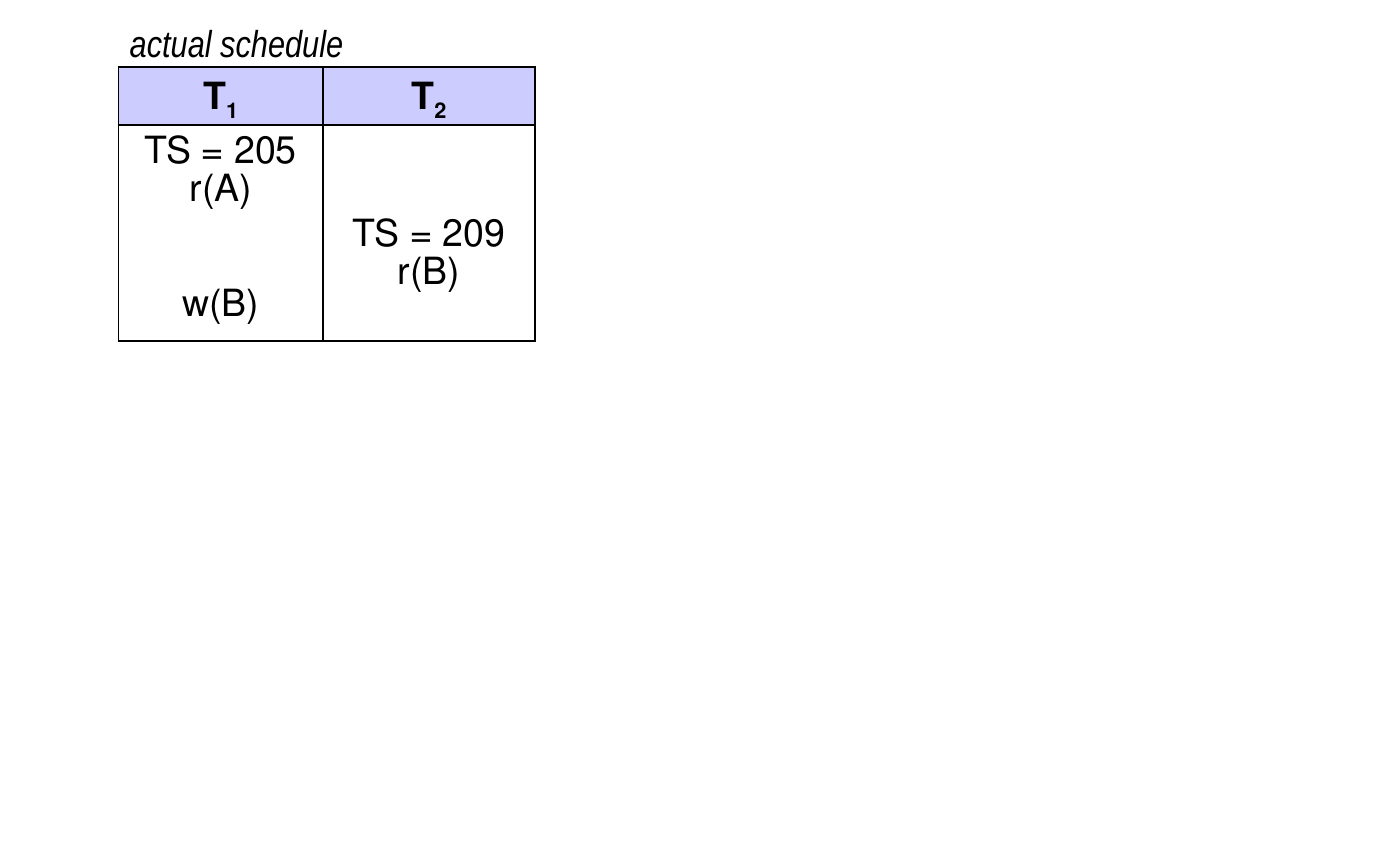
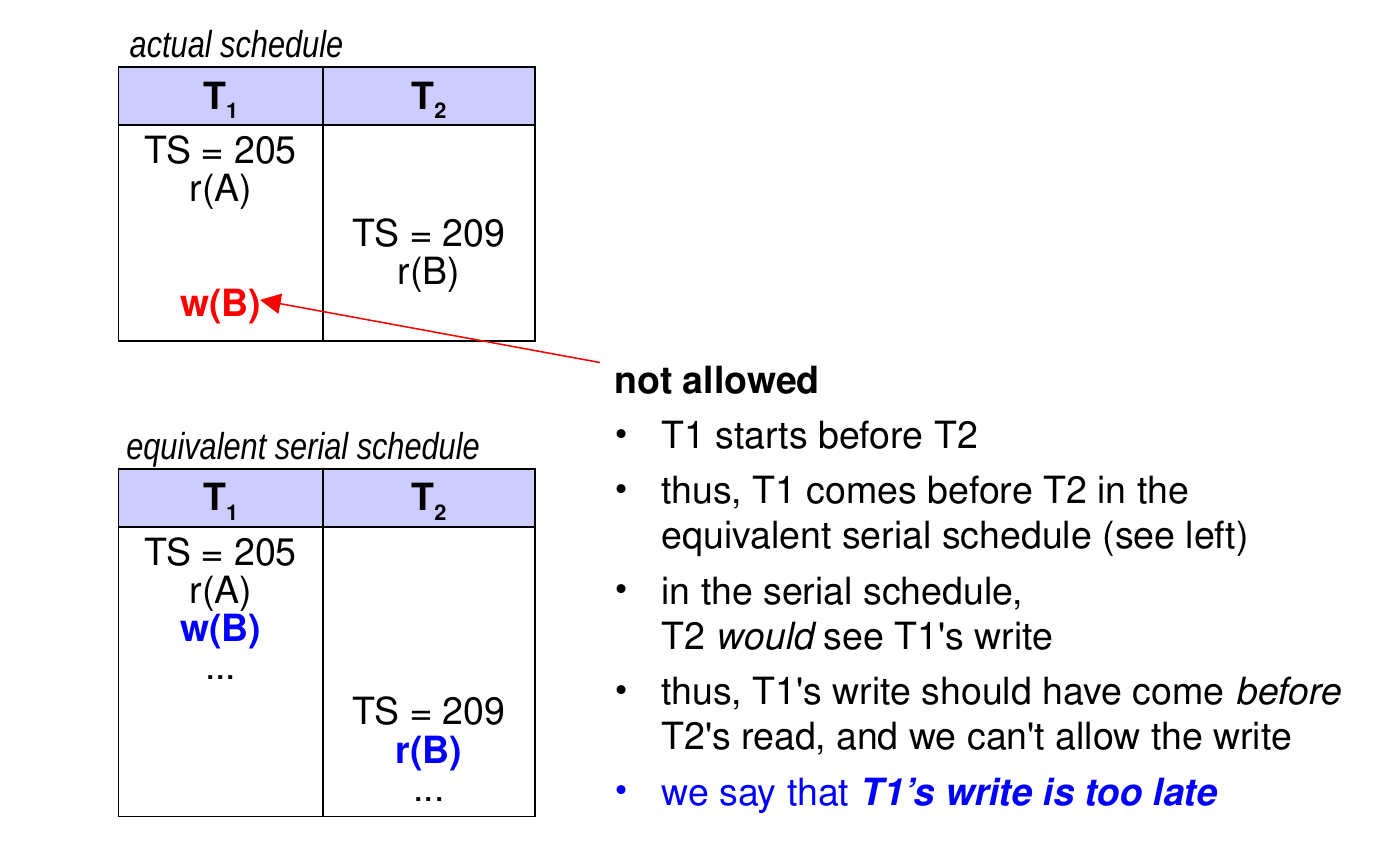
  • Examples of actions that are not allowed:
    • example 2:

Timestamp-Based Concurrency Control (cont.)

  • When a txn attempts to perform an action that is inconsistent with a timestamp ordering:
    • the offending txn is rolled back
    • it is restarted with a new, larger timestamp
  • With a larger timestamp, the txn comes later in the equivalent serial ordering.
    • allows it to perform the offending operation
  • Rolling back the txn ensures that all of its actions correspond to the new timestamp.

Timestamps on Data Elements

  • To determine if an action should be allowed, the DBMS associates two timestamps with each data element:
    • a read timestamp: RTS(A) = the largest timestamp of any txn that has read A
  • the timestamp of the reader that comes latest in the equivalent serial ordering
  • a write timestamp: WTS(A) = the largest timestamp of any txn that has written A
  • the timestamp of the writer that comes latest in the equivalent serial ordering
  • the timestamp of the txn that wrote A’s current value

Timestamp Rules for Reads

  • When T tries to read A:
    • if TS(T) < WTS(A), roll back T and restart it
  • T comes before the txn that wrote A, so T shouldn’t be able to see A’s current value
  • T’s read is too late (see our earlier example 1)
  • else allow the read
    • T comes after the txn that wrote A, so the read is OK
  • the system also updates RTS(A):

        RTS(A) = max(TS(T), RTS(A))

  • why can’t we just set RTS(A) to T’s timestamp?

      there may be a previous reader of A that comes after T in the timestamp ordering

Timestamp Rules for Reads (cont.)

  • Example: assume that T1 wants to read A, and we have the following timestamps:

  • T1 started before T2 (30 < 50)
    • thus T1 comes before T2 in the equivalent serial ordering
  • T2 has already read A. How do we know? RTS(A) = TS(T2)
  • Despite that, it’s okay for T1 to read A.
    • reads don’t conflict, so we don’t care about the equivalent serial ordering of two readers of an item
  • what matters is that T1 comes after the writer of A’s current value (30 > 10)

Timestamp Rules for Writes

  • When T tries to write A:
    • if TS(T) < RTS(A), roll back T and restart it
  • T comes before the txn that read A, so that other txn should have read the value T wants to write
  • T’s write is too late (see our earlier example 2)
  • else if TS(T) < WTS(A), ignore the write and let T continue
  • T comes before the txn that wrote A’s current value
  • thus, in the equivalent serial schedule, T’s write would have been overwritten by A’s current value
  • else allow the write
    • how should the system update WTS(A)?

      WTS(A) = TS(T)

Thomas Write Rule

  • The policy of ignoring out-of-date writes is known as the Thomas Write Rule:
    • …else if TS(T) < WTS(A), ignore the write and let T continue
  • What if there is a txn that should have read A between the two writes? It’s still okay to ignore T’s write of A.
  • example:
    • TS(T) = 80, WTS(A) = 100 → we ignore T’s write of A
      what if txn U with TS(U) = 90 is supposed to read A?
  • if U had already read A, Thomas write rule wouldn’t apply:
    • RTS(A) = 90
    • T would be rolled back because TS(T) < RTS(A)
  • if U tries to read A after we ignore T’s write:
    • U will be rolled back because TS(U) < WTS(A)

Example of Using Timestamps

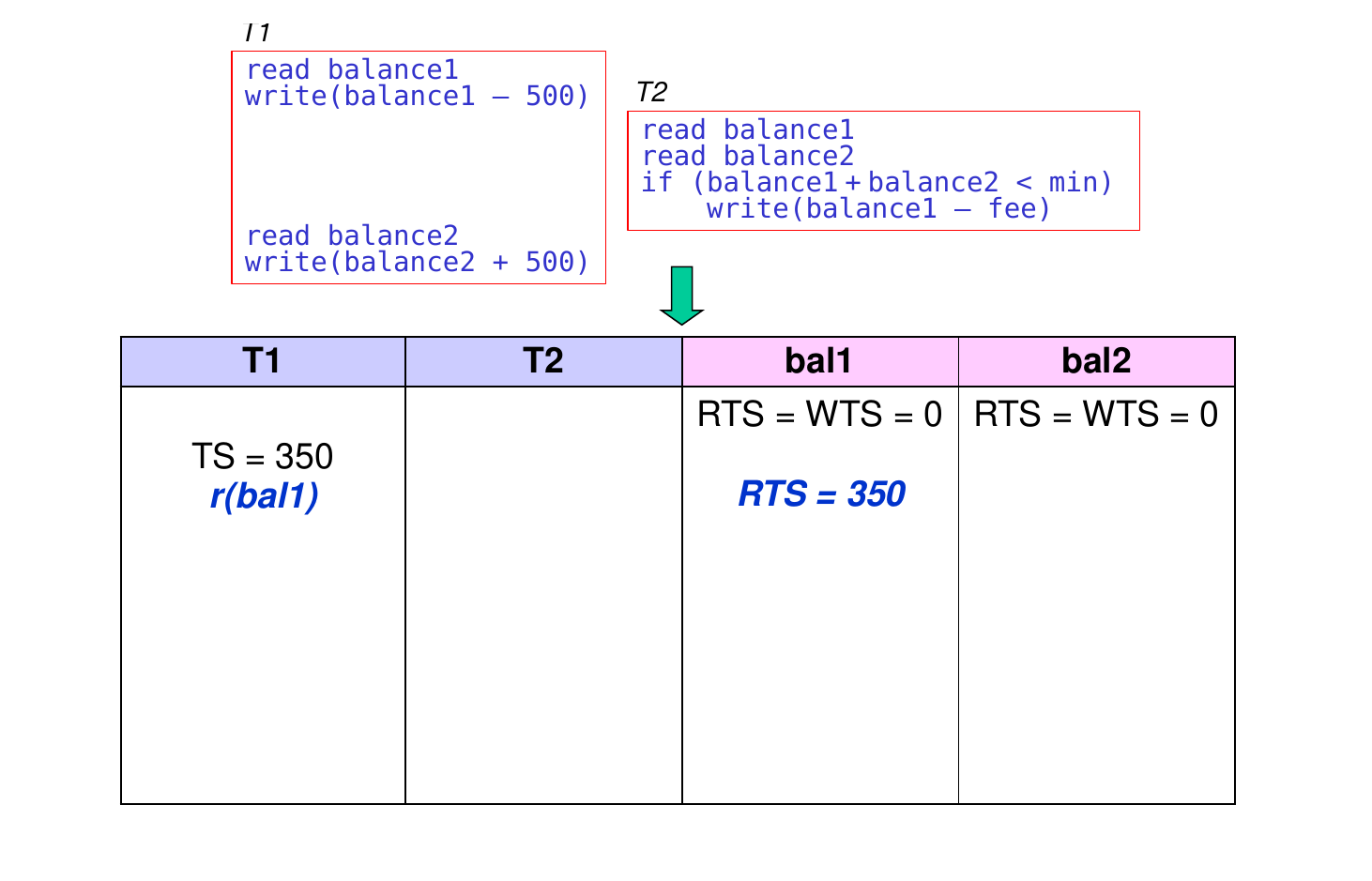
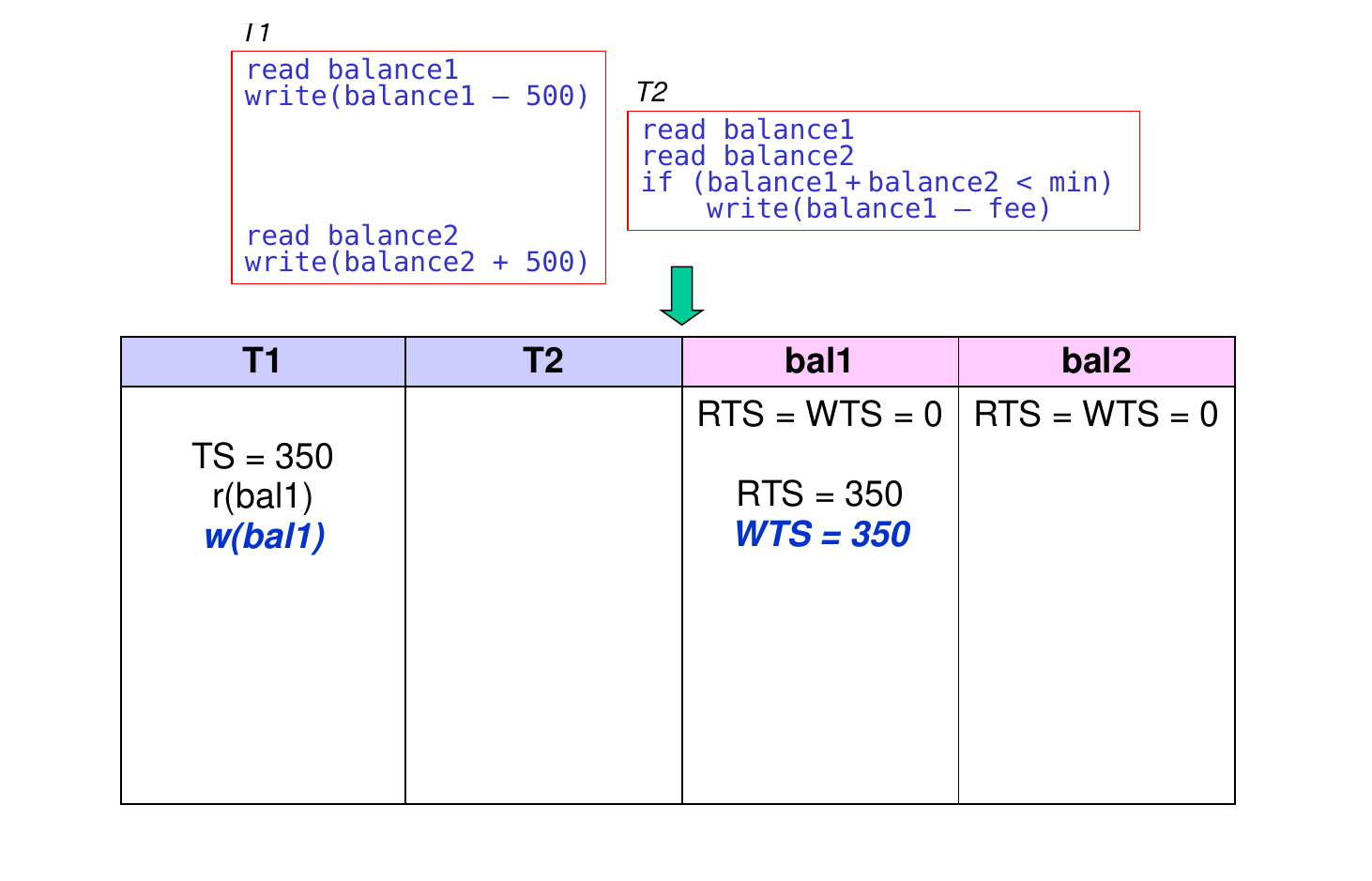
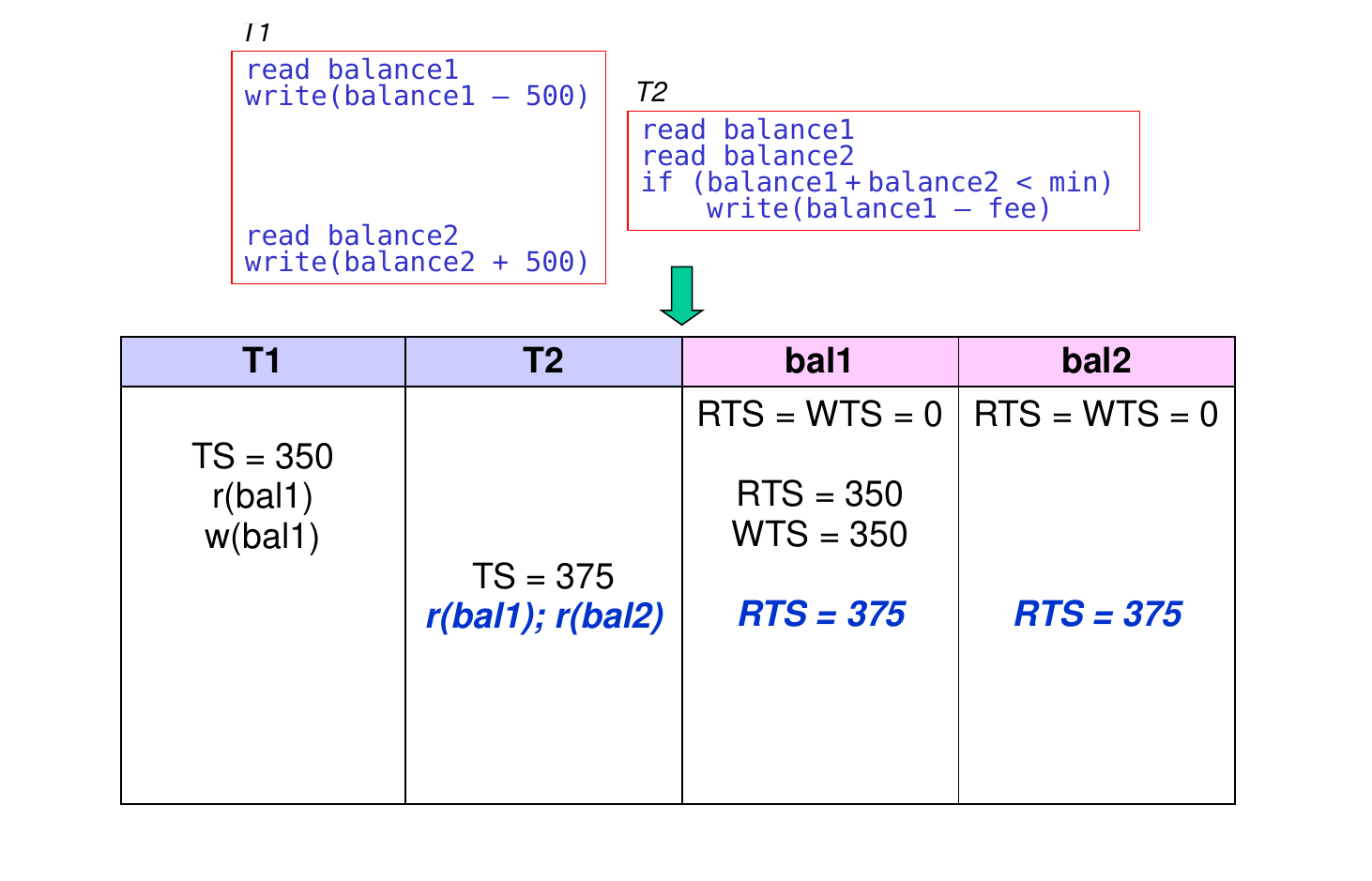
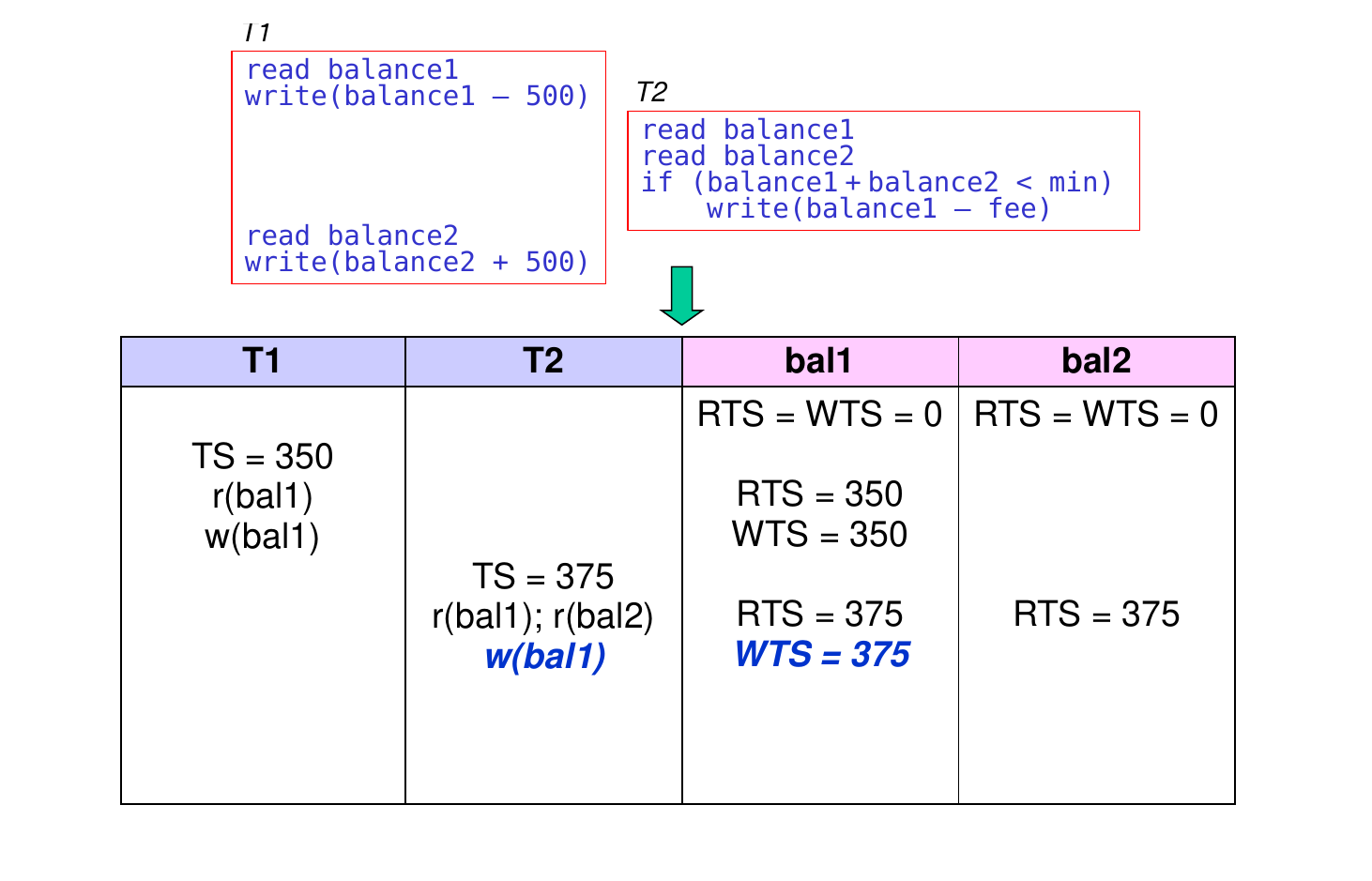
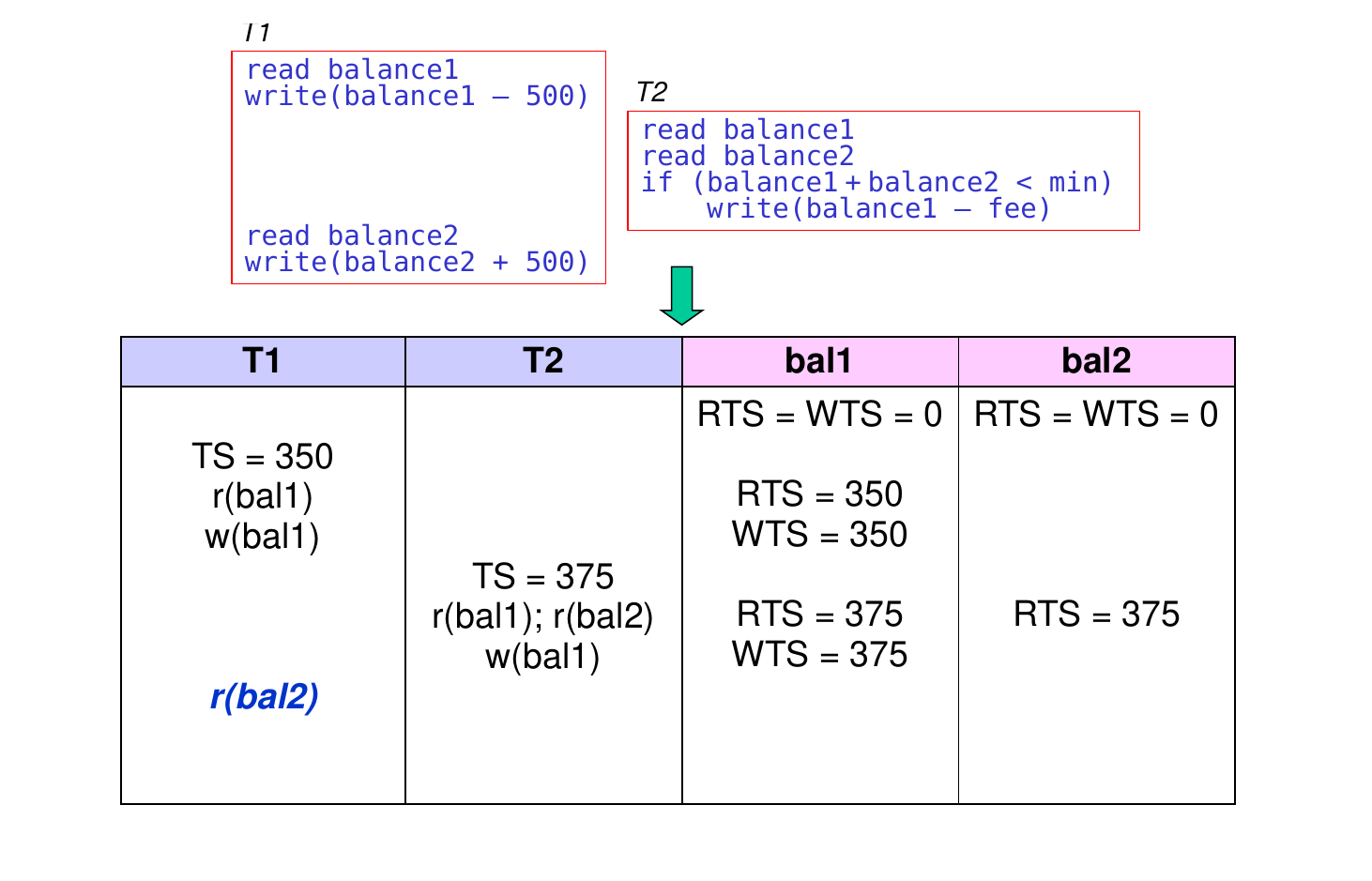
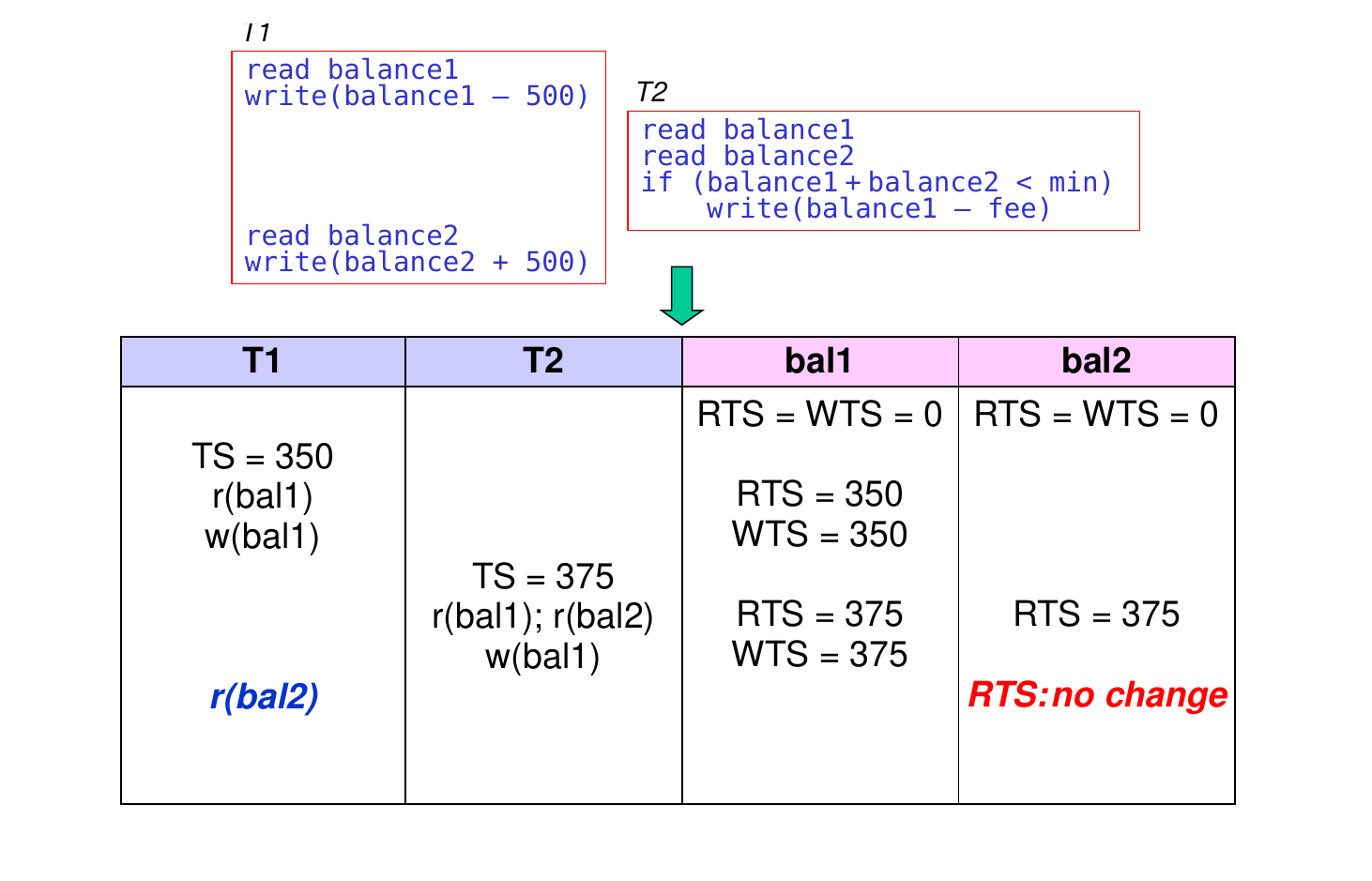
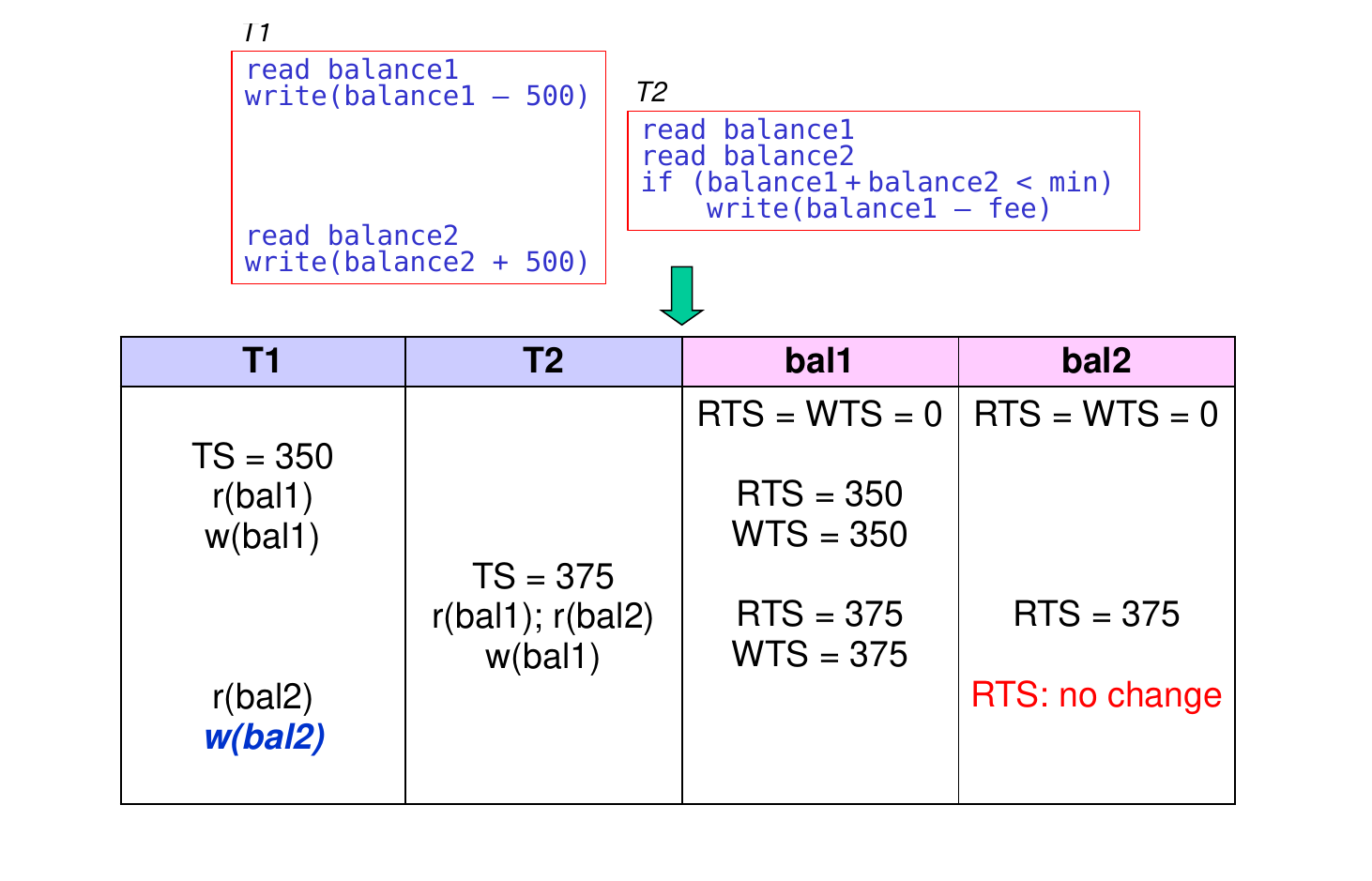
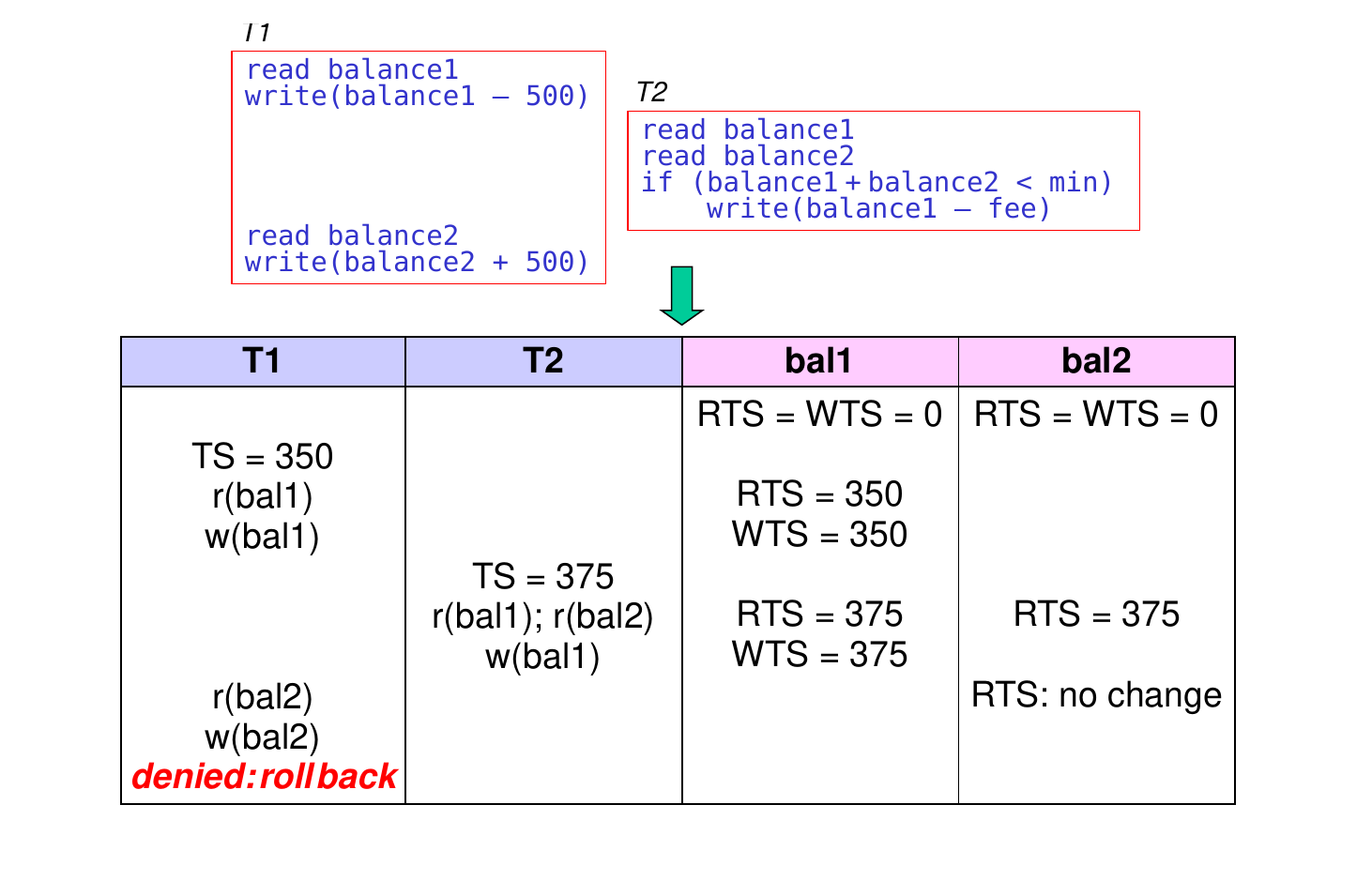
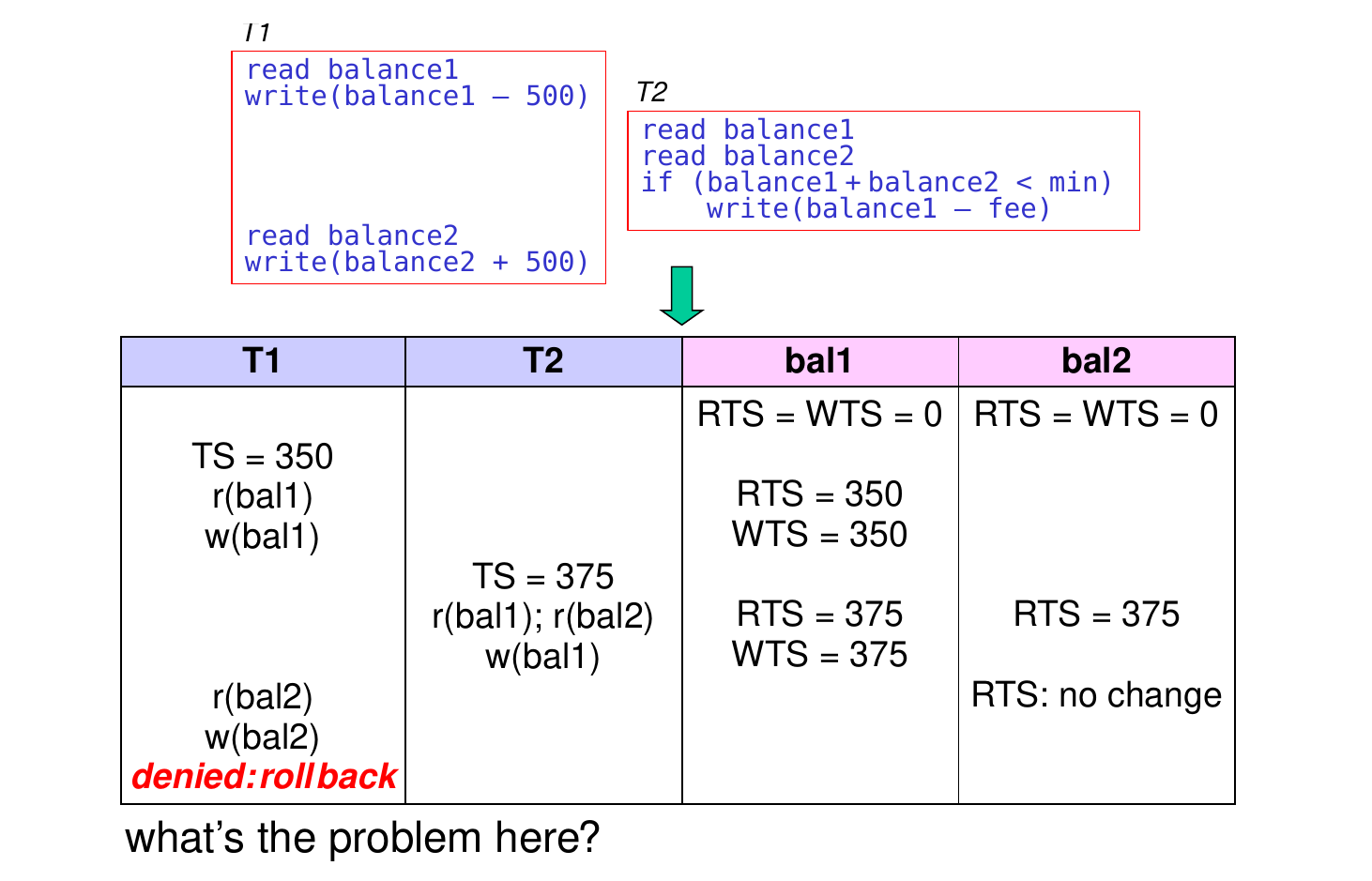
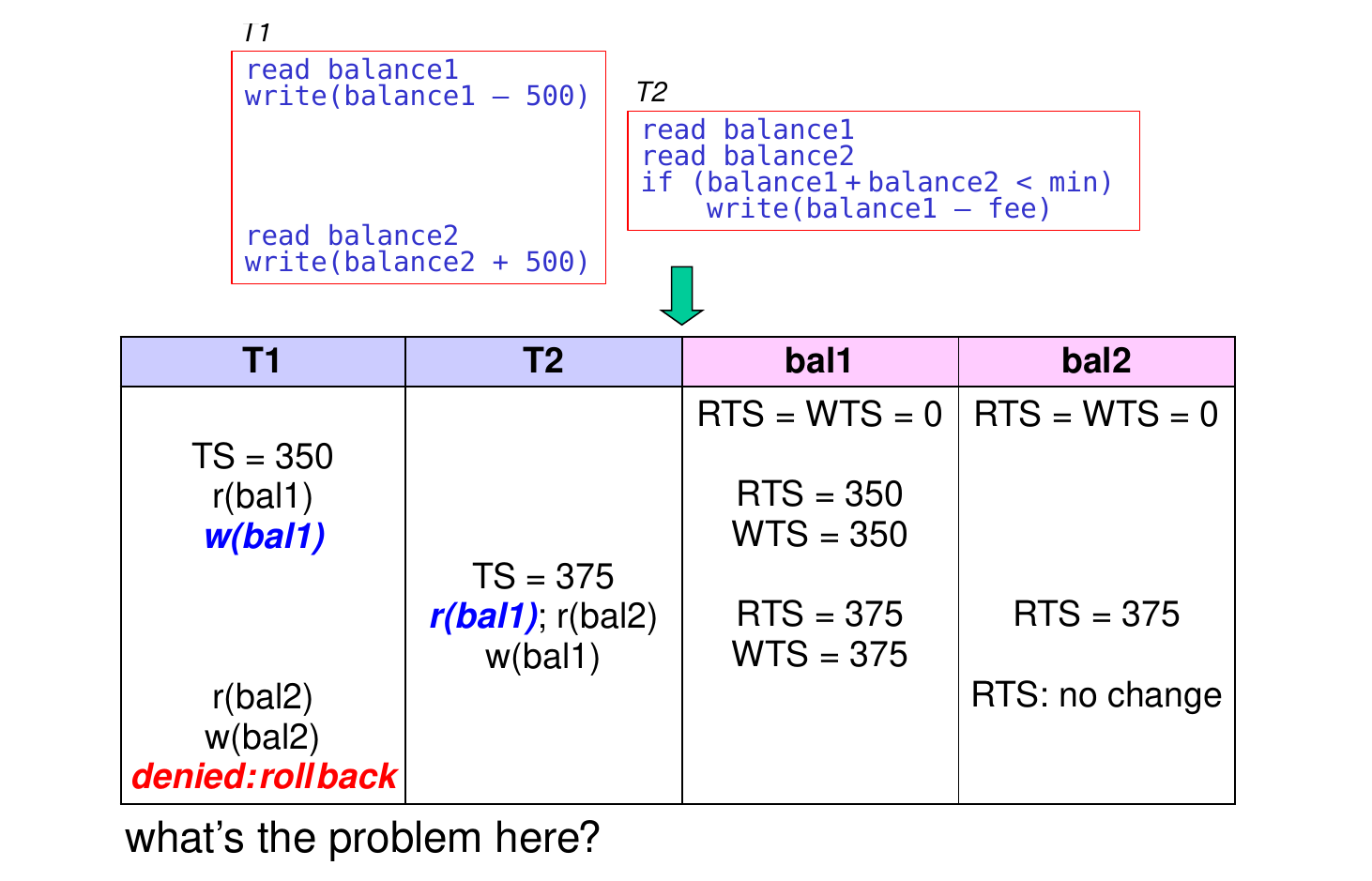
  • They prevent our problematic balance-transfer example.
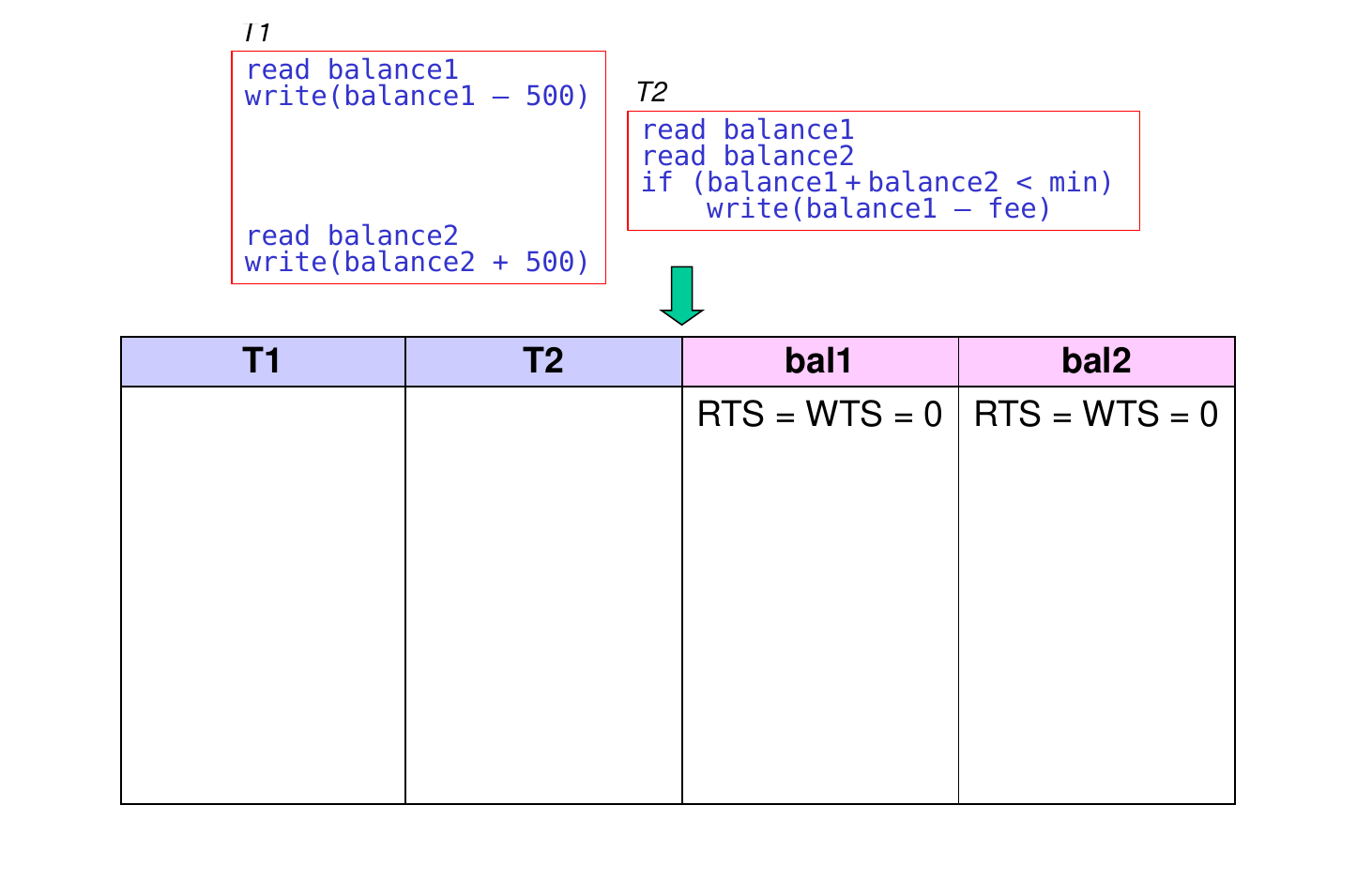
T2 performed a dirty read. It would also need to be rolled back. (a cascading rollback!)

Multiversion Timestamp Protocol

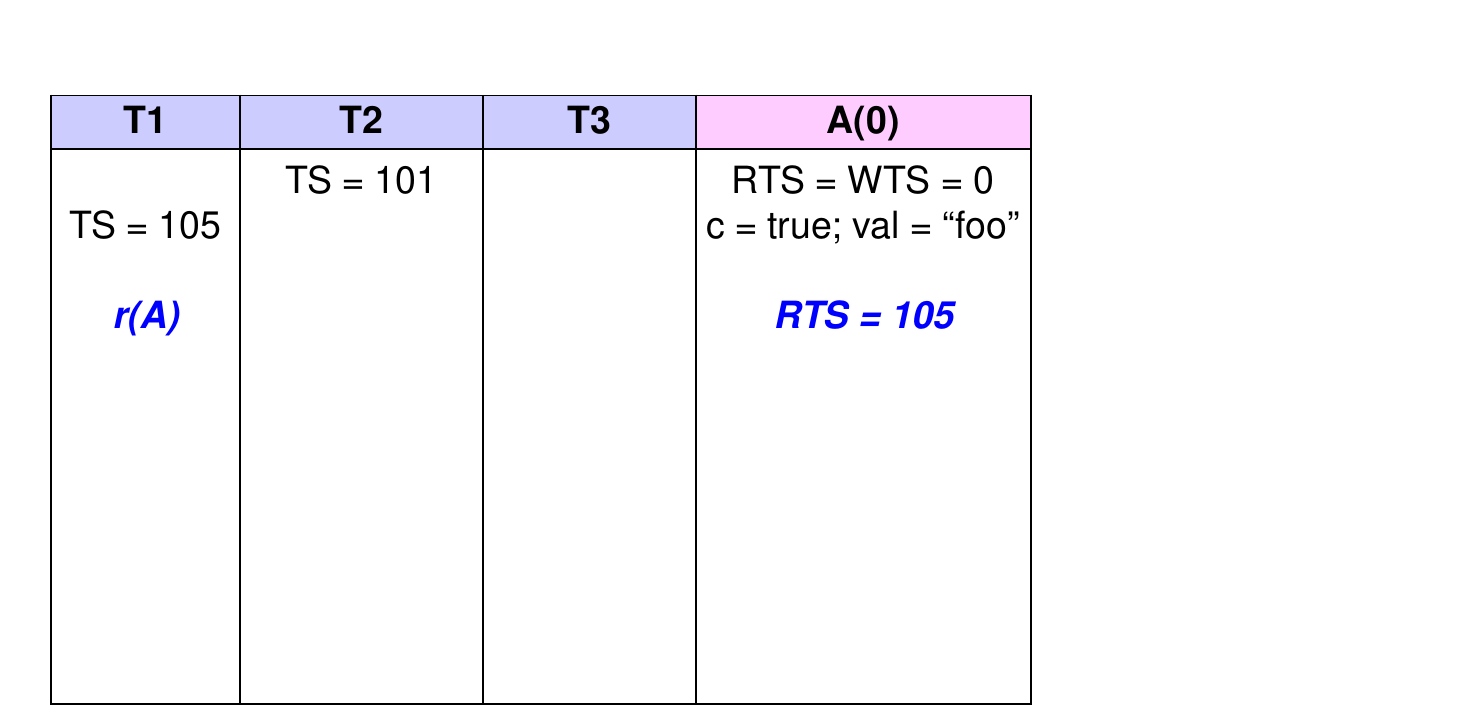
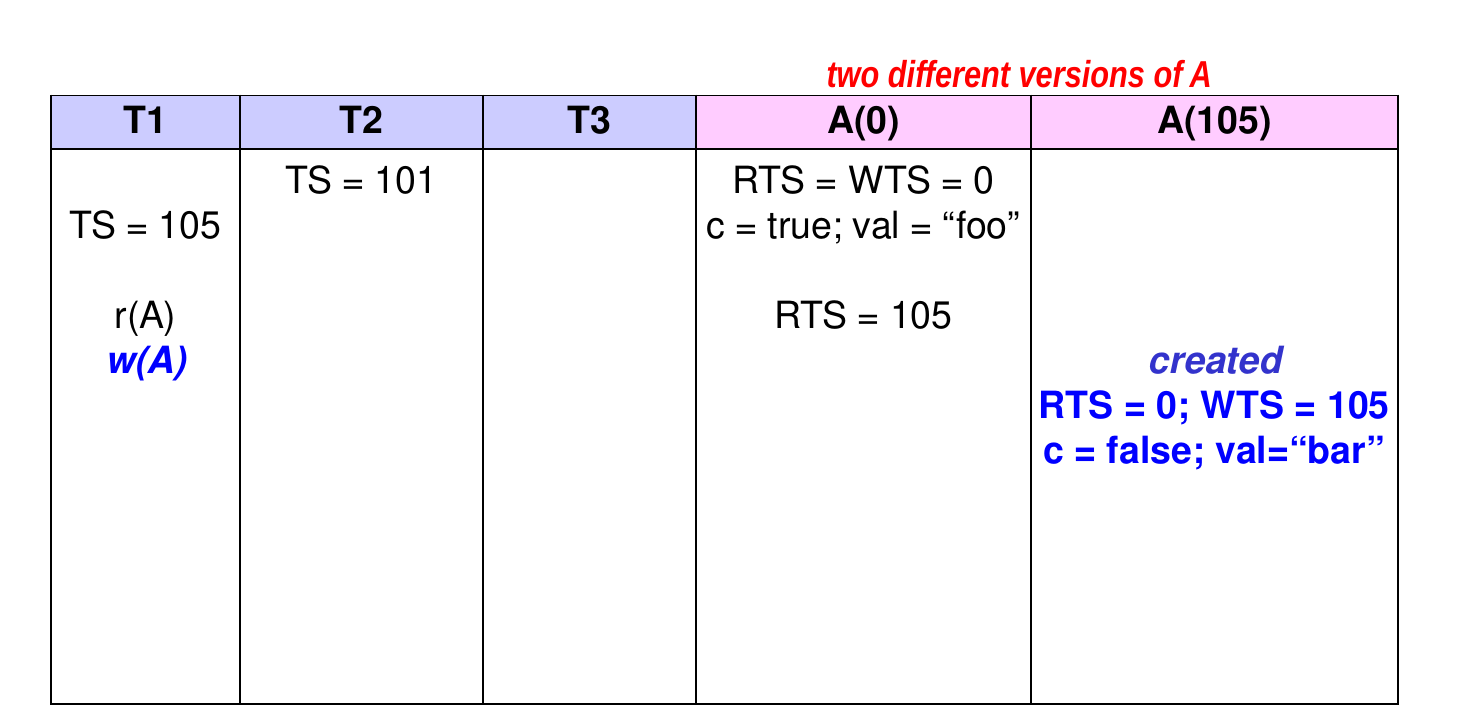
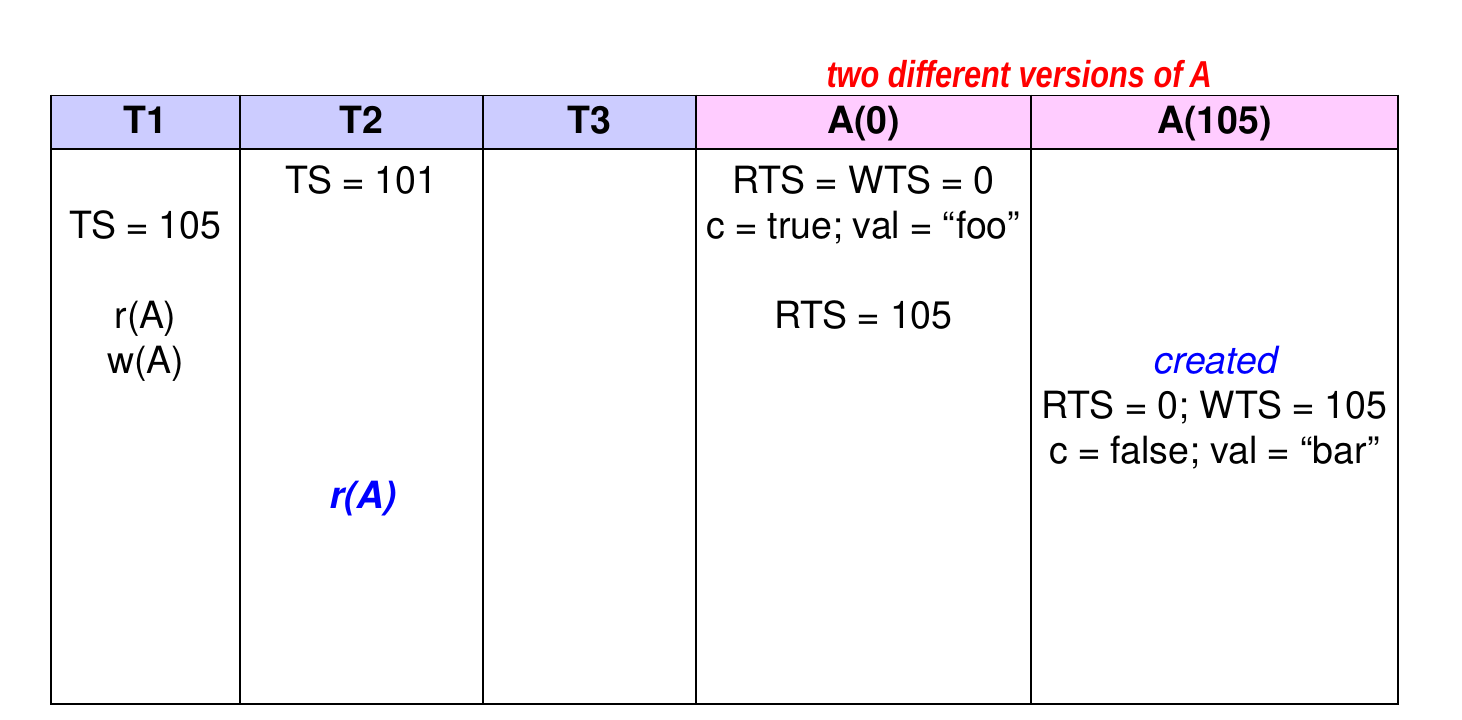
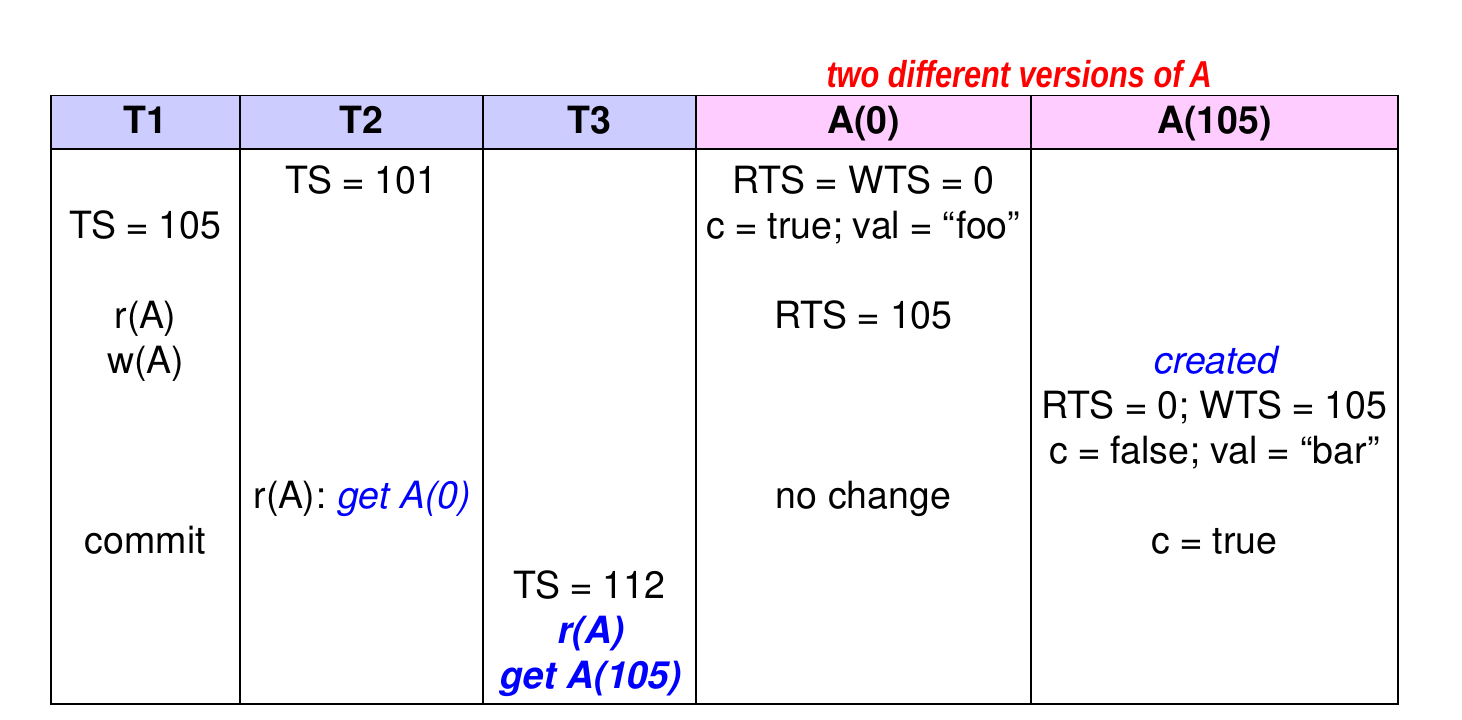
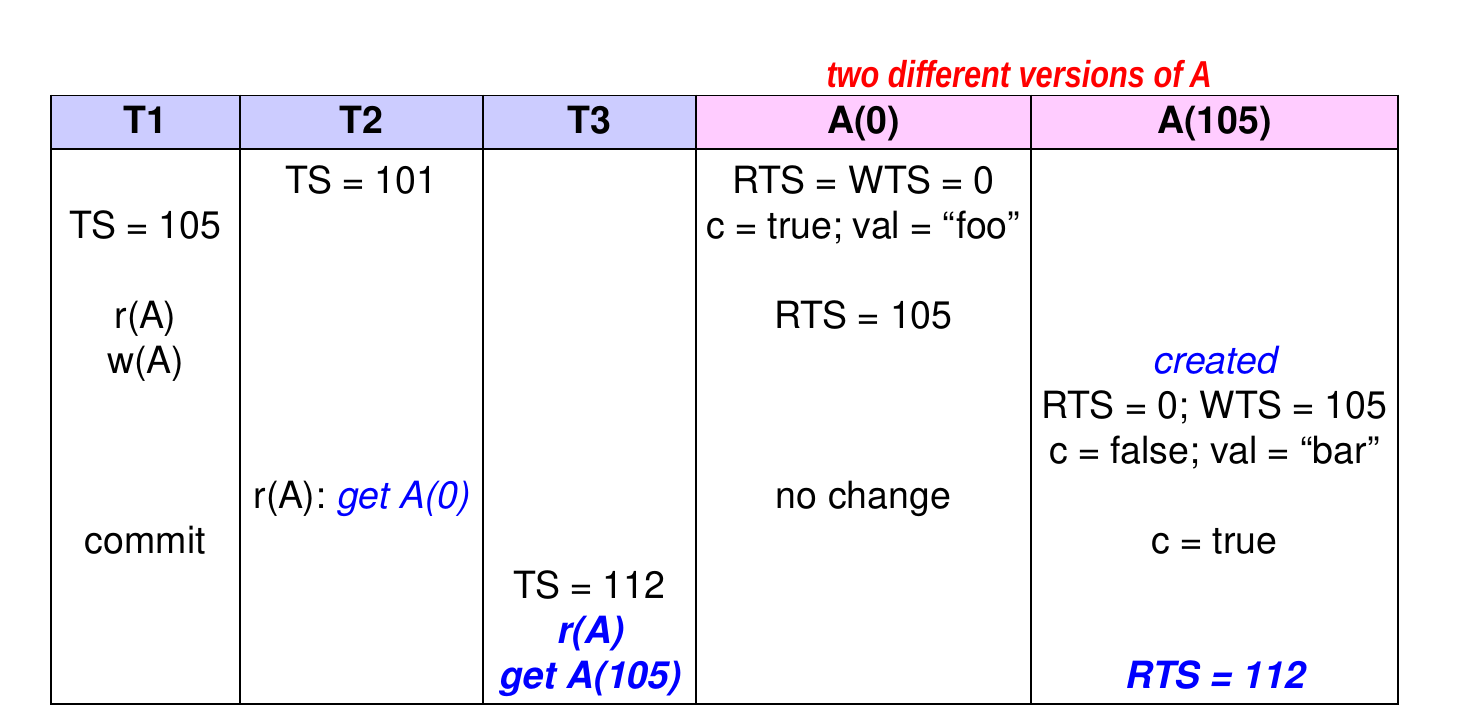
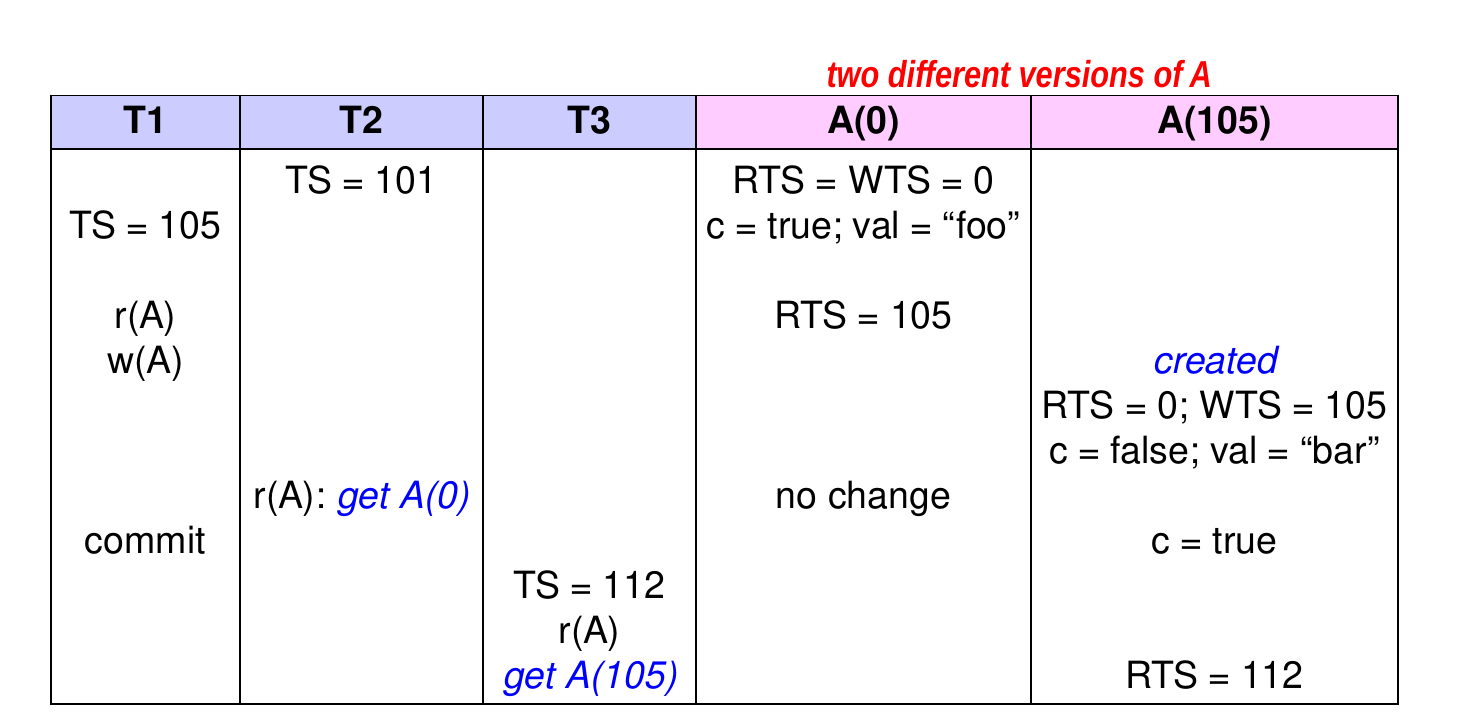
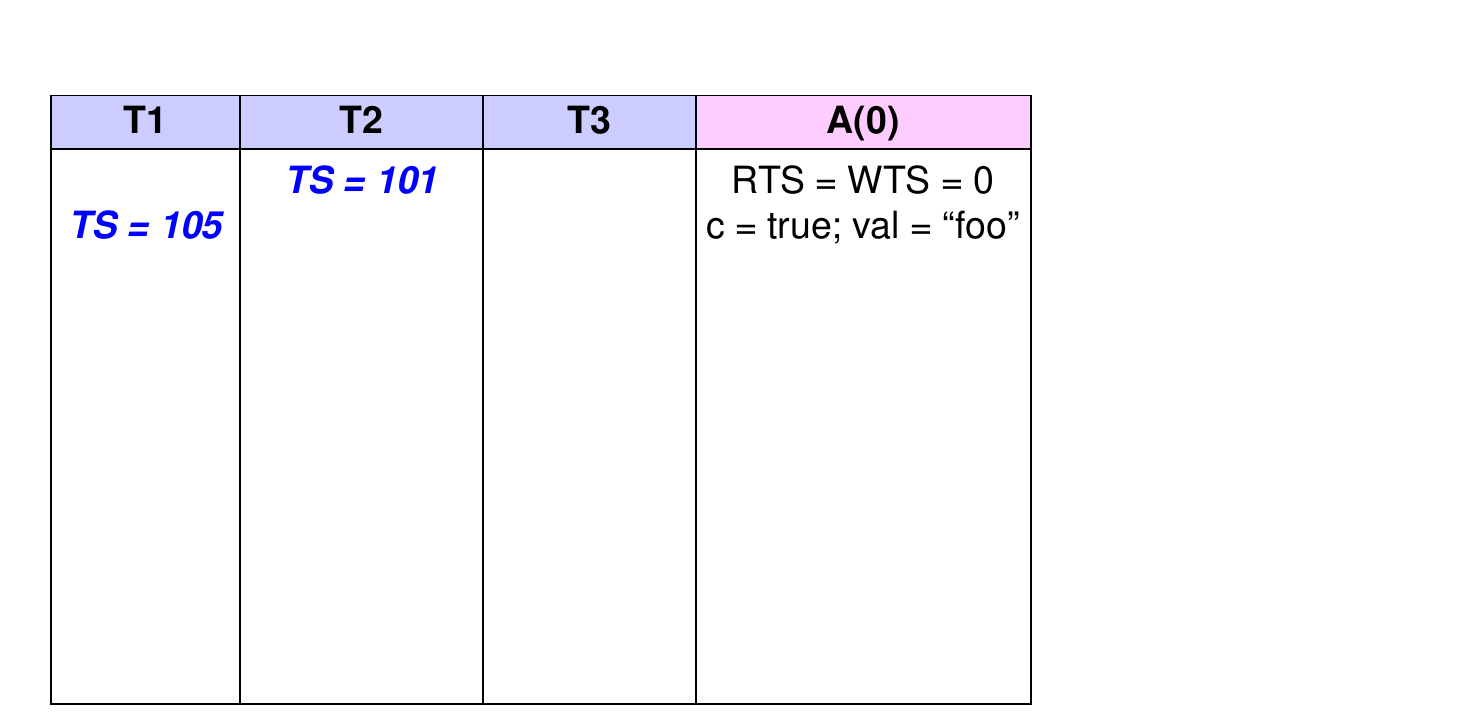
  • To reduce the number of rollbacks, the DBMS can keep old versions of data elements, along with the associated timestamps.
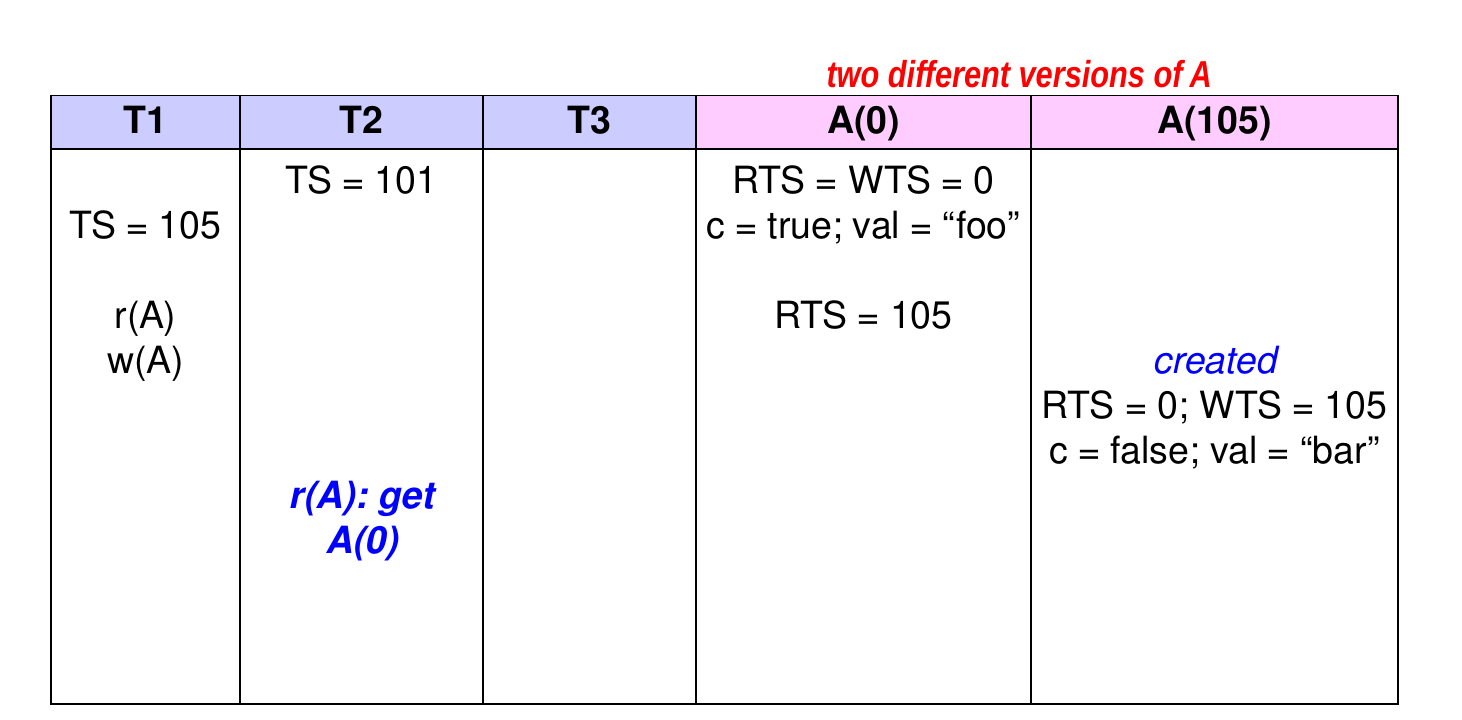
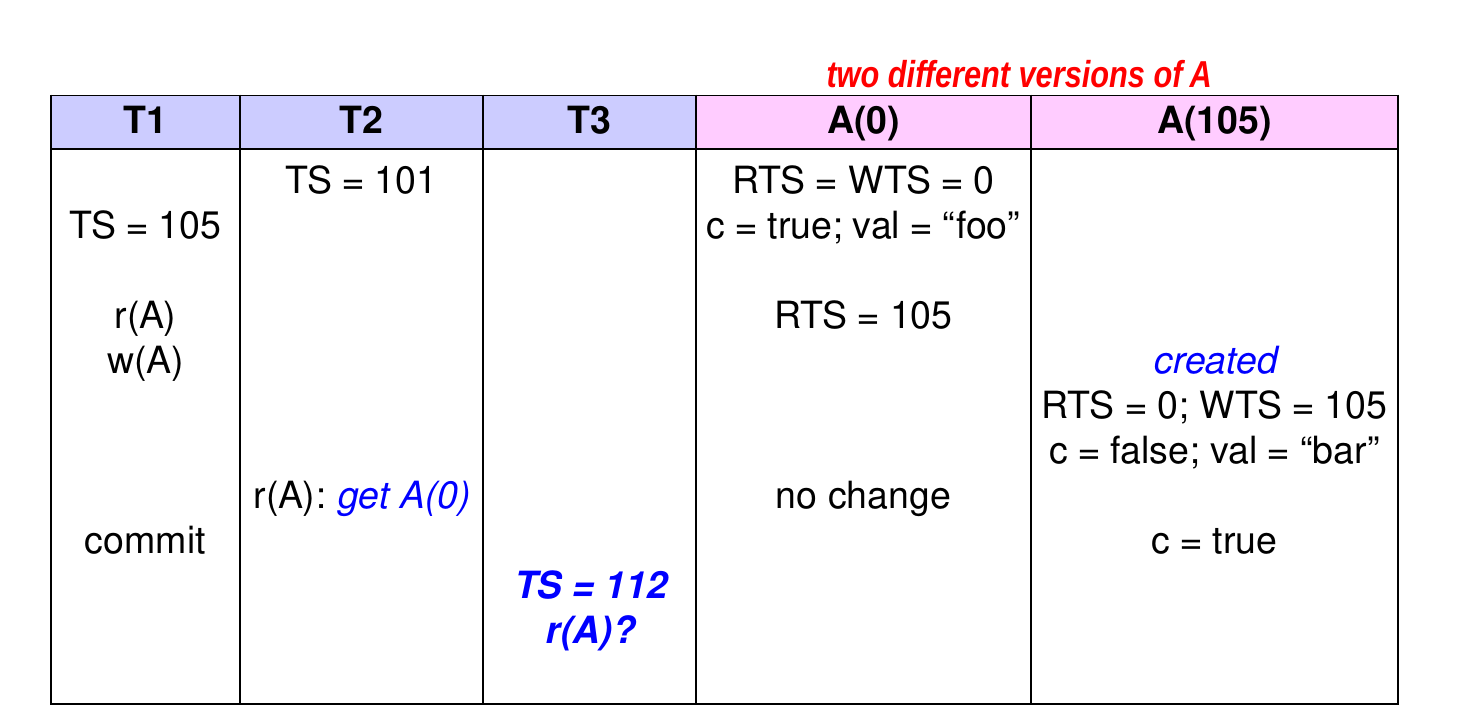
  • When a txn T tries to read A, it’s given the version of A that it should read, based on the timestamps.
  • the DBMS never needs to roll back a read-only transaction!
Multiversion Timestamp Protocol (cont.)

  • Because each write creates a new version, the WTS of a given version never changes.
  • The DBMS maintains RTSs and commit bits for each version, and it updates them using the same rules as before.
  • If txn T attempts to write A:
    • find the version of A that T should be overwriting (the one with the largest WTS < TS(T))
    • compare TS(T) with the RTS of that version
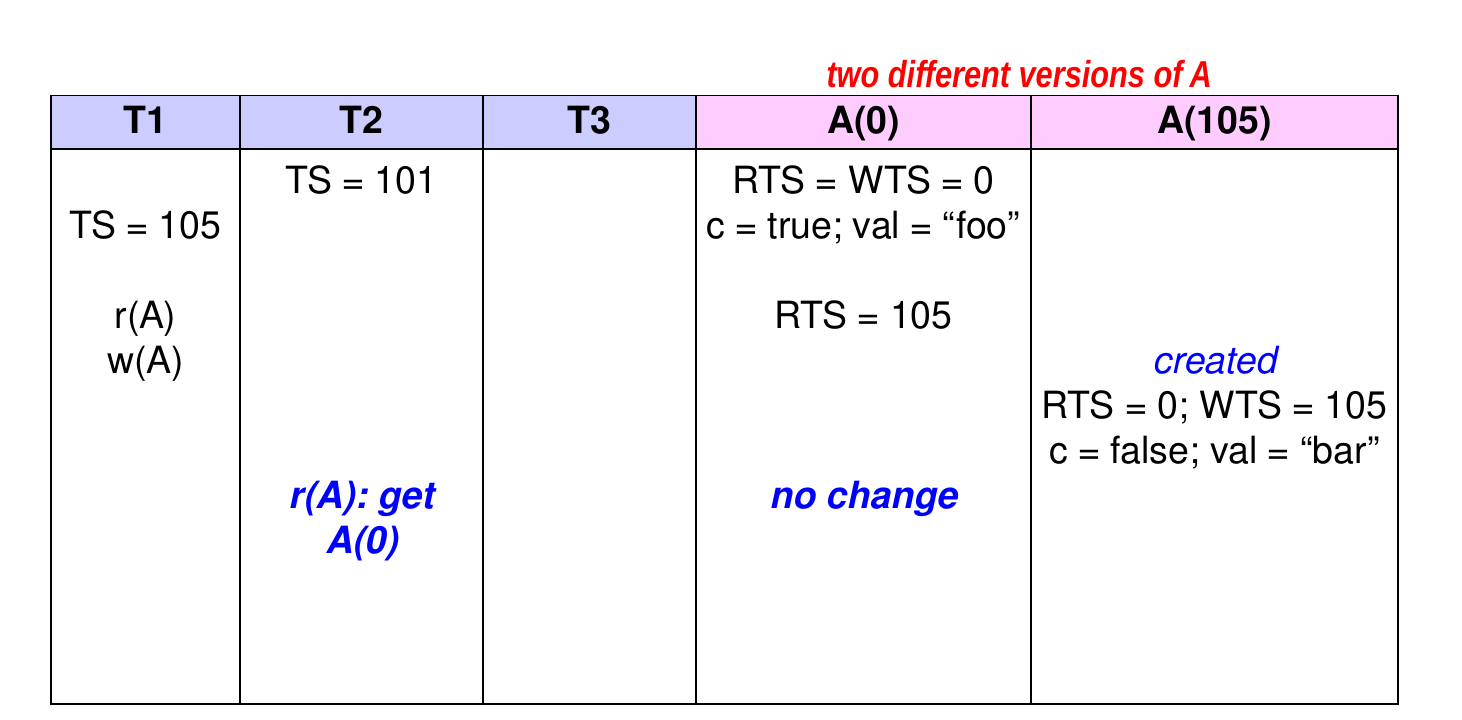
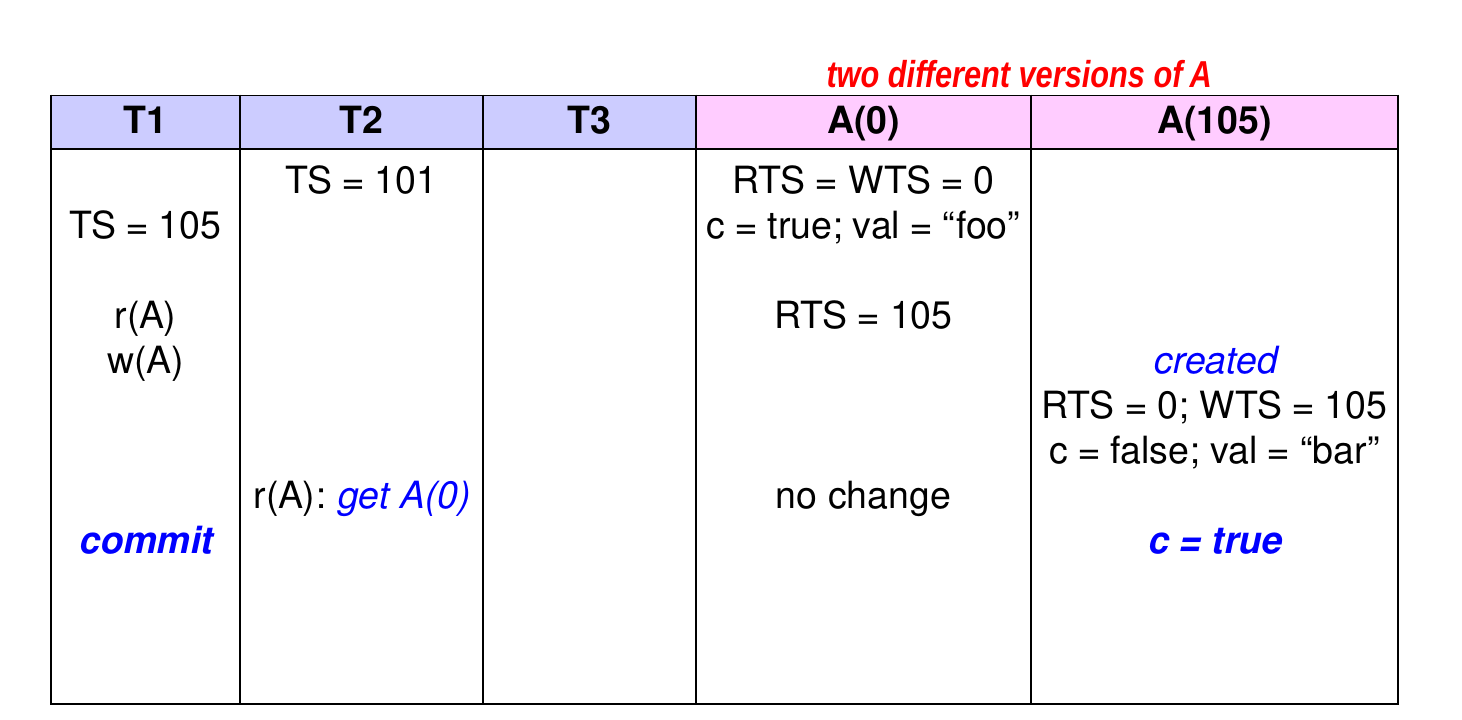
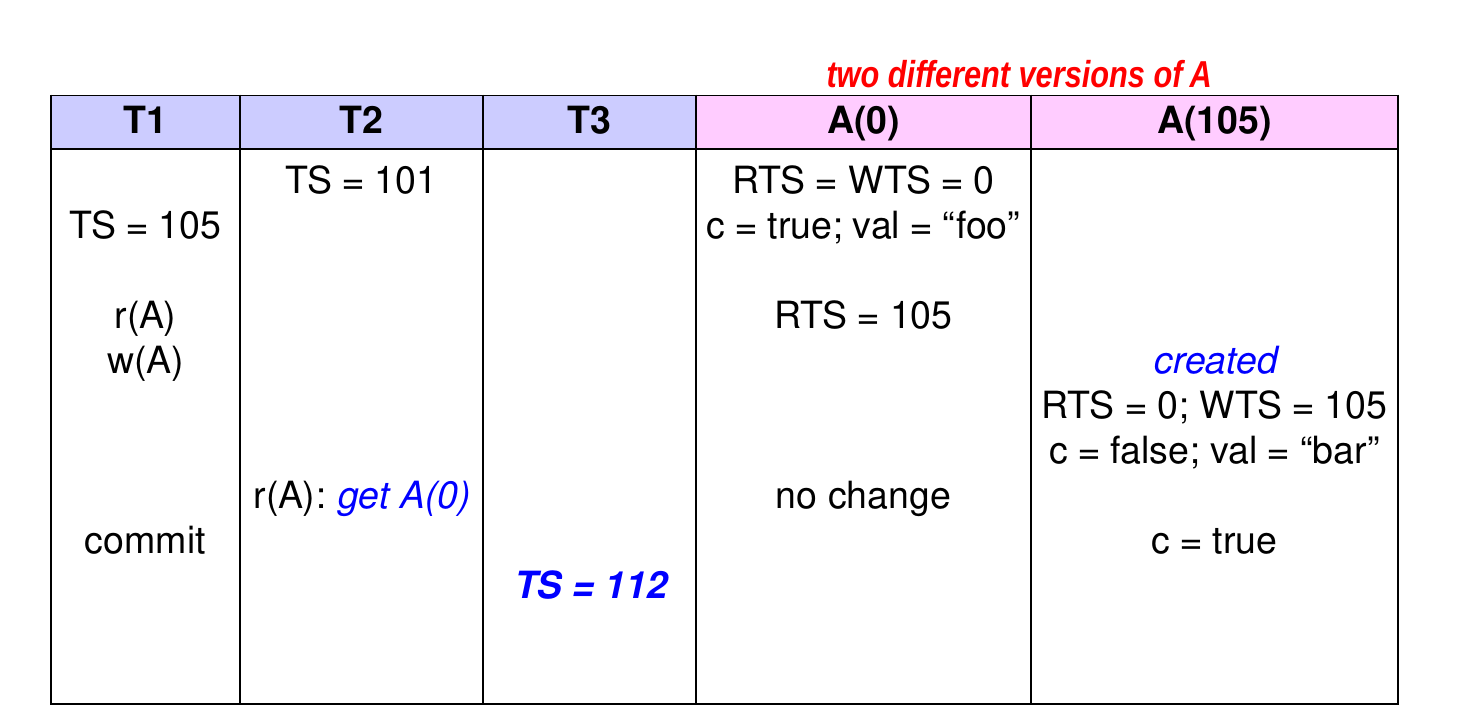
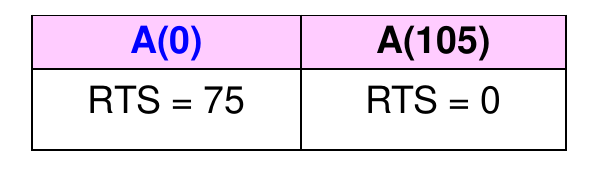
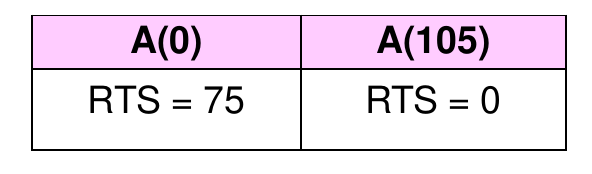
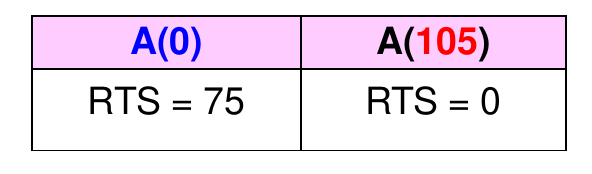
  • example: txn T (TS = 50) wants to write A
  • it should be overwriting A(0)
  • should we allow its write and create A(50)?

      no. 50 < 75, so T’s write is too late
Multiversion Timestamp Protocol (cont.)

  • If T’s write of A is not too late:
    • create a new version of A with WTS = TS(T)
  • Writes are never ignored.
    • there may be active txns that should read that version
  • Versions can be discarded as soon as there are no active transactions that could read them.
  • can discard A(t1) if:
    • there is another, later version, A(t2), with t2 > t1

        and

  • there is no active transaction with a TS < t2
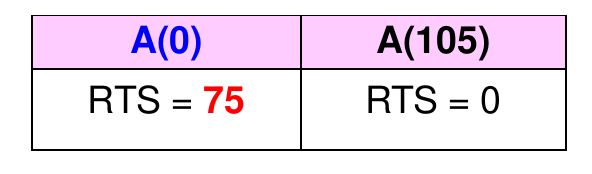
  • example: we can discard A(0) as soon as there are no remaining txns with TS < 105
Locking vs. Timestamps

  • Advantages of timestamps:
    • txns spend less time waiting
    • no deadlocks
  • Disadvantages of timestamps:
    • can get more rollbacks, which are expensive
    • may use somewhat more space to keep track of timestamps
  • Advantages of locks:
    • only deadlocked txns are rolled back
  • Disadvantages of locks:
    • unnecessary waits may occur

The Best of Both Worlds

  • Combine 2PL and multiversion timestamping!
  • Transactions that perform writes use 2PL.
    • their actions are governed by locks, not timestamps
  • thus, only deadlocked txns are rolled back
  • Multiple versions of data elements are maintained.
    • each write creates a new version
  • the WTS of a version is based on when the writer commits, not when it started
  • Read-only transactions do not use 2PL.
    • they are assigned timestamps when they start
  • when T reads A, it gets the version from right before T started
    • will only get a version whose writer has committed
  • read-only txns never need to wait or be rolled back!